Open |
Open from
Closed today
Ticketing
My selection

Hans-Ulrich Obrist Archives - Chapter 1: Édouard Glissant
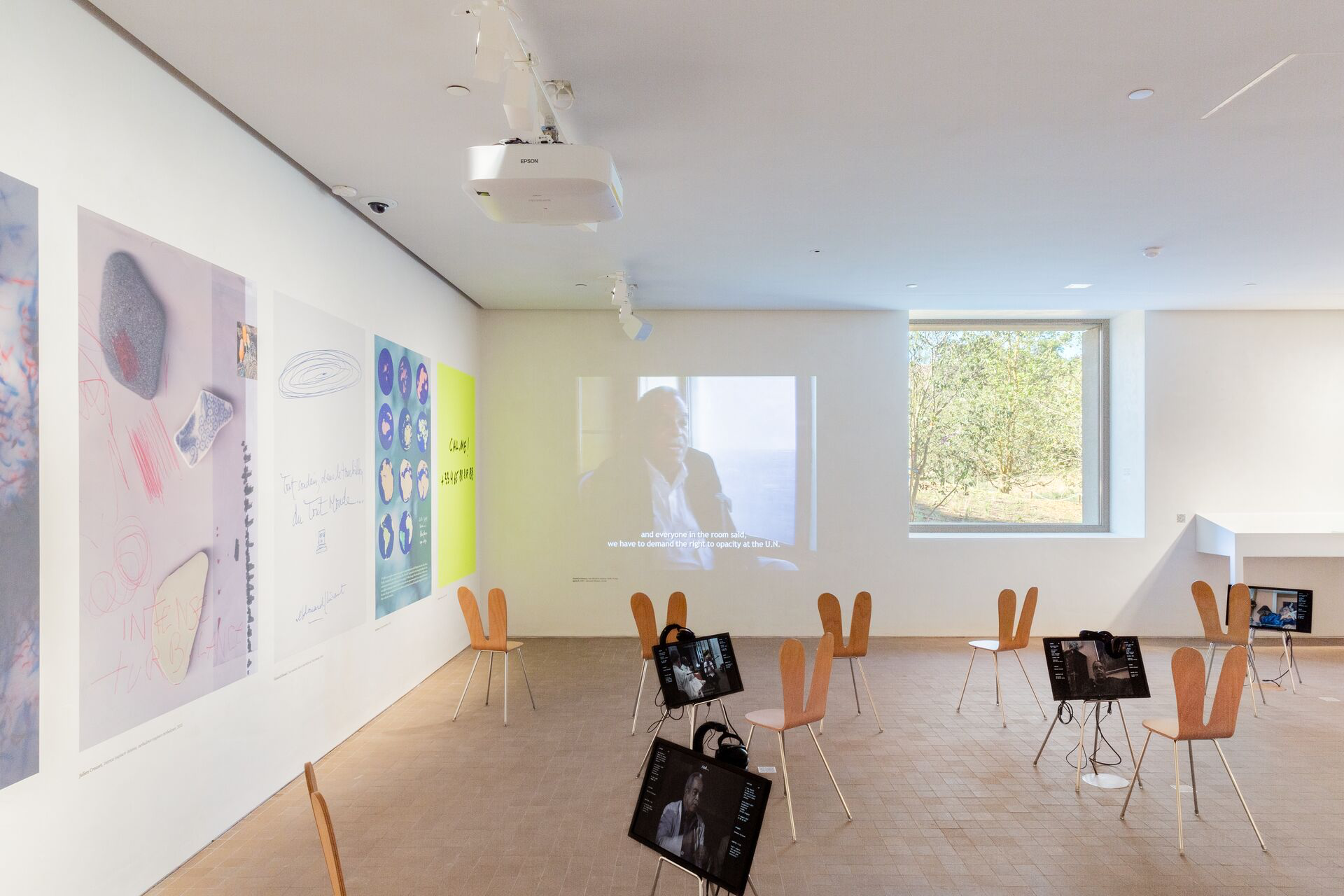
The first presentation of the archive of Hans-Ulrich Obrist at LUMA Arles is dedicated to the late Édouard Glissant (b. 1928 in Martinique, France – d. 2011 in Paris, France), Martinique-born philosopher, poet and public intellectual. Drawing on periods of collaboration, friendship and mentorship between the philosopher and the curator, the presentation highlights a belief they had in common: conversation and reciprocal exchange with the other can be a means to produce new realities. For Glissant, a world in transformation is an "All-World" that listens and learns from each of its unique voices.

Obrist’s encounter with Glissant influenced the direction of his work for years to come. He was first introduced to the philosopher’s thinking through the artist Alighiero Boetti, whom he met after turning eighteen in 1986. Throughout the second half of the 1990s, he got to know Glissant in the company of their mutual friend agnès b. Their companionship started in Parisian cafés, and these meetings quickly became regular events. During this same period, Obrist adopted a daily fifteen-minute ritual of reading the writings of the poet-philosopher, a habit that he still practices. Their relationship was driven by a spontaneity that enabled them to collaborate on a dozen public conversations, interviews and printed materials. These projects led them to travel together across cities, continents and archipelagos.

Glissant’s philosophy of "Relation" is rooted in the history and the geography of the Antilles archipelago. Through constant exchanges from one island to another, the archipelago has provided the matrix for creolisation, a process of continual fusion that does not cause the loss of cultural and linguistic diversity, but enriches it through hybridisation. The most tangible outcome to emerge from this context is creole languages, resulting from miscegenation and osmosis between vernaculars. While continental thinking relies on systems, and claims the absoluteness of its own worldview, archipelagic thinking recognises and furthers the world’s diversity. Glissant realised early on the dangers of globalisation, the homogenising engine behind the disappearance of cultural, linguistic and ecological diversity, as well as the dangers of the populist counter-current to globalisation, namely new forms of nationalism and localism that refuse solidarity. To resist globalisation without denying globality, he coined the notion of "Mondialité" as a plea for a continuous worldwide dialogue that equally encouraged the mixing of cultures and celebration of local identities. Obrist’s curatorial projects are directly inspired by this concept of "Mondialité" as a perpetual process of relating.

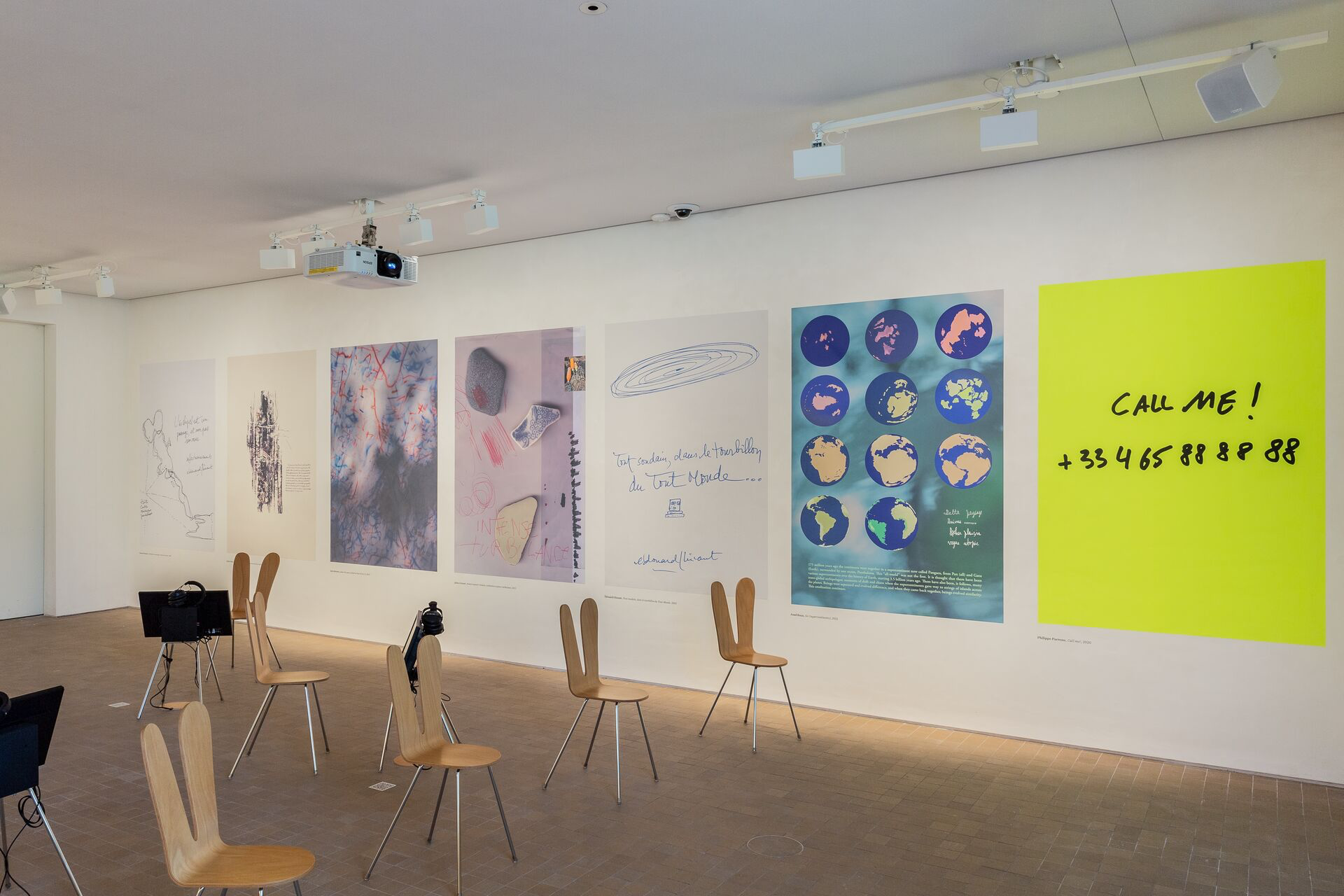
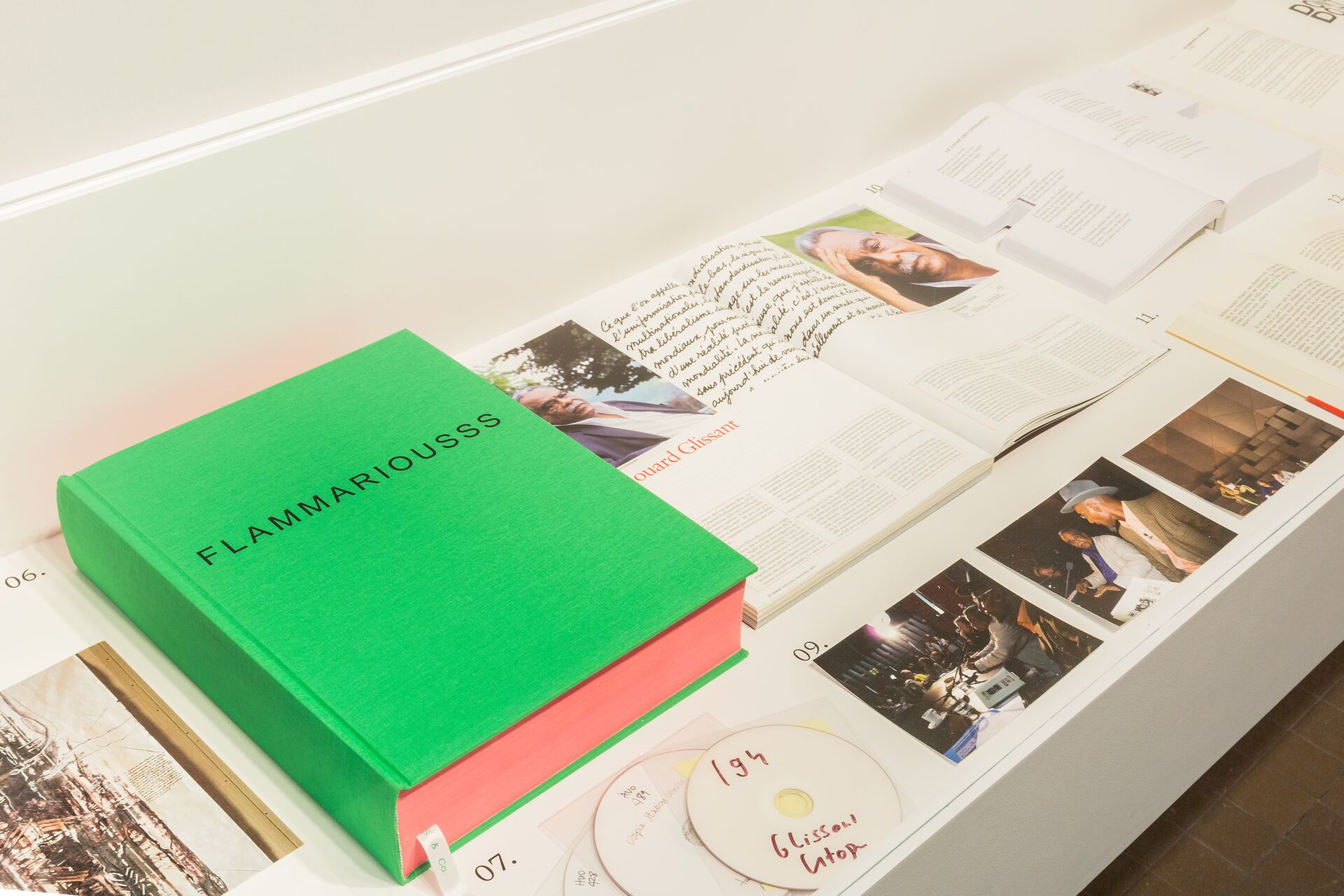
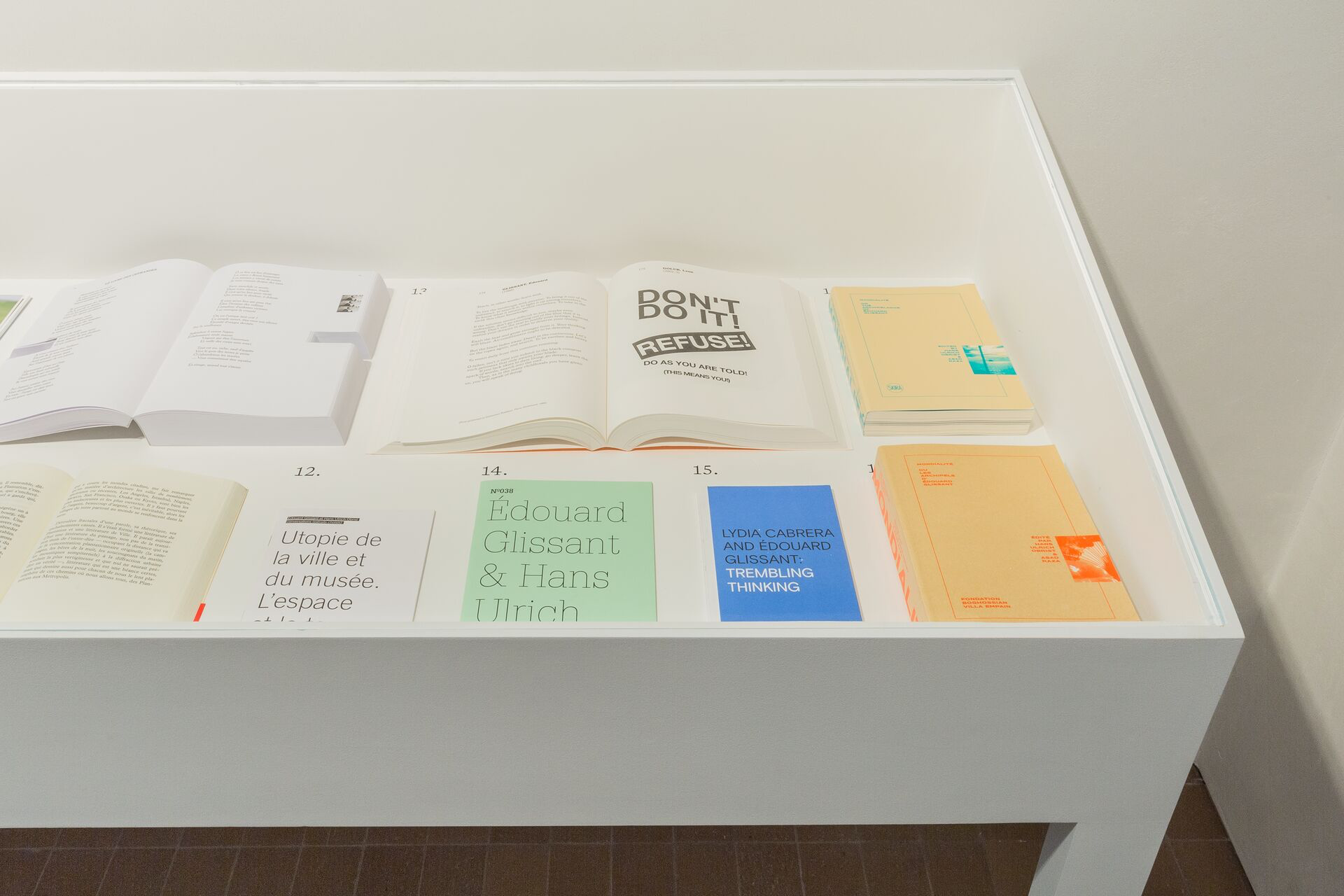
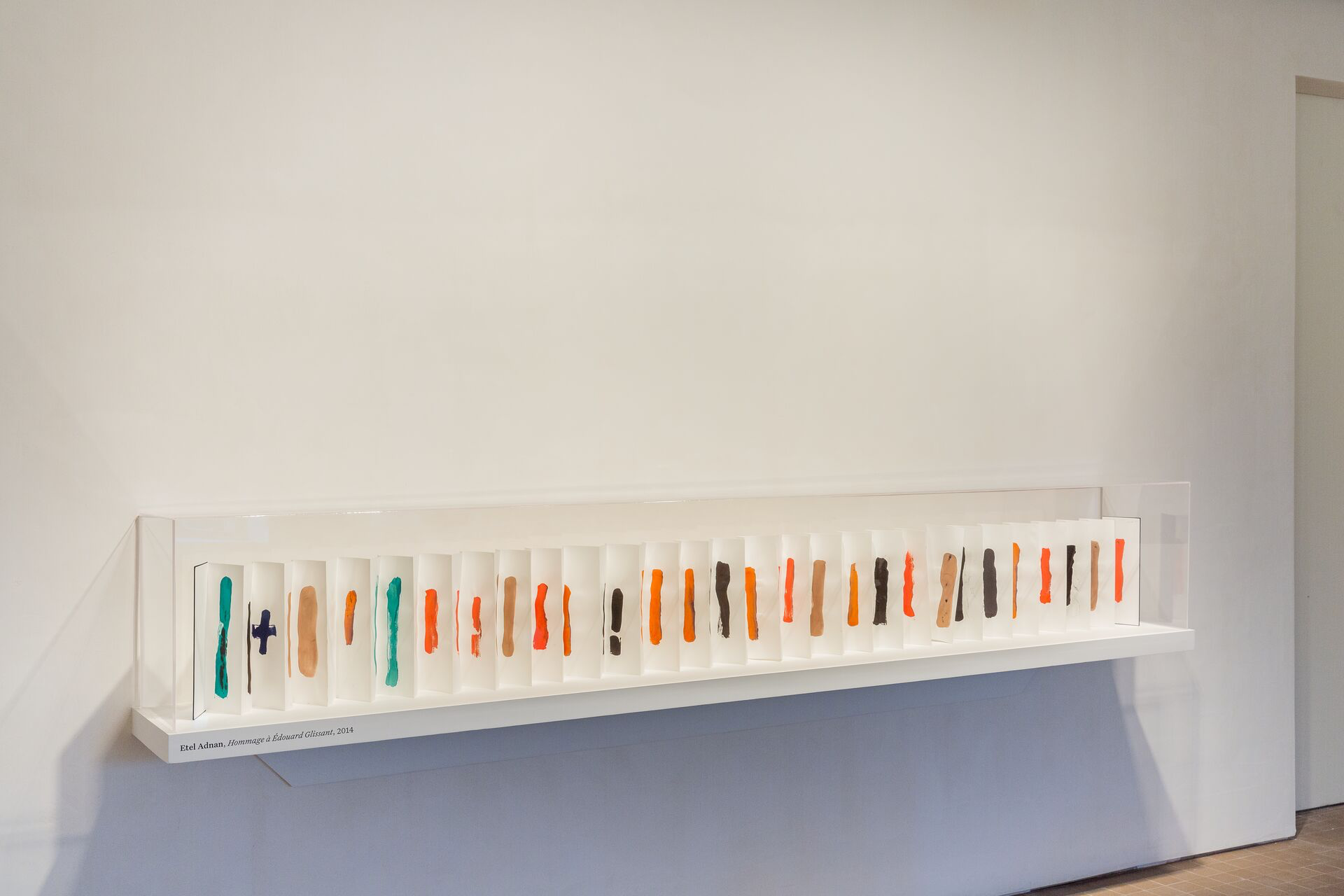
The focus of this presentation is a collection of audio-visual material related to Glissant from Obrist’s Interview Archive. Presented for the first time, more than six hours of video material from public and private interviews, screened on eight viewing stations, allow visitors to listen to Glissant engaging in dialogues, reading his poetry aloud, forming and shaping his thoughts and philosophy while speaking. In addition to the videos, various other archival materials such as books dedicated to Obrist by Glissant are presented to offer a unique overview of this inspiring relationship. The presentation also features a series of posters by contemporary artists, who were either close to Glissant or who feel connected to his thinking. It is through their unique language that Glissant’s ideas find prolongation, reflecting their contemporaneity and urgency.

Throughout his career, Obrist has been committed to making Glissant’s thinking accessible, quoting him at every opportunity and orchestrating numerous events, exhibitions, and publications dedicated to him. On the occasion of its opening, LUMA Arles is pleased to dedicate this presentation to Glissant, whose vision of the 21st-century art institution as an archipelago that would accommodate networks of interrelations between people, traditions and disciplines has been an inspiration for the project since its conception. Glissant had imagined the institutions of the future as places of dialogue where various parts of the world would come into contact with others. For him, what mattered was the production of reality, the transformation of theories and poetries into concrete engagements to respond to the problems of the moment. His utopia was a quivering place that transcended established systems and perpetually reinvented itself. This presentation aims to give historical and artistic consistency to the dream shared by Glissant and Obrist of a "utopian point where all the world’s cultures and all the world’s imaginations can meet and hear one another".

Photo Digital-GLISSANT_AF_PICTURES_63
Credits
© Arthur Fouray

‘The One-World trembles physically, geologically, mentally, spiritually, because the One-World is looking for this point, I would not say this station, but this utopian point where all the cultures of the world, all the imaginations of the world, can meet and hear one another without being dispersed or getting lost.’

Édouard Glissant, 2003, Utopia Station, Venice Biennale

Pictures of the exhibition

Photo Digital-GLISSANT_AF_PICTURES_4
Credits
© Arthur Fouray
Photo Digital-GLISSANT_AF_PICTURES_50
Credits
© Arthur Fouray
Photo Digital-GLISSANT_AF_PICTURES_46
Credits
© Arthur Fouray
Photo Digital-GLISSANT_AF_PICTURES_6
Credits
© Arthur Fouray

Archives of Hans-Ulrich Obrist

The archive of Hans-Ulrich Obrist (b. 21 May 1968 in Zurich, Switzerland) documents his curatorial and conversational practice. Since the late-1980s, the Swiss-born curator has been developing a multifaceted practice that is shaped, first and foremost, through interactions. His archive is about listening, since it contains a multitude of encounters with some of the most influential figures of our times.

In 1986, Obrist visited the studio of Peter Fischli & David Weiss in Zurich, on the eve of the production of their film Der Lauf der Dinge (The Way Things Go, 1987), that LUMA Arles presented in the Médico-Social building on the occasion of the exhibition It’s Urgent! in 2020, a chain reaction of objects set in motion where one thing leads to another. From this visit onwards, he began visiting artists’ studios, travelling on the night train, each encounter leading to another, each artist sending him to others.

What Obrist calls his Interview Project began in earnest in the early 1990s, when Jonas Mekas encouraged the young curator to film his conversations with artists. To date, the Interview Archive contains around 4,000 recorded conversations, not only with artists but also with architects, musicians, writers, filmmakers, philosophers, scientists. The wider archive consists of many other layers, such as publications, photographs, handwritten and electronic correspondence, notes, sketches, drawings and projects.

Together with Hans-Ulrich Obrist, Maja Hoffmann proposes a format that would reveal, over the course of years, different facets of the archive, such as a project or an encounter. At the core of these series of presentations are the documents stemming from the Interview Archive, which, more than an accumulation of interviews, constitutes an infinite conversation connecting people, cultures, languages and disciplines. At the heart of each episode of this long-term project is this idea of learning to listen and listening to learn. Édouard Glissant is the first chapter of the Archive of Hans-Ulrich Obrist, composed of books, handwritten documents and audio-visual recordings, which will be followed by many other.

The display of the Édouard Glissant interviews revisits Now Interviews, initially conceived by Japanese architect Kazuyo Sejima, on the occasion of the 12th Architecture Biennale in 2010. For the presentation at LUMA Arles, Sejima suggested that a tree should be planted in front of a window. This space was therefore named the Cherry Tree Gallery. As an echo of or resonance with Yoko Ono’s wish tree, on the occasion of the overall opening of LUMA Arles on June 26 2021, Dominique Gonzalez-Foerster will attach ribbons in the colours of post-it notes to the branches of the tree chosen by Sejima and visible through the window.
DM000727-525x350

Edouard Glissant

Novelist, poet and essayist Édouard Glissant (1928-2011) is one of the great writers of the 20th and 21st centuries. As a young man in Martinique, Glissant was fascinated by the surrealist movement and, together with his friends from the Franc Jeu (a literary and political group), campaigned for the revolutionary ideas of colonial liberation. He left Martinique for metropolitan France in 1946 where he studied philosophy at the Sorbonne and ethnography at the Musée de l'Homme. He then published his first poetry collections (Un Champ d'îles in 1953) and his novel La Lézarde [translated into English by Frances Frenaye under the title The Ripening, published by G. Brazeller, New York.], which received the Prix Renaudot in 1958.

In 1965, Glissant returned to Martinique. In 1967, he created the Institut Martiniquais d'Études (IME), a private educational institution which aims to provide young Antilleans with an education that reflects the reality of their History and geography. In 1971, he founded the journal Acoma (published by Maspero), a critical research journal on Antillean societies, which already heralded one of his major essays in this field at that time, Le Discours antillais (1981) [translated by J. Michael Dash in Édouard Glissant, Caribbean discourse: selected essays, University of Press of Virginia, Charlottesville, 1989]. Through his essays, novels and poetic texts, which are interwoven, he gradually introduced the notion of Tout-Monde [the Whole-world], the title of the 1995 novel, followed by the essay Traité du Tout-Monde in 1997 [translated by Celia Britton, Treatise of the Whole-world, Liverpool University Press, 2020].

From 1980 to 1988, Glissant was Editor-in-chief of the UNESCO Courier, developing its editions in 36 languages, distributed in more than 150 countries. In 1988, Glissant moved to the United States and became Professor in the Department of French and Francophone Studies at the Louisiana State University (LSU). In 1993, he was actively involved in the founding of the International Parliament of Writers, an international institution aimed at establishing solidarity with persecuted writers and intellectuals. In 2006, Glissant created the Institut du Tout-Monde, with the support of the Conseil Régional d'IIe de France, the Ministère de l'Outre-Mer, and the Maison de l'Amérique Latine.

In 2009, Glissant published his last essay, Philosophie de la Relation, subtitled Poésie en étendue, and as his final work in 2010, La terre, le feu, l'eau et les vents – Une anthologie de la poésie du Tout-monde.
Portrait Hans Ulrich Obrist - Small

Hans Ulrich Obrist

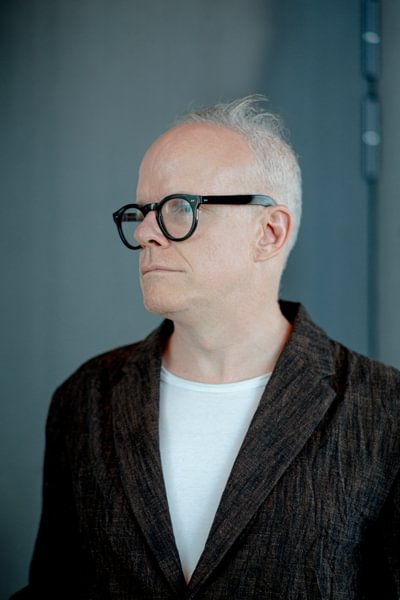
Hans Ulrich Obrist (b. 1968, Zurich, Switzerland) is Artistic Director of the Serpentine Galleries in London, and Senior Advisor at LUMA Arles. Prior to this, he was the Curator of the Musée d’Art Moderne de la Ville de Paris. Since his first show “World Soup : The Kitchen Show” in 1991, he has curated more than 350 shows.

 Obrist’s recent publications include Ways of Curating (2015), The Age of Earthquakes (2015), Lives of the Artists, Lives of Architects (2015), Mondialité (2017), Somewhere Totally Else (2018) The Athens Dialogues (2018), Maria Lassnig: Letters (2020), Entrevistas Brasileiras: Volume 2 (2020), and 140 Ideas for Planet Earth (2021).