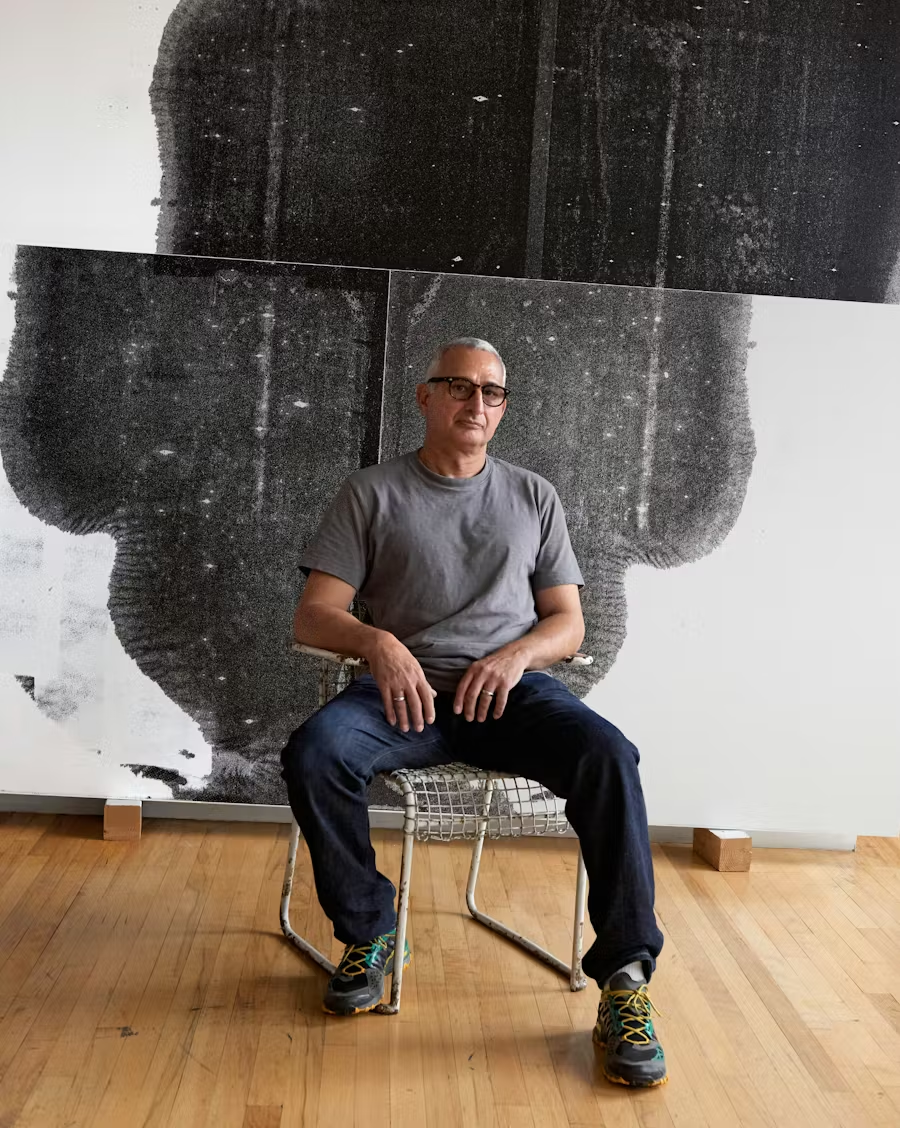
The Impermanent Display I
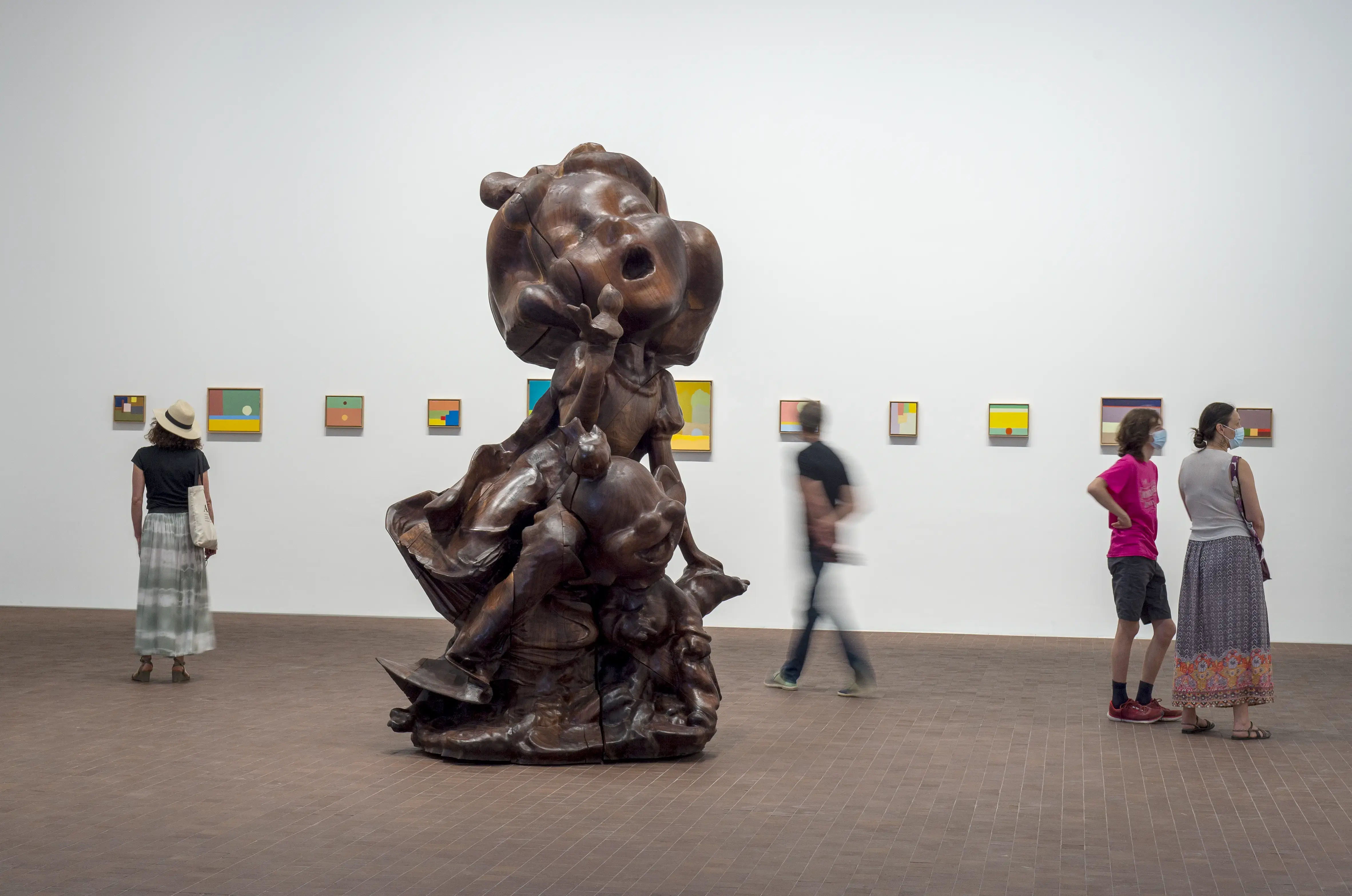
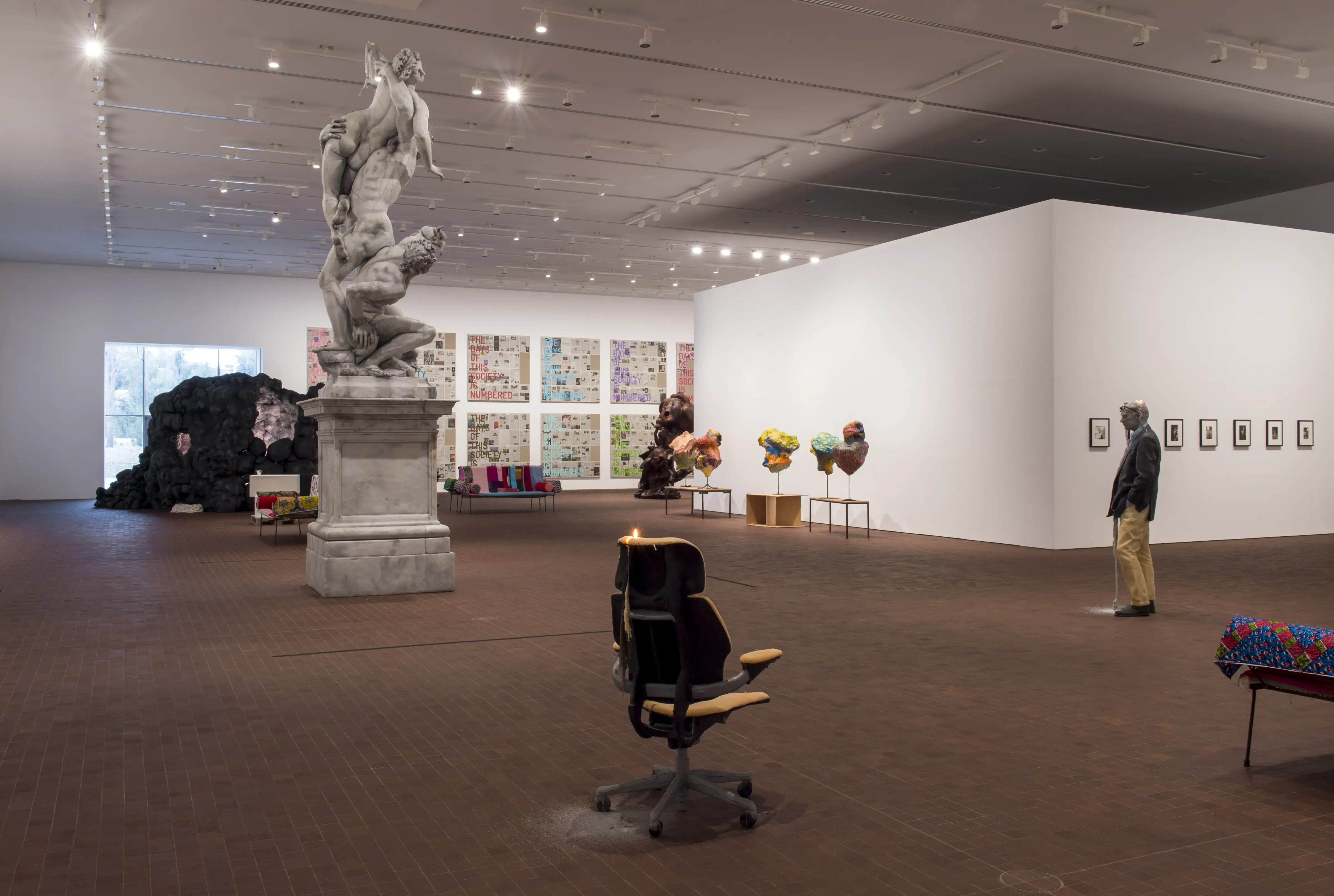
Inside The Impermanent Display I exhibition
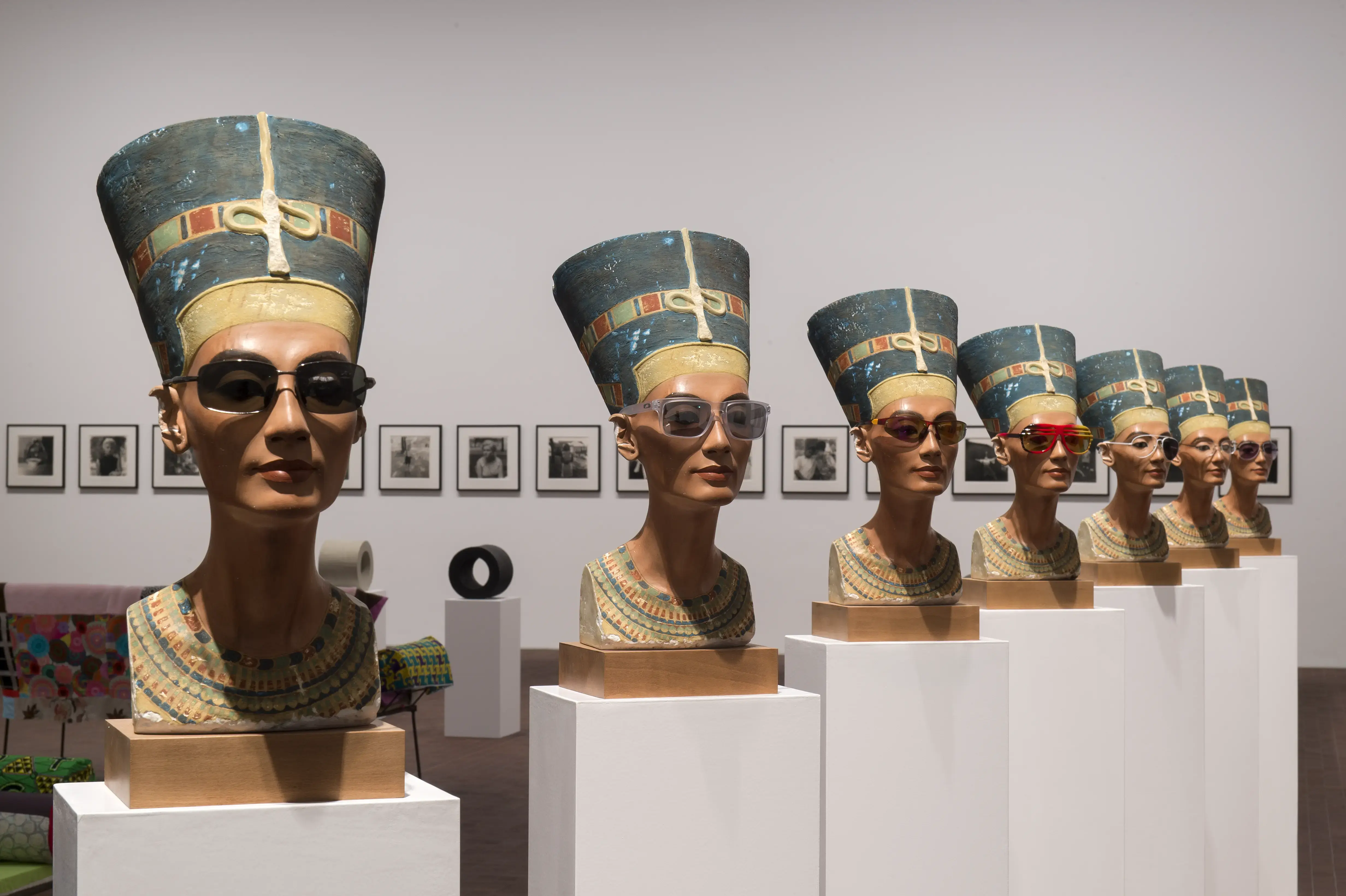
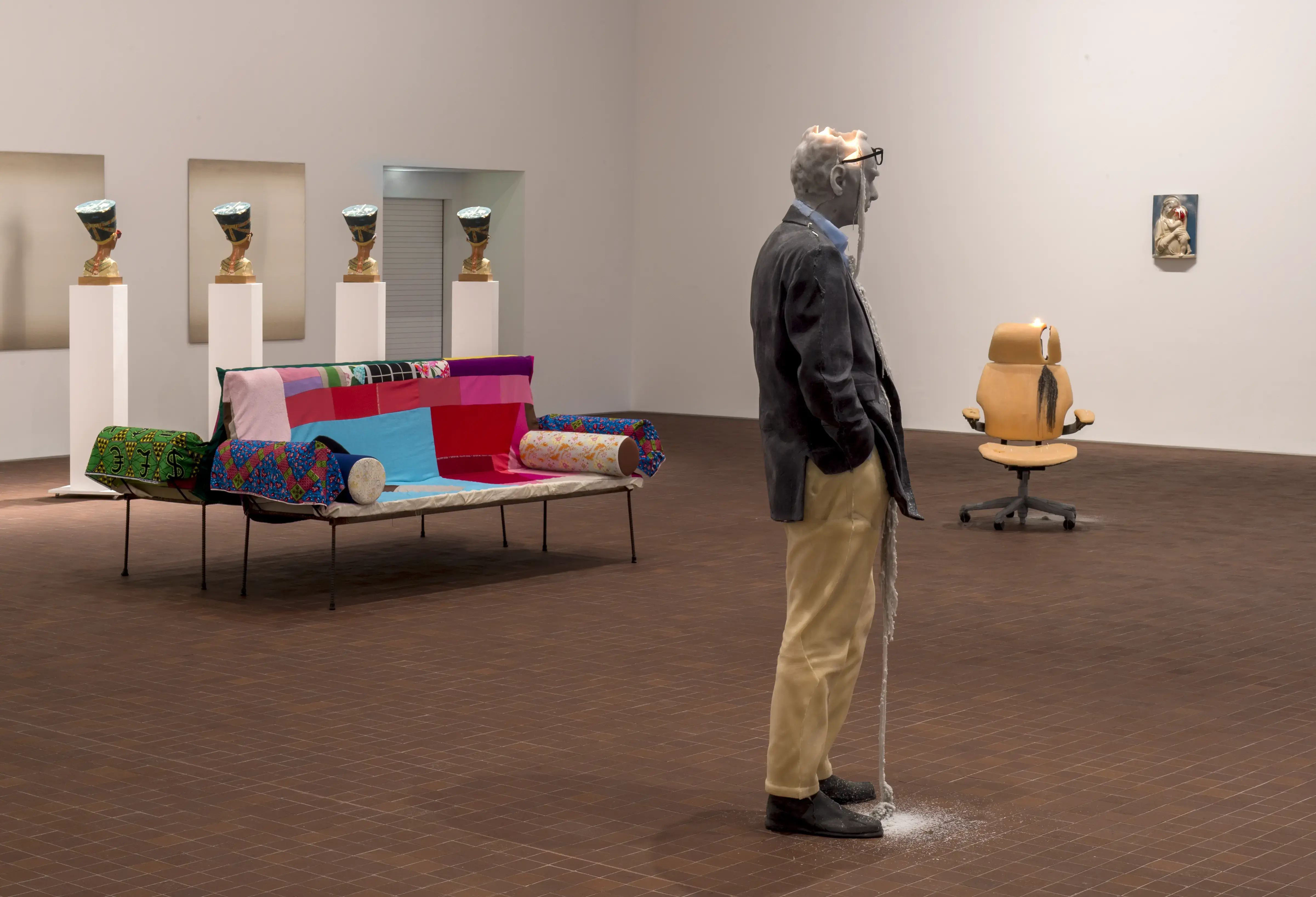
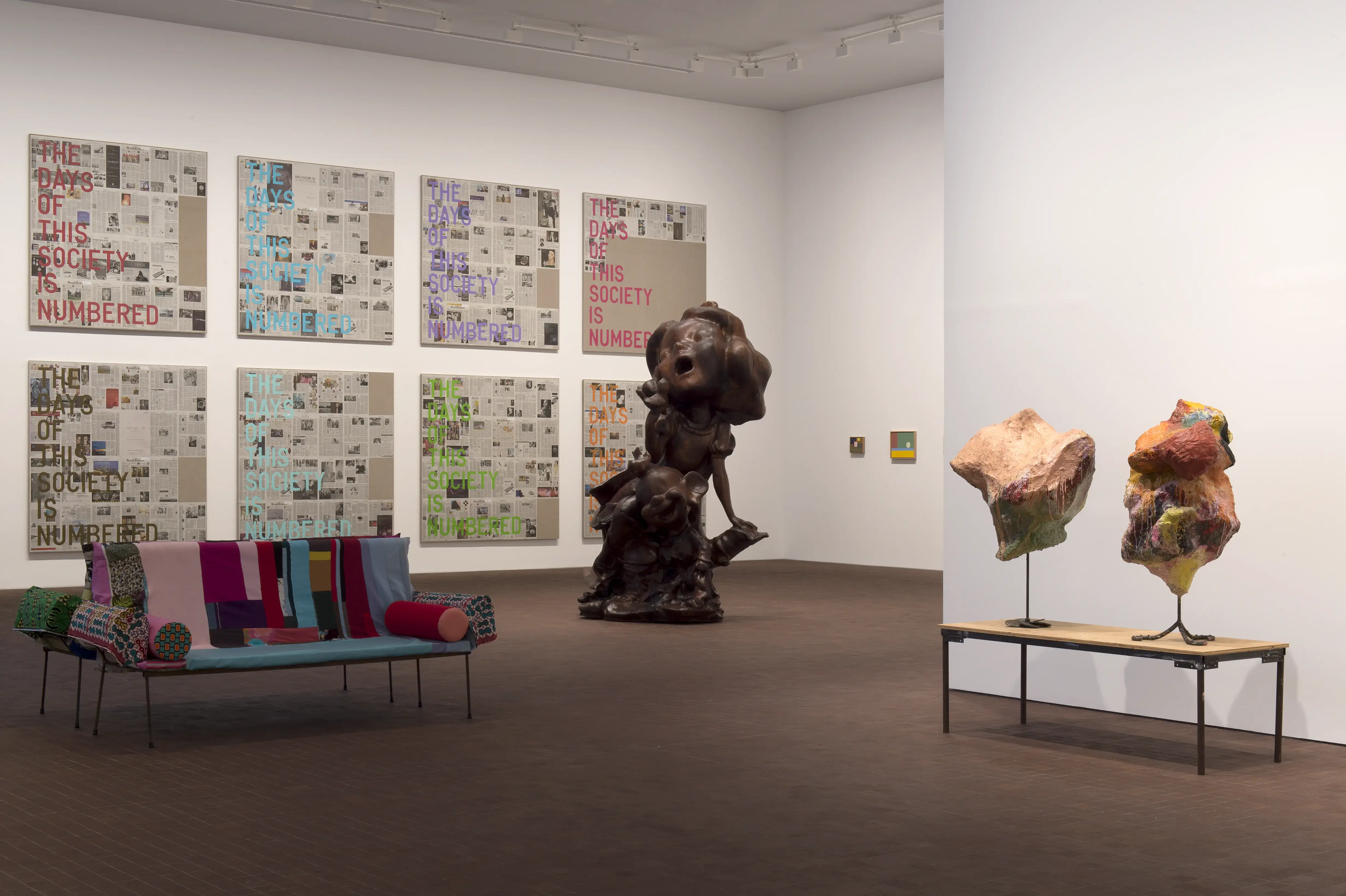
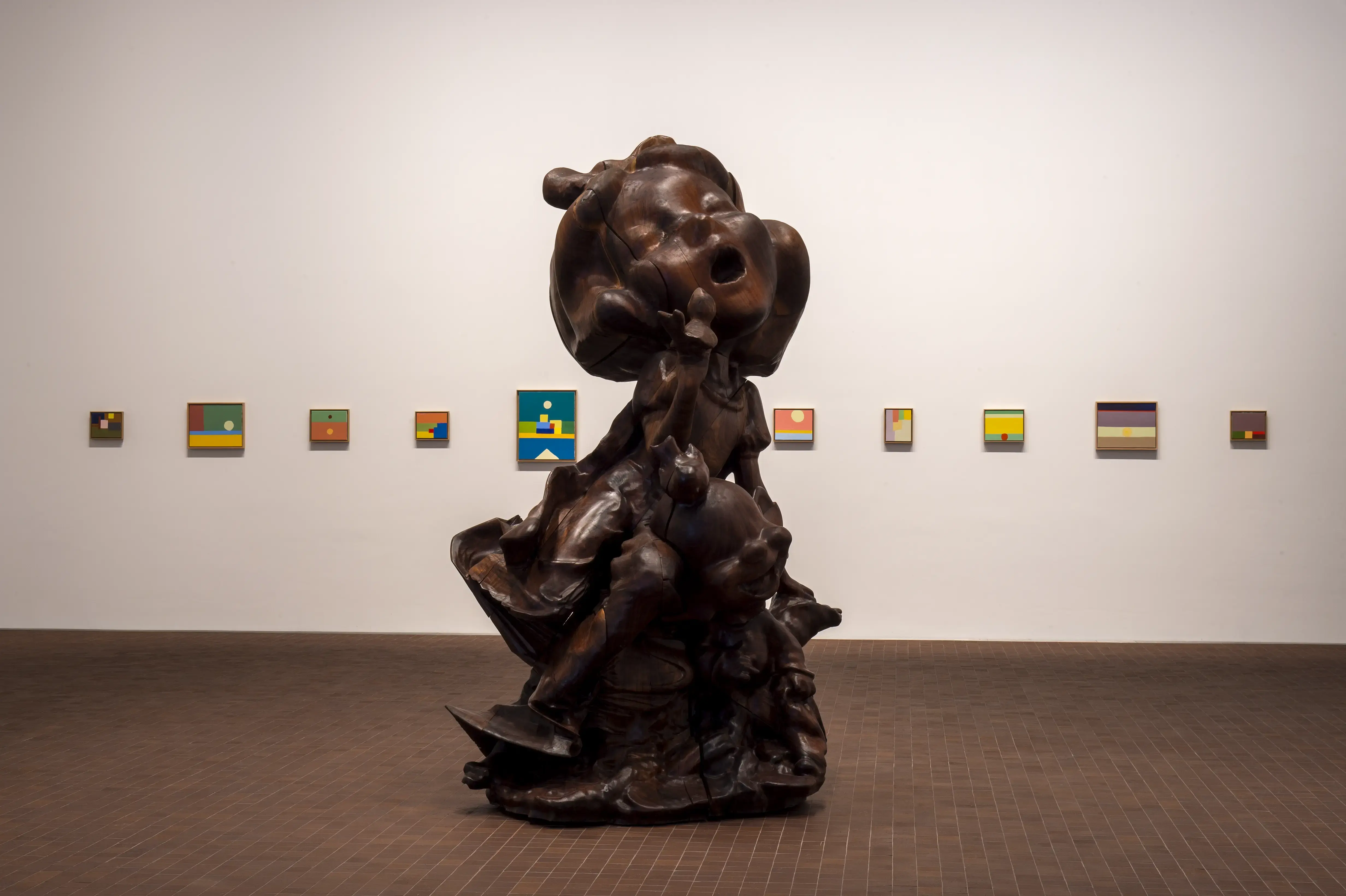


/ADNAN%20Etel_2_Courtesy%20Galerie%20Lelong%20&%20Co.jpg)
Etel Adnan
Diane Arbus
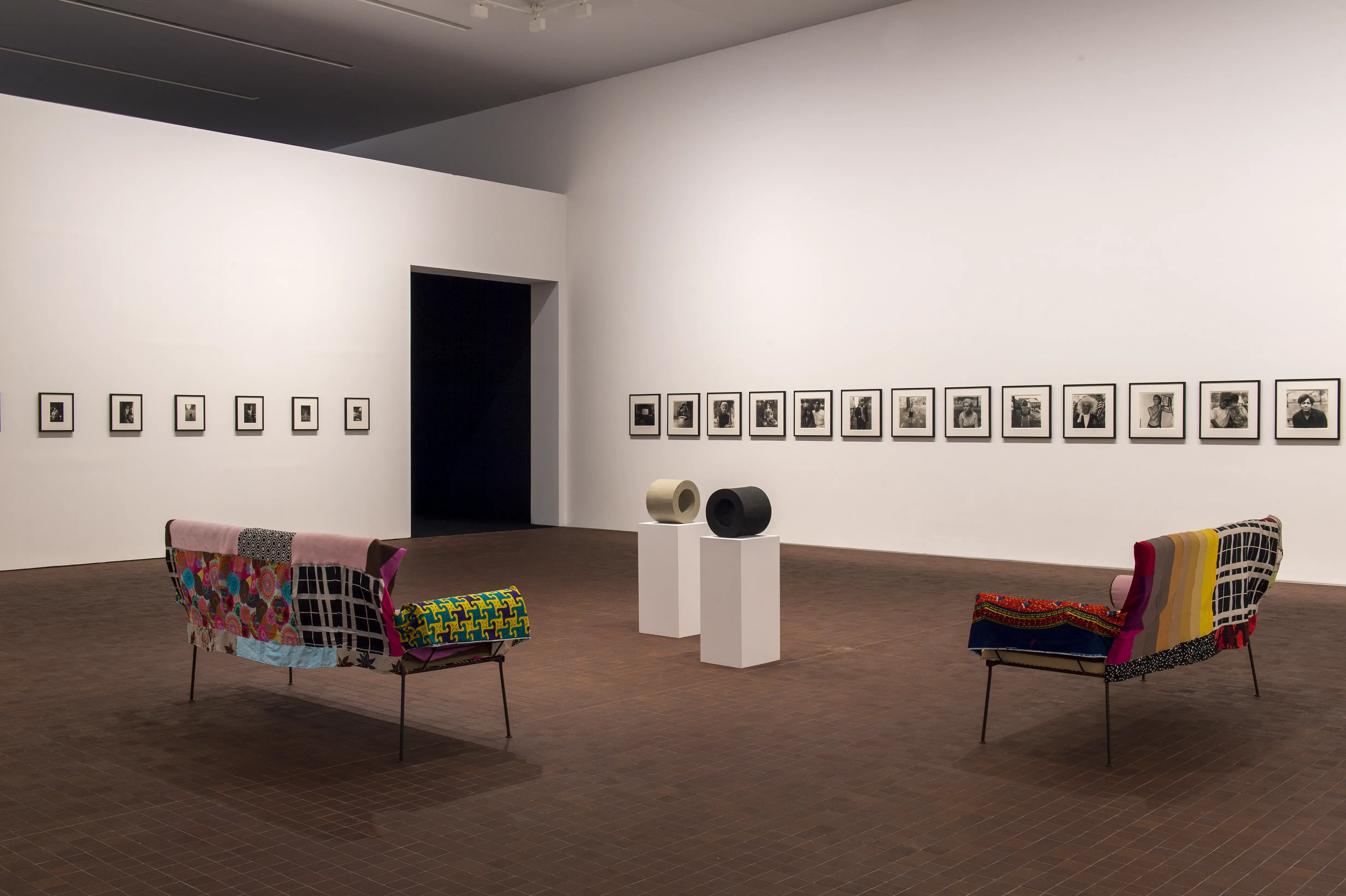
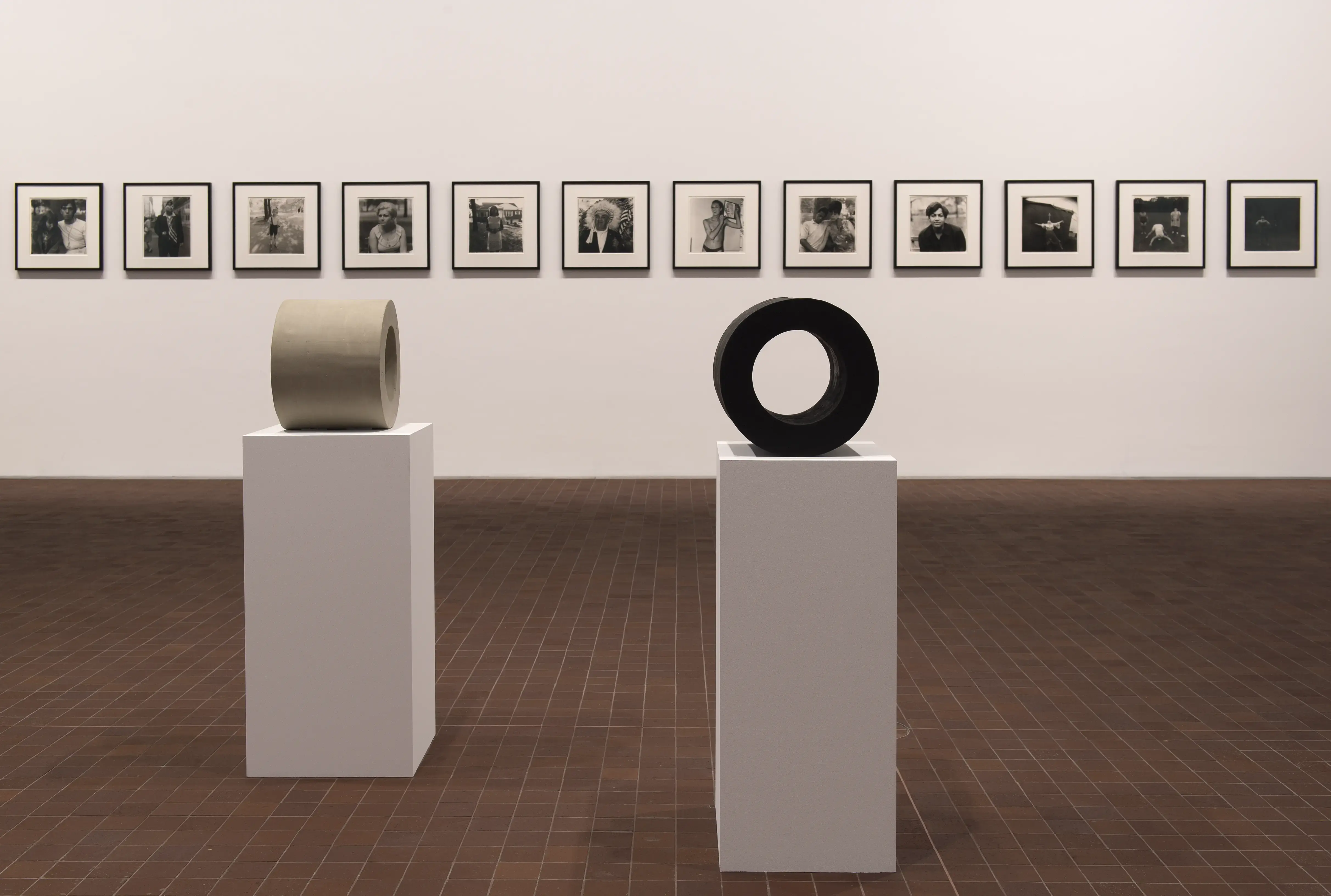
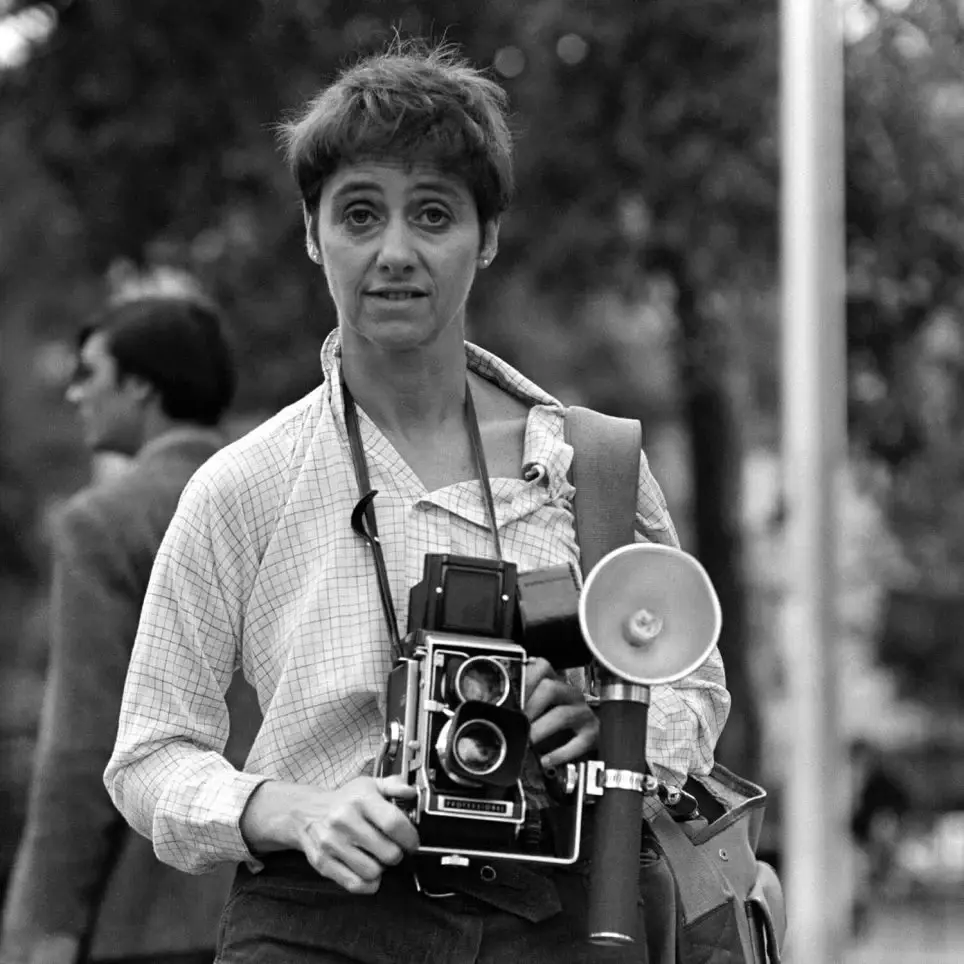
Diane Arbus is one of the most original and influential photographers of the twentieth century. She studied photography with Berenice Abbott, Alexey Brodovitch, and Lisette Model and had her first published photographs appear in Esquire in 1960. In 1963 and 1966 she was awarded John Simon Guggenheim Fellowships and was one of three photographers whose work was the focus of New Documents, John Szarkowski’s landmark exhibition at The Museum of Modern Art in 1967. Arbus’s depictions of couples, children, female impersonators, nudists, New York City pedestrians, suburban families, circus performers, and celebrities, among others, span the breadth of the postwar American social sphere and constitute a diverse and singularly compelling portrait of humanity. A year after her death, her work was selected for inclusion in the Venice Biennale, the first time any photographer had been so honored.
In the ensuing fifty years, major traveling museum retrospectives have been mounted by the Museum of Modern Art in New York (1972), the San Francisco Museum of Modern Art (2003), the Jeu de Paume, Paris (2011) The Metropolitan Museum of Art, New York (2016), and the Art Gallery of Ontario (2020).
Books devoted to her work include: Diane Arbus: An Aperture Monograph (1972), Magazine Work(1984), Untitled (1995), Revelations (2003), The Libraries (2004), A Chronology (2011), Silent Dialogues(2015), In the Beginning (2016), A Box of Ten Photographs (2018), and Documents (2022).
In addition to the museums mentioned above, significant collections of her work can be found in numerous institutions throughout the world. The Bibliothèque Nationale de France was an early collector, and the Centre Pompidou followed.
/Alighiero_Boetti_(conceptual_artist).jpg)
Alighiero Boetti
Alighiero Boetti was born in Turin, Italy in 1940. Although not formally trained in art, Boetti was preoccupied with the theory of creativity from an early age. Traveling to Afghanistan at the beginning of the 1970s, he was introduced to the traditional craft of embroidery, which marked a turning point in the artist's career. His fundamental concern with the relationship between "order" and "disorder" is manifest in his grid structures, derived from the "magical squares," that feature sayings and aphorisms that stem from cultural, philosophical, mathematical and linguistic contexts.
Having shown in Milan and Turin, Boetti had his first US solo exhibition in New York at John Weber Gallery in 1973. He continued to show throughout Italy and the United States until his premature death in 1994.
He has been honored post-humously with several large-scale exhibitions, most notably at the Museum für Moderne Kunst in Vienna in 1997 and the Museum für Moderne Kunst in Frankfurt am Main in 1998. The 2001 exhibition with Gagosian Gallery was organized in conjunction with the Archivo Boetti in Rome, their first collaboration with a commercial gallery, and is accompanied by a fully illustrated catalogue.
/72dpiKonzeptkuenstler_Han_78257566.jpg)
Hans-Peter Feldmann
/DSC_3441a-1600.jpg)
Urs Fischer
Urs Fischer mines the potential of materials—from clay, steel, and paint to food, dirt, and produce—to create works that disorient and bewilder. Through scale distortions, illusion, and the juxtaposition of common objects, his sculptures, paintings, photographs, and large-scale installations explore themes of perception and representation while maintaining a witty irreverence and mordant humor.
Fischer began his artistic career studying photography at the Schule für Gestaltung in Zurich. He later lived in London and Los Angeles, and shared a studio with Rudolf Stingel in both Berlin and New York. Themes of absence and presence, as well as the processes of art production, pervade his work, in which Fischer makes use of tables, chairs, shadows, and light to explore distortion and anthropomorphism. In Stuhl mit (1995–2001), bulbous, fabric-covered legs merge with a wooden chair, and in Studies for chairs for individual seating positions (1993), the absence of a human body is suggested by a sawdust and rubber mold draped over the furniture. Food is also a major element in Fischer’s work. Rotting, melting, and crumbling, and placed in juxtaposition with permanent materials like metal, bricks, and mortar, it serves as a memento mori; Rotten Foundation (1998) comprises a brick structure built on a foundation of rotting produce; Untitled (Bread House) (2004–05), a Swiss chalet constructed entirely of loaves of bread, was left to be eaten by parakeets; and in the Problem Paintings (2011–), portraits mounted on aluminum panels are obscured by images of eggs, peppers, and kiwis, as well as twisted bolts and half-smoked cigarettes.
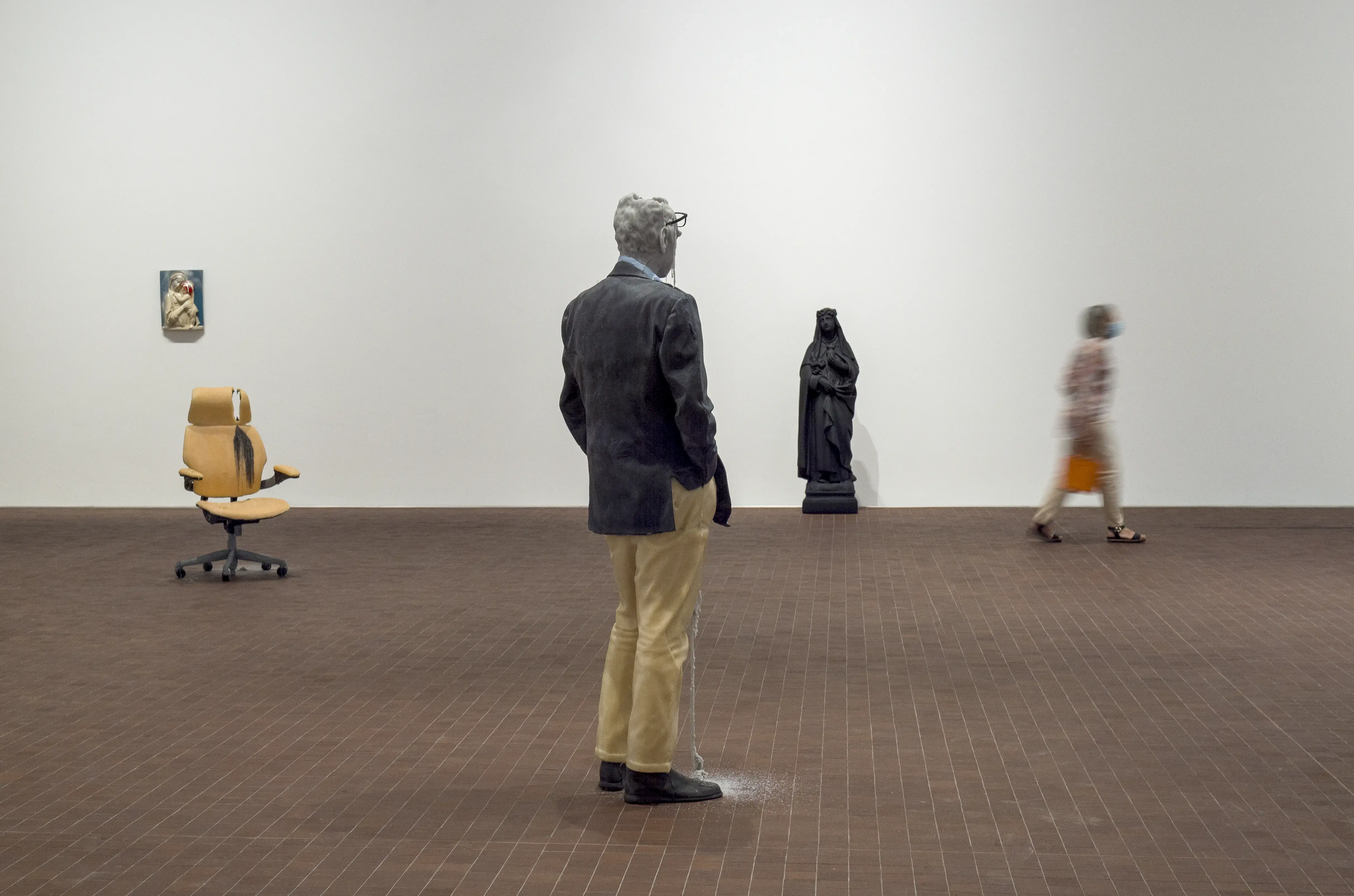
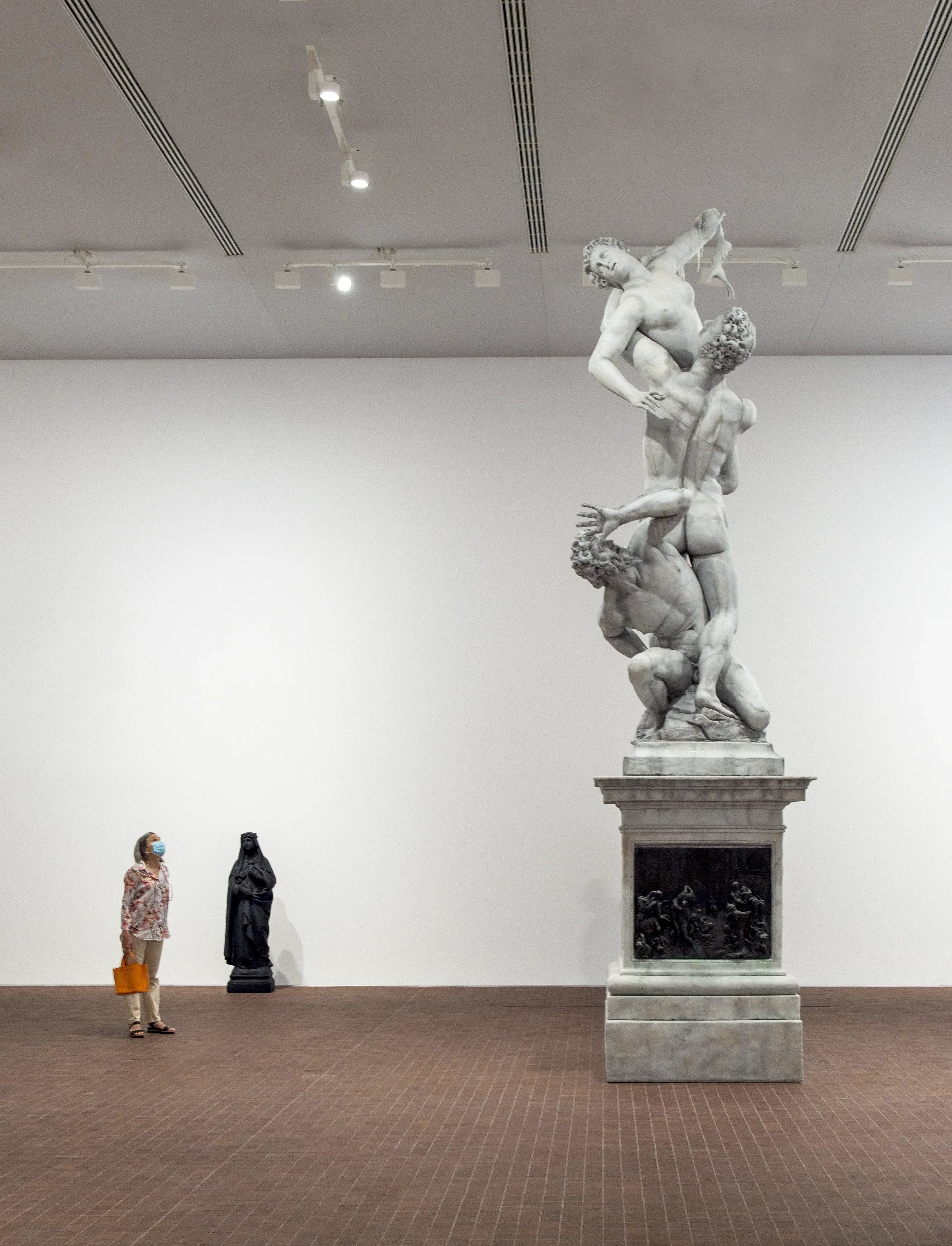
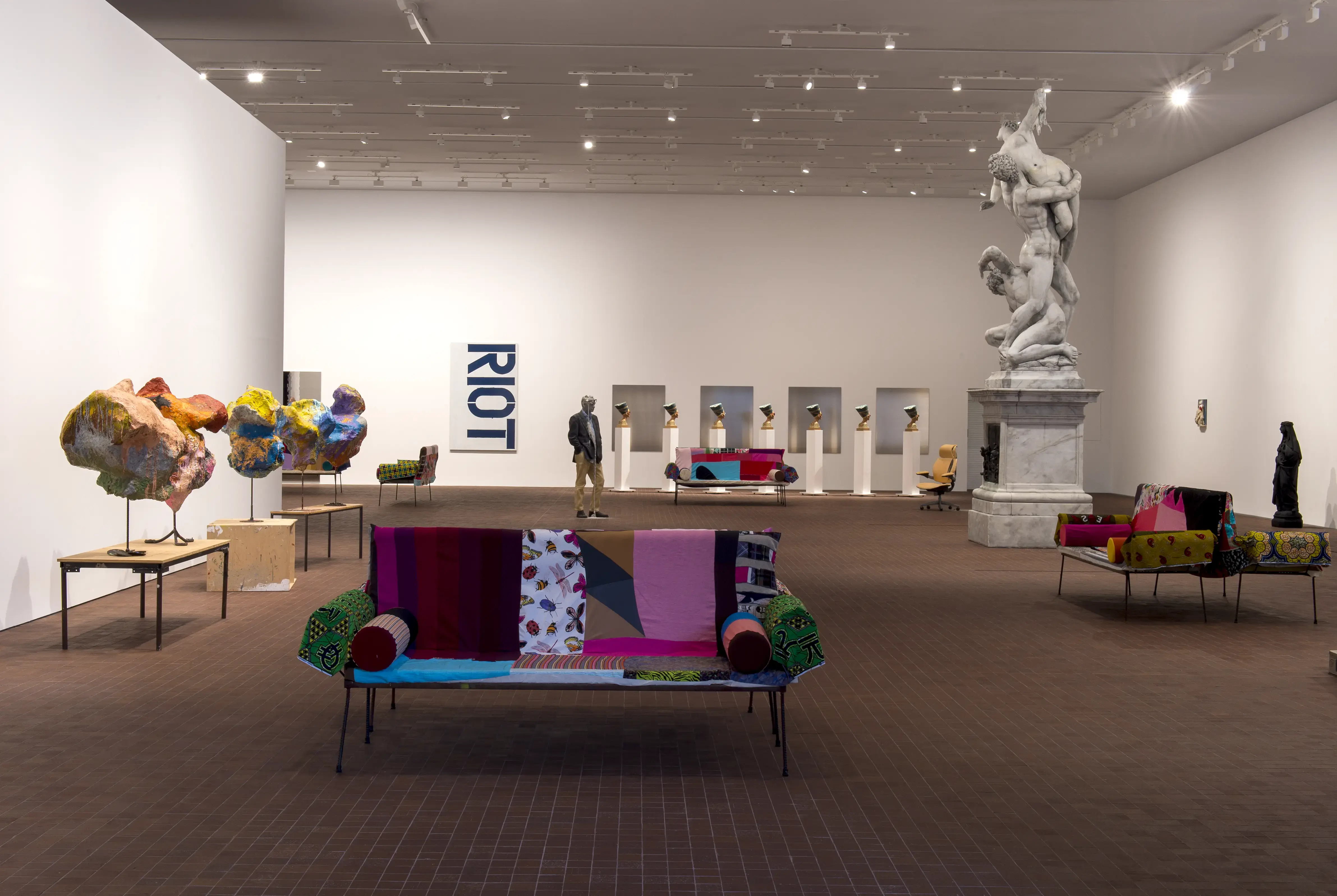
In 2009 Fischer had his first large-scale solo presentation in an American museum, at New York’s New Museum; the exhibition featured a series of immersive installations and hallucinatory environments including cityscapes and mirrored labyrinths. At the Venice Biennale in 2011, his wax copy of Giambologna’s late-sixteenth-century sculpture Rape of the Sabine Women slowly melted, looming over another candle depicting an ordinary man wearing glasses and a sport coat. The candle works, which Fischer has produced since 2001, attest to his mastery of entropy, as well as his simultaneous incorporation and rejection of tradition.
Fischer had his first solo show with Gagosian in 2012. The following year for his exhibition Yes at the Geffen Contemporary at MOCA Los Angeles, 1,400 volunteers produced unfired clay sculptures in the weeks leading up to the exhibition. As soon as Fischer has accomplished one material feat, he embarks on another, in ways that are complicated and playful, messy and perfected.
/Bild_08.09.25_um_14.21%20(1).webp)
Katharina Fritsch
/ Rat-King (1991–93) is a circle of two dozen gigantic rats, each nearly ten feet tall, with their tails tied in a massive knot at the center. Art historian Jean-Pierre Criqui has said of Fritsch’s animal sculptures, “The way the artist uses them, but also the situations in which she places them, gives them ambiguous powers at the intersection of several tendencies: humanity’s ancestral fears and superstitions, as expressed, for example, in tales and legends; the intensities of totemic thought and of its images; and the uncanny and Freudian dream study.” Typically each work is molded by hand, then cast in plaster, reworked, and then cast again in polyester. The polyester form is finished with a matte paint, which absorbs light, giving the sculpture’s surface a disorienting immaterial quality. “My sculptures can never be totally grasped, like a picture that has something unresolved about it,” Fritsch has explained. “They stay in your head like an enigma. That’s how life seems to me and that’s how I depict it.”
/7c16dbdc-1113-4806-9483-1c4bf64222e6.webp)
Mike Kelley
/Isa%20Genzken.jpg)
Isa Genzken
Inspired by the stark severity of modernist architecture and the chaotic energy of the city, Genzken’s work is continuously looking around itself, translating into three-dimensional form the way that art, architecture, design and media affects the experience of urban life, and the divides between public and private. There is an intuitive and consistent manner to Genzken’s work, not only in dramatising aspects of space and scale for the audience, but in creating new dialogues and contact with surfaces of material. The socio-political content is evident and central to her work. In 2017, Genzken was awarded the prestigious Goslarer Kaiserring (or Emperor’s Ring) by the city of Goslar, Germany.
Arthur Jafa
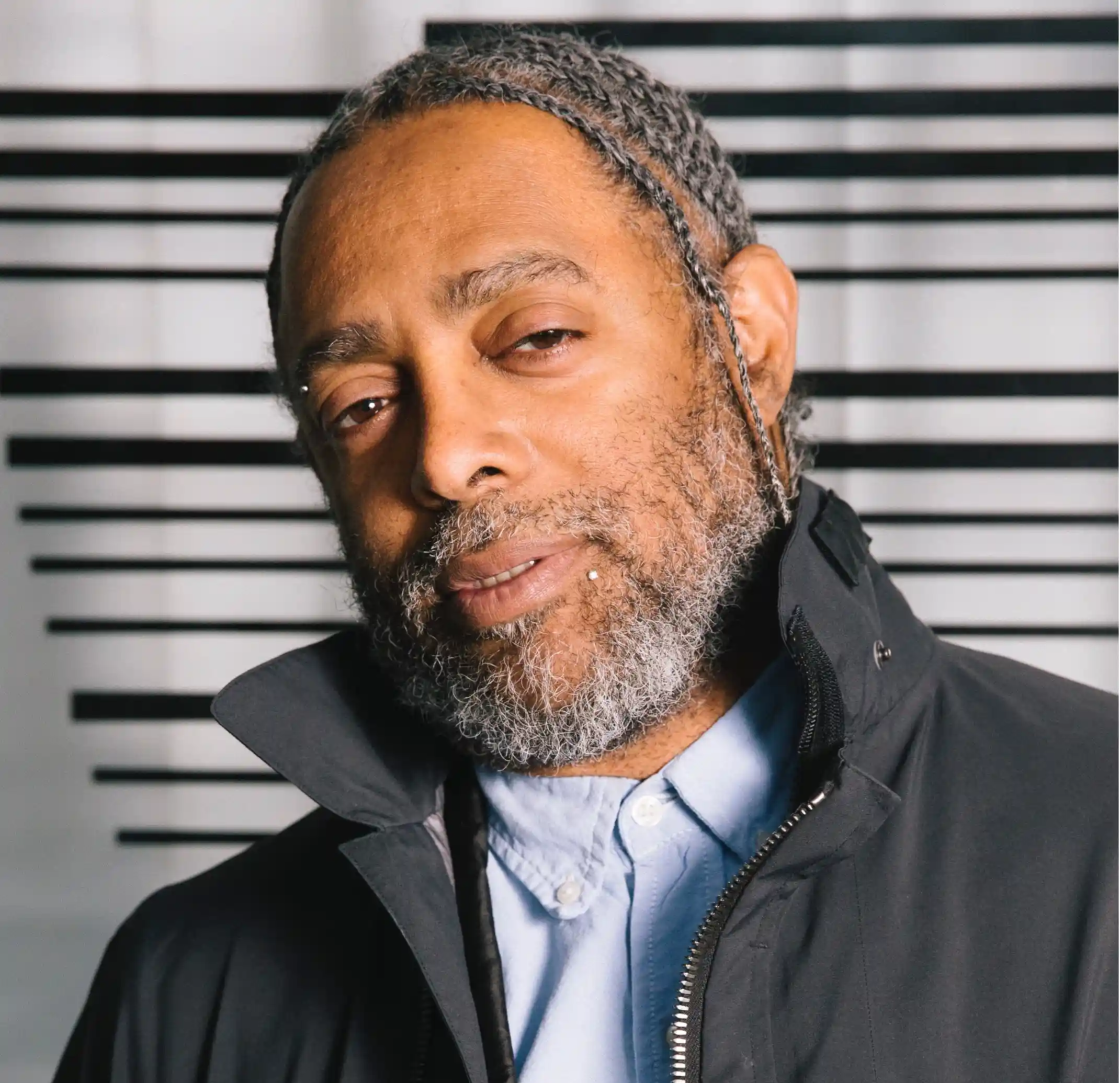
Arthur Jafa (b. 1960, Tupelo, Mississippi) is an artist, filmmaker and cinematographer. Across three decades, Jafa has developed a dynamic practice comprising films, artefacts and happenings that reference and question the universal and specific articulations of Black being. Underscoring the many facets of Jafa’s practice is a recurring question: how can visual media, such as objects, static and moving images, transmit the equivalent "power, beauty and alienation" embedded within forms of Black music in US culture?
Jafa’s films have garnered acclaim at the Los Angeles, New York and Black Star Film Festivals and his artwork is represented in celebrated collections world- wide including The Metropolitan Museum of Art, The Museum of Modern Art, The Tate, The San Francisco Museum of Modern Art, The Studio Museum in Harlem, The High Museum Atlanta, The Dallas Museum of Art, The Museum of Contemporary Art in Chicago, Stedelijk, LUMA Foundation, The Perez Art Museum Miami, Los Angeles Museum of Contemporary Art, The Hirshhorn Museum and Sculpture Garden; and the Smithsonian American Art Museum, among others.
Jafa has recent and forthcoming solo exhibitions of his work at the Pérez Art Museum Miami; the Berkeley Art Museum and Pacific Film Archives; Galerie Rudolfinum, Prague; Moderna Museet, Stockholm; and the Louisiana Museum of Art, Denmark. In 2019, he received the Golden Lion for the Best Participant of the 58th Venice Biennale “May You Live in Interesting Times.”
Paul McCarthy
/face.jpg)
Michelangelo Pistoletto
/58087F2FB78AE58E27850A970C61796E.webp)
Rirkrit Tiravanija
/ptwestfranz_in01.jpg)
Franz West
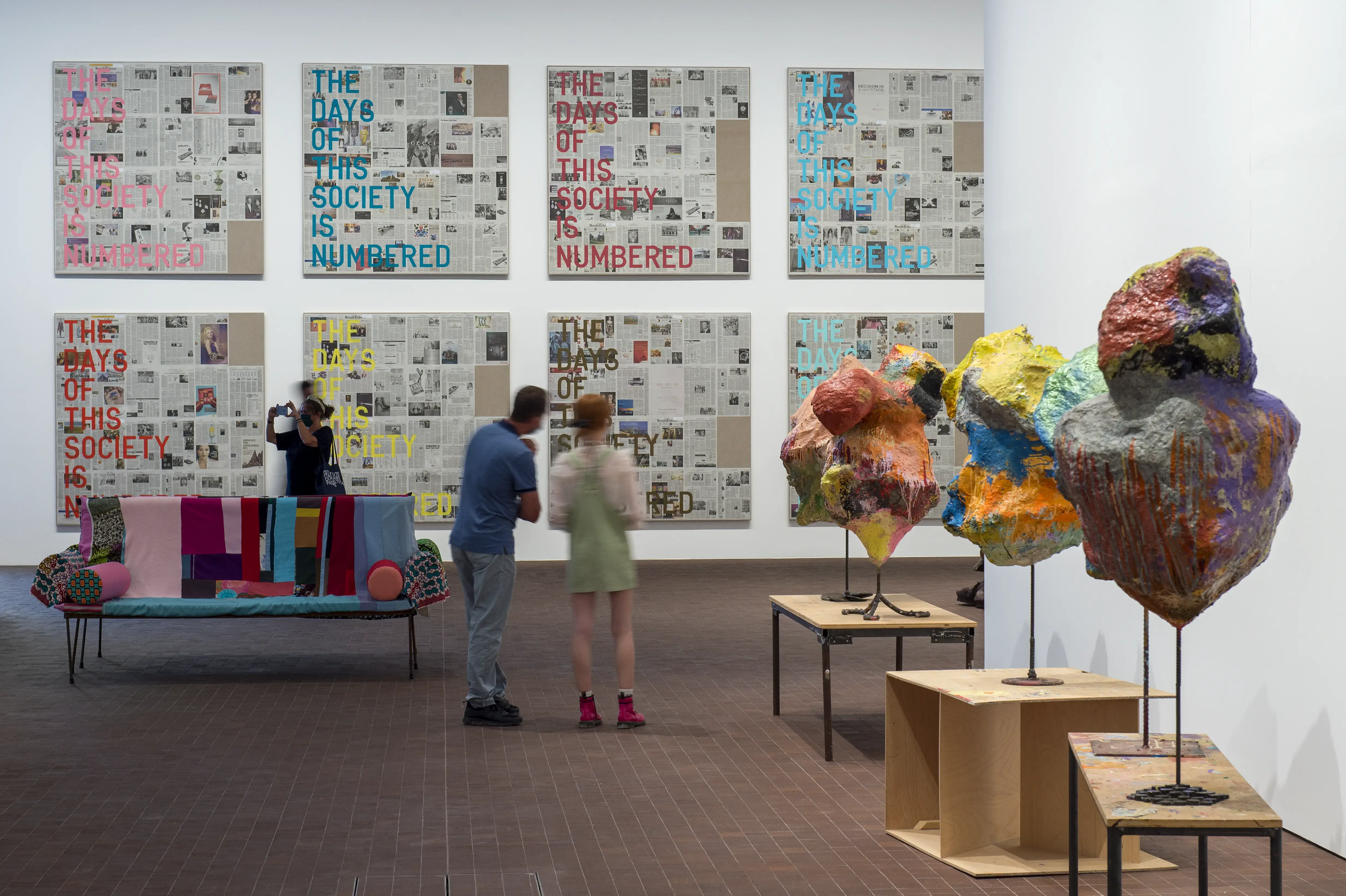
A major figure of the Viennese art scene, Franz West developed a sculptural and installation-based practice from the early 1970s onward that challenges the boundaries between everyday functional objects and works of art. Chairs, tables, armchairs, sofas, beds, carpets, and even upholstery fabrics become, in turn, vehicles for a critical, provocative, and often deliberately irreverent reflection on the nature and scope of the artistic gesture.
Influenced by performance art and Viennese Actionism, West took an early interest in the role of the body in art and argued for a radical merging of art and life. Beginning in the 1970s, he created portable papier-mâché sculptures known as Paßstücke (Adaptives), inviting the public to interact with them and to perform.
Playful in spirit, his works challenge traditional frameworks of art. By the late 1980s, Franz West was creating installations that sit at the intersection of sculpture and furniture—objects designed to be used, altered, and activated by the public. Everyday objects and furnishings thus became a central motif in his work.