
Art and Anarchism: Equality between dispute and misunderstanding
- Conference
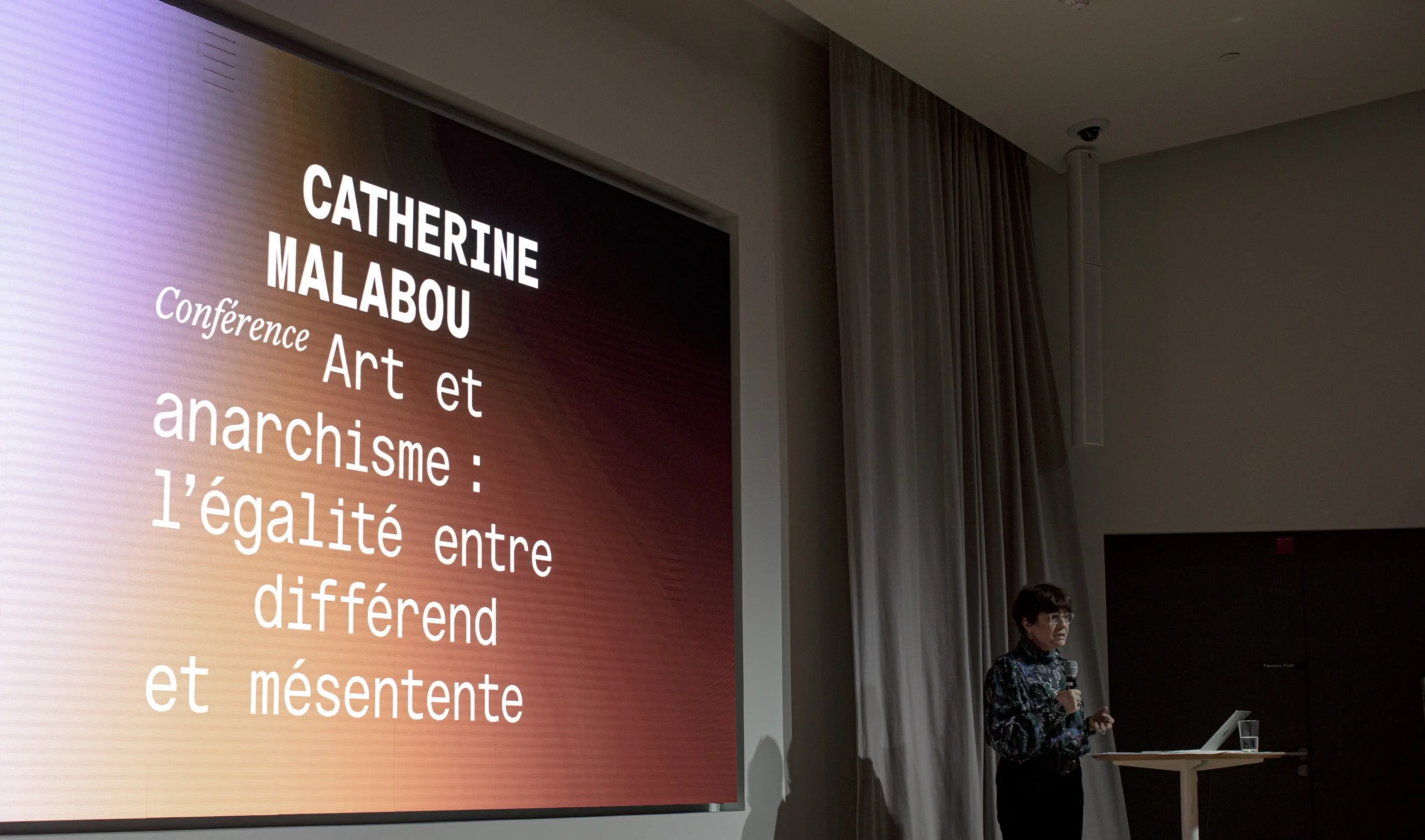
Her new book, Au Voleur! Anarchism and Philosophy [Thief! Anarchism and Philosophy] (University Press of France, PUF), questions the reasons why major figures in philosophy have ignored the notion of anarchism, even though many of their concepts are inspired by it.
According to Malabou, ‘…An outstanding debate on the relationship between art and philosophy in recent decades can be epitomized by the debate between Jean-François Lyotard and Jacques Rancière on the question of the political role of art. For Lyotard, it is paradoxically in the unpresentable that the political dissent manifests itself […]. Therefore, equality can neither be represented nor materialize. Rancière, on the contrary, affirms that experience itself unfolds through artistic forms. Art, as a displacement of political discord, allows to repair the social apparatus and to think of equality as a form of offerring to spectators the possibility of emerging on the political scene by emancipating themselves. Starting by this opposing argumentation, both Lyotard and Rancière arrive to the conclusion of a definition of art as an anarchist device. Where are we today?’
Practical Information
Art and Anarchism: Equality between dispute and misunderstanding
In this lecture, philosopher Catherine Malabou revisits one of the defining debates in contemporary philosophy on the political role of art: the disagreement between Jean-François Lyotard and Jacques Rancière.
Through their respective concepts of the différend and dissensus, Malabou examines two distinct ways of understanding the relationship between art, equality, and emancipation. While Lyotard locates the political in what resists representation, Rancière argues that aesthetic experience can make equality perceptible by opening up new forms of visibility and political subjectivity.
By revisiting these contrasting perspectives, Catherine Malabou explores the continuing relevance of art as a site of political transformation and asks what it means today to think of art as an anarchic force.