
Explore the full series of conference sessions from the event, available online.
Environmental History I
- Symposium |
- Environment
/Pages%20%C3%A9dito/LUMA%20M%C3%A9dias%20(%C3%A9dito)/Histoire%20Environnementale/JOANA%20LUZ_20190605_LUMA_PERFORMANCE%20KILUANJI_DSF2312Joana%20Luz.webp)
Credits
© Joana Luz
© Joana Luz
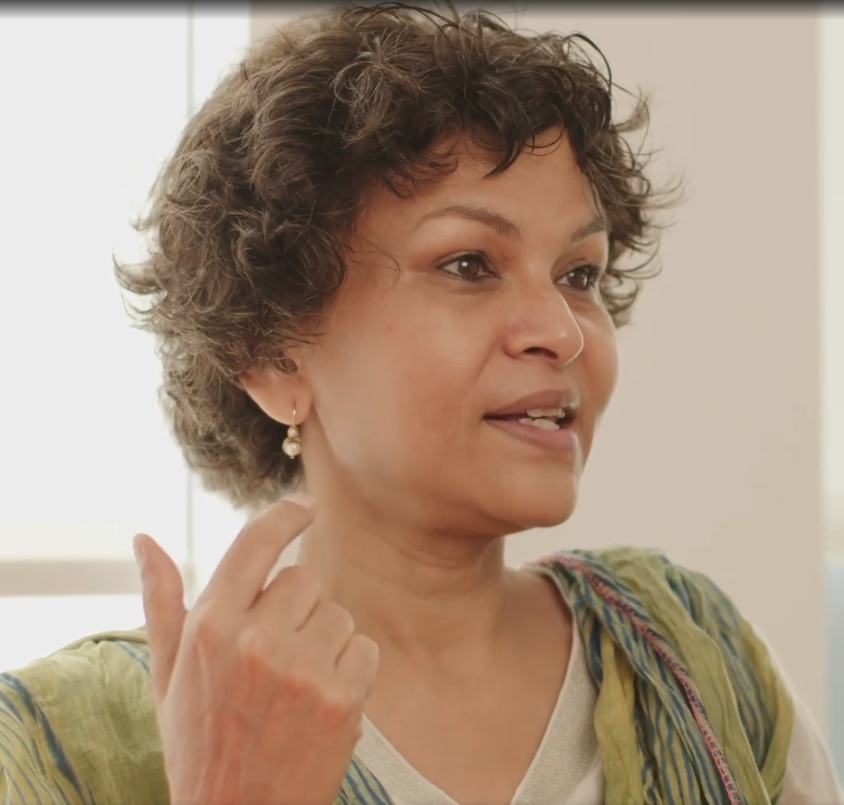
Amita Baviskar
Amita Baviskar is a Professor of Environmental Studies and Sociology & Anthropology at Ashoka University. Currently, she is working on food and changing agrarian environments in Central India and studying the social experience of air pollution and heat in Delhi.
/image15.jpg)
Catherine T. Dunlop
Catherine Tatiana Dunlop is an Associate Professor of History and the Director of Graduate Studies in History at Montana State University, Bozeman. Her current book manuscript focuses on the environmental and cultural history of the mistral wind in southern France. She currently serves as Editor of the Gallery (visual culture) section of the journal Environmental History.
/22-12_portrait%20Claire%20Dutrait-large.jpg)
Claire Dutrait
Claire Dutrait is an Author, Co-Founder of the collective Urbain, trop urbain, and a Doctoral student in Practice and Theory of Literary and Artistic Creation (Centre interdisciplinaire d'étude des littératures d'Aix-Marseille, ED354). Her research and writing focus on polluted territories and the narratives that run through them.
/DSC_2714.jpg)
Steve Hagimont
Steve Hagimont works on the history of past relationships with nature and its symbolic and material transformation. He focuses his studies primarily on tourism and nature conservation and is interested in the critique of science.
/Saodat%20Ismailovat%20C-anvarrakishev.jpeg)
Saodat Ismailova
Saodat Ismailova is a filmmaker and artist from Uzbekistan who came of age in the post-Soviet era and has established her artistic career between Paris and Tashkent. Interweaving rituals and dreams within the tapestry of everyday life, her films investigate the historically complex and multilayered culture of Central Asia. She graduated from Tashkent’s State Institute of Arts and Culture and Le Fresnoy, National Studio for Contemporary Arts in Tourcoing. In 2021, she founded the DAVRA research collective in Central Asia.
She has had solo exhibitions at Swiss Institute (2026), Pirelli HangarBicocca in Milan (2024–2025), Eye Filmmuseum in Amsterdam (2023), Le Fresnoy in Tourcoing (2023), and Centre for Contemporary Arts Tashkent (2019). Her work has been presented in numerous collective exhibitions, including the Bourse de Commerce, Pinault Collection (2026), the Fondation Pernod Ricard (2025), Venice Biennale (2013, 2022), documenta fifteen (2022), and major international film festivals. In 2022, she received the Eye Art & Film Prize, Amsterdam, and the Art Basel Gold Award in 2025.
/89a93ee_178151-3265242.avif)
Lucile Leclair
Journalist and author, Lucile Leclair is an expert on agriculture and food issues. She has written three books published by Editions du Seuil and collaborated with Le Monde diplomatique. She teaches at the École supérieure de journalisme (ESJ) in Lille.
/sebastienmarot-1500x.jpg)
Sébastien Marot
Sébastien Marot holds a Master of Philosophy, a PhD in History and an Accreditation to supervise research in environmental history. Between 1986 and 2002, he was a general delegate of the French Society of Architects in Paris, and launched the journal Le Visiteur (1994-2003).
/mauch_christof_01_c_Martin_Hangen_2021_web%20(Urheberbild%20Web)_800x800.jpg)
Christof Mauch
Christof Mauch is Director of the Rachel Carson Center for Environment and Society and chair in American Culture and Transatlantic Relations at LMU Munich. He is also an affiliated professor in the History Faculty of LMU Munich and an honorary professor and honorary fellow at the Center for Ecological History at Renmin University in China. He is one of the leading figures in the field, with over 100 presentations in over 25 countries, with specialization in China, US and Germany. His publications include “Slow Hope, in Aeon” March 11, 2020 and (in German) “Paradise Blues: Travels through American Environmental History” (2022).
/Samaneh-Moafi-event.png)
Samaneh Moafi
Dr. Samaneh Moafi is the Senior Researcher at Forensic Architecture, a multidisciplinary team based at Goldsmiths, University of London. She earned her PhD from the Architectural Association School of Architecture (AA) with a dissertation on the contemporary history of state-initiated mass housing in Iran and the class identities and gender roles it informed.
/Morton_headshot_cropped.jpg)
Timothy Morton
Timothy Morton is Rita Shea Guffey Chair in English at Rice University and Director of the Cool America Foundation. They have collaborated with many artists including Laurie Anderson, Björk, Jennifer Walshe, Adam McKay, Jeff Bridges and Olafur Eliasson. Morton has written 20 books that have been translated into 13 languages as well as 300 essays on ecology and philosophy in all aspects of culture.
/V-Mure-768x1018.jpg)
Véronique Mure
Botanist and Tropical Agronomy Engineer. Her professional career has been primarily in the public sector, for the Pont du Gard site, the Occitanie Region, and the Nîmes-Métropole agglomeration.

Jenny Price
Jenny Price is the author of Stop Saving the Planet: An Environmentalist Manifesto. A Public Writer, Artist, and Historian, she works passionately on environmental justice, and is a Research Fellow at the Sam Fox School of Design & Visual Arts at Washington University-St. Louis.
/Portrait%20Gr%C3%A9gory%20Quenet.jpg)
Grégory Quenet
Grégory Quenet is one of the pioneers of environmental history and the environmental humanities in France. Since 2012, he has been a professor of environmental history at the University of Versailles Saint-Quentin-en-Yvelines (Paris-Saclay). Founder of the French portal for environmental humanities, he organized the eighth European Society for Environmental History Conference in Versailles in 2015. Since its creation in 2024, he has been codirector of the Environmental Humanities research department at the Collège des Bernardins, where he held the Laudato si’: For a New Exploration of the Earth chair from 2021 to 2023. His latest book, Histoire de la pensée écologique (History of Ecological Thought), was published by PUF in May 2025. Since 2021, he has served as a scientific advisor for the Environmental History program at LUMA Arles.
/73.jpg)
Mahesh Rangarajan
Mahesh Rangarajan is Professor of Environmental Studies and History. He served as corresponding editor of Environment and History (1996-2000), and was also on the editorial board of Conservation and Society (2003-2009). He is the author of Nature and Nation (2015), Nature Without Borders (2014), and India’s Wildlife History (2001). Furthermore, he co-edited People, Parks and Wildlife: Towards Coexistence (2000).
/medium_XXM8V6U_ROGARD_Lo%C3%AFc.png)
Loïc Rogard
Loïc Rogard is a research associate at Atelier 21, a think-do-tank led by designer and artist Cédric Carles. He works with Atelier 21 to develop Paléo-énergétique, a participatory research initiative based on crowdsourcing. The project aims to identify, share, and highlight past and present energy practices in order to inspire the world of tomorrow.
/20221019_1_2_7_1_1_obj26992156_1.jpg.avif)
Estelle Rouquette
Estelle Rouquette is a Doctor of Art History and Archeology. As Assistant Director of the Camargue Regional Nature Park, she organizes cultural projects, heritage, architecture, landscape, energy, and environmental education and awareness. She is also the Director of the Camargue Museum.
/image_50441217-1536x1153.jpg)
Lise Sedrez
Lise Sedrez is Associate Professor in History of the Americas at the Universidade Federal do Rio de Janeiro and a CNPQ researcher. She created the Online Bibliography on Latin America Environmental History in 1999. She is also a founding member of the Sociedad Latino-Americana y Caribeña de Historia Ambiental, and a Rachel Carson Center Fellow-Landhaus 2022.
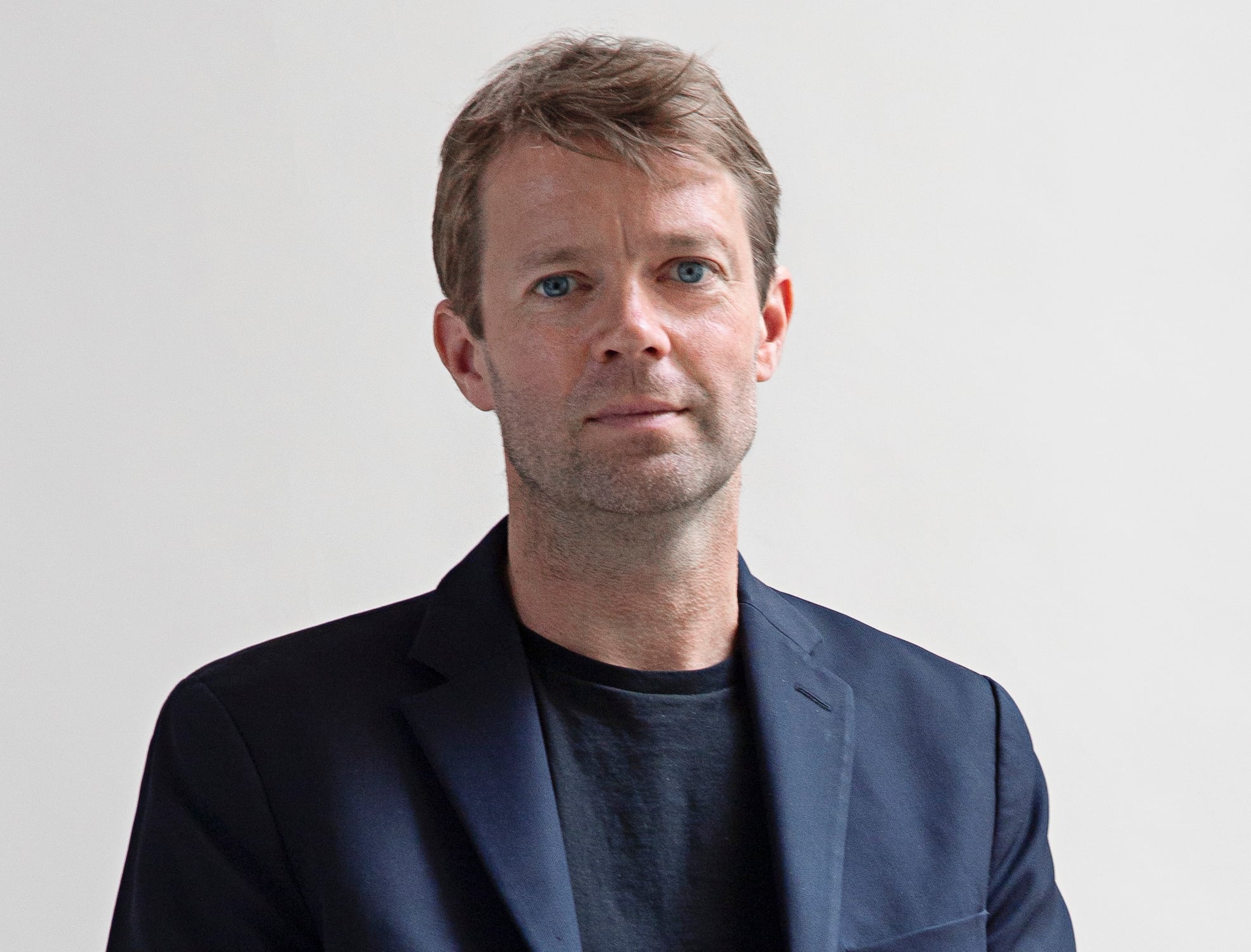
Bas Smets
Bas Smets, born in 1975 in Belgium, is a landscape architect with a multidisciplinary background that has shaped his unique approach to creating innovative and sustainable urban spaces. He founded his firm in 2007 in Brussels which has since built over 50 international projects, including the LUMA Parc des Ateliers in Arles, the Thurn & Taxis Park in Brussels, the Sunken Garden in London, and the Himara Waterfront in Albania. In 2022, Smets won the prestigious international competition to redesign the public space surrounding Notre-Dame Cathedral in Paris.
Smets' approach is characterized by his concept of "Augmented Landscapes," which utilizes natural processes to create new microclimates. He often collaborates with artists and scientists, reflecting his commitment to interdisciplinary innovation.
2023, Smets was appointed Professor in Practice at the Graduate School of Design of Harvard University, where he continues to explore inventive ways to transform urban environments into ecological systems capable of mitigating climate change. His visionary approach to landscape architecture offers a promising path forward for making cities more resilient to the challenges of the climate crisis.

Mark D. Spence
Mark Spence’s scholarship involves work in environmental history, Indigenous histories, the history of the American West and national parks history. His first book, *Dispossessing the Wilderness,* and the articles that precede it created many debates within the National Park Service.
/20190131_132646-768x1014.jpg)
Jan Synowiecki
Jan Synowiecki is a Lecturer in Modern History at the University of Caen, Normandy. He is a Specialist in Modern Environmental History and is currently working on an Environmental History of French North America.
/Pages%20%C3%A9dito/LUMA%20M%C3%A9dias%20(%C3%A9dito)/Histoire%20Environnementale/EH_2025_1920_1280.webp)
/Pages%20%C3%A9dito/LUMA%20M%C3%A9dias%20(%C3%A9dito)/Histoire%20Environnementale/A3_300DPI3.webp)
/Pages%20%C3%A9dito/LUMA%20M%C3%A9dias%20(%C3%A9dito)/Histoire%20Environnementale/LUMA_1920_1280_72DPI.webp)