Open |
Open from
Closed today
Ticketing
My selection

Nightlife

  • Video installation
  • |
  • Visual art
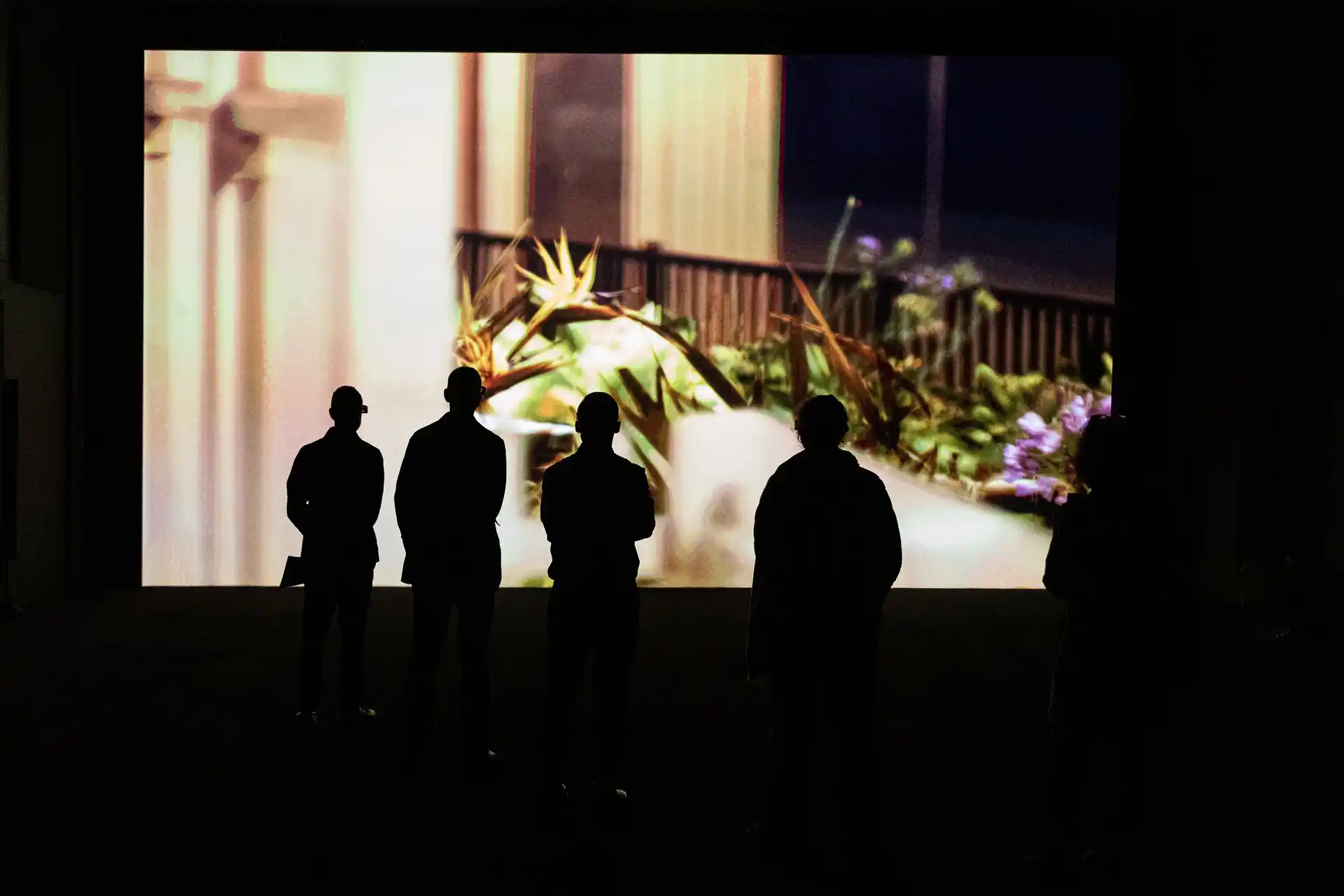
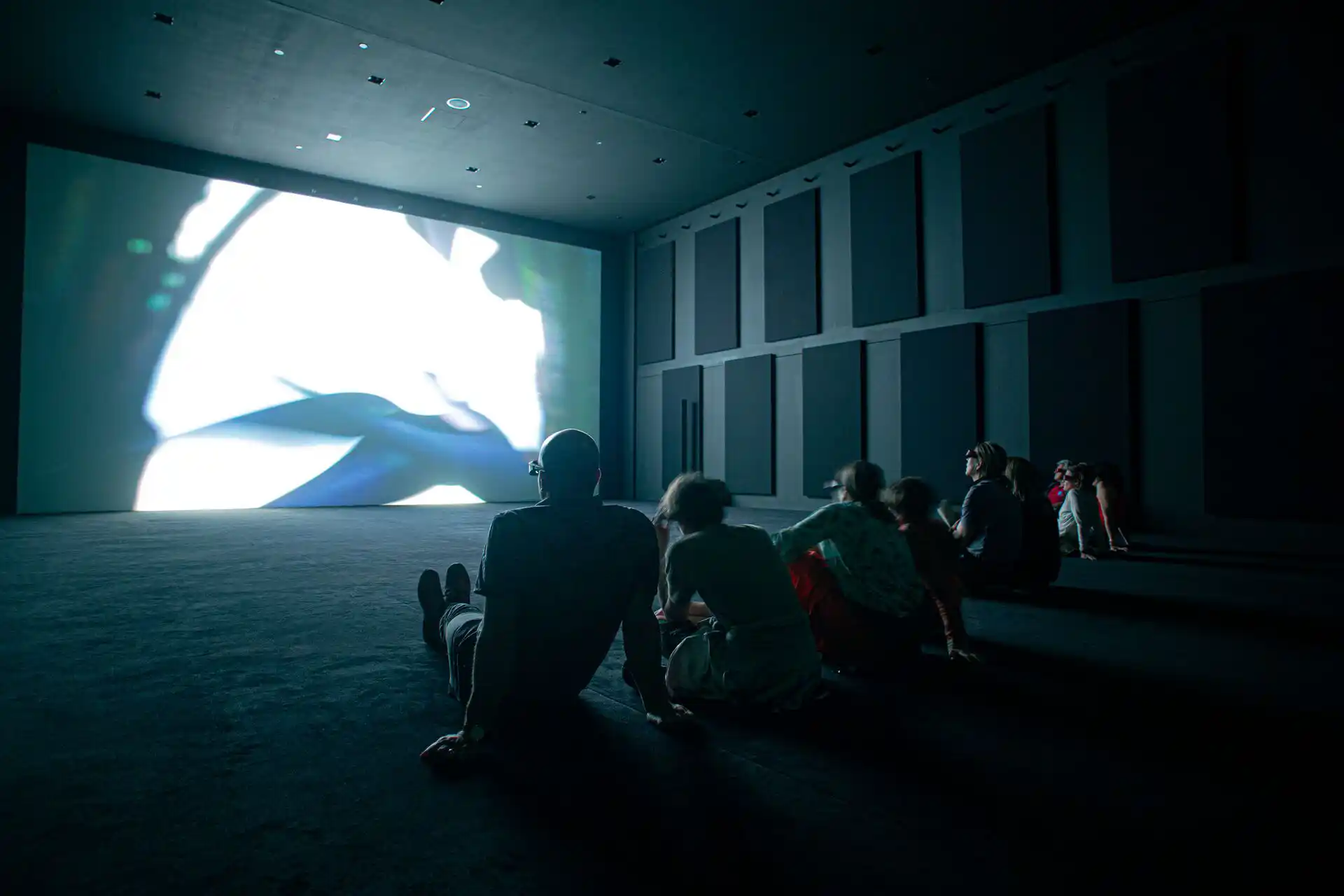
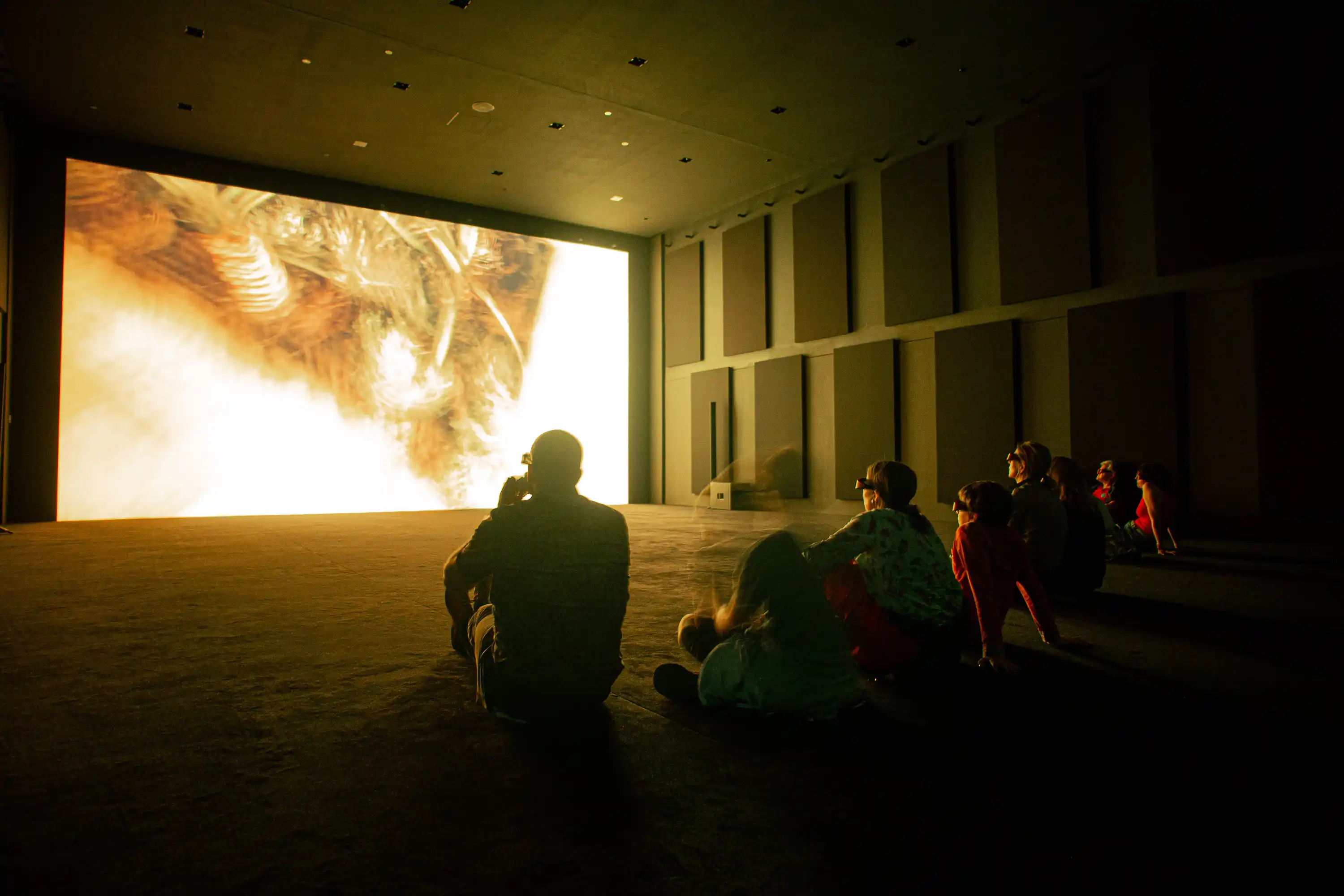
Nightlife is a 3D film shot entirely at night and over a period of two years on locations in Cleveland, Los Angeles and Berlin. The narrative examines the legacies of revolution, political resistance and resilience through the relics and ruins of modern history. Beginning with images of Rodin’s sculpture of The Thinker, which was partially destroyed during an attack that was undertaken by a radical political group against American military action in Vietnam, the film then continues with powerful images of lush vegetation from Los Angeles, of non-native plants moving in the wind. The plants depicted were brought to the city from different parts of the world for the 1932 Olympic Games. Soon after, the image moves to an aerial view of a firework display over the Olympic Stadium in Berlin, site of the 1936 Olympic Games, organized under Germany’s Nazi regime before the Second World War. The composition ends with a shot of an oak tree, planted by U.S. track athlete Jesse Owens, who made history at the Games by winning four gold medals, thereby destroying the myth of Aryan supremacy. The German Olympic Committee gave athletes an oak sapling for each gold medal they won. Owens came home with four of them. One of the trees was planted in Rhodes High School, Cleveland, where he trained.

The merging of sociopolitical realities gives rise to a captivating visual narrative that unfolds into a song by Alton Ellis, one of the most significant voices in the history of Jamaican music. Two versions of the song “Black Man’s World” are played on a loop, with the refrain “I was born a loser” changing into the declaration “I was born a winner.” In addressing the ways history is constructed through mythologies, nature and political processes, the work is powerfully charged with a symbolism of power, strength and fragility of forms and ideas. It consequently becomes a metaphor for the failings of society but also a testament to resistance and rebirth.
Cyprien Gaillard - LUMA Arles - ©Adrian Deweerdt
Credits
© Adrian Deweerdt

Inside Cyprien Gaillard's Exhibition
Cyprien Gaillard - LUMA Arles - ©Victor&Simon - Joana Luz-1
Credits

© Victor & Simon /Joana Luz

Cyprien Gaillard - LUMA Arles - ©Victor&Simon - Joana Luz
Credits

© Victor & Simon /Joana Luz

Cyprien-Gaillard

Cyprien Gaillard

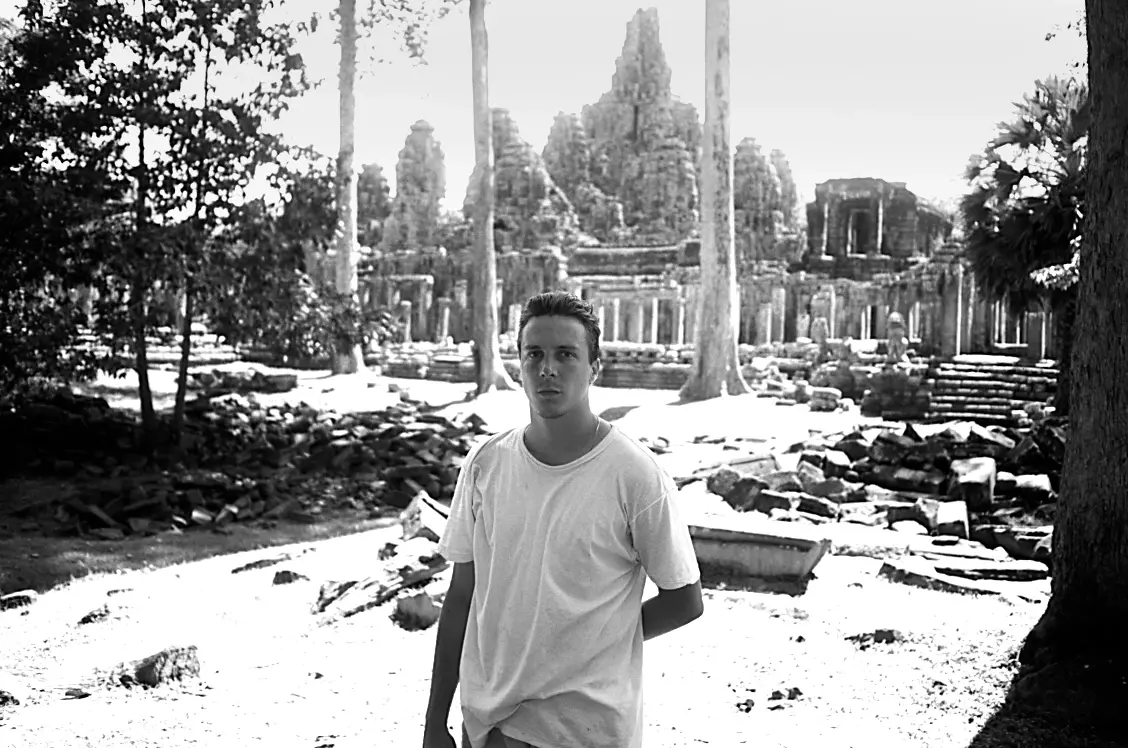
Cyprien Gaillard was born in Paris in 1980 and lives and works in Berlin. After spending his childhood in the United States, Cyprien Gaillard studied at the Ecole Cantonale des Arts in Lausanne. Winner of the Marcel Duchamp Prize in 2010, he is currently one of the most prominent young French artists. Reinterpreting Land Art by filming fire extinguishers pouring dry ice in rural landscapes, or recording destruction processes, his work compresses time and can be understood as an archaeology of the future in which the present is projected towards its entropy. His work, which reflects a trend described by the artist himself as “vandalism", takes the form of sculptures, videos, engravings, photographs and interventions in public spaces. It brings out contemporary socio-political realities and the innate beauty of their brutality.

 Recent solo exhibitions include “Reefs to Rigs,” Sprüth Magers Los Angeles, USA (2020); “Ocean II Ocean”, Tank Museum, Shanghai, China (2019); “Overburden”, Accelerator Konsthall, Stockholm, Sweden (2019); “Roots Canal”, Museum Tinguely, Basel, Switzerland (2019).