Summer Screenings
Accompanying its exhibition program, LUMA Arles is organizing a series of artists’ film screenings at the auditorium of The Tower.
These screenings are an invitation to delve deeper into the ways in which each artist approaches the medium of film, in resonance and conversation with their exhibitions at LUMA Arles.
Practical Information
Access guaranteed subject to availability.
Thursday, July 27
From 5:30 p.m.
LUMA Arles presents two evenings of screenings to echo the exhibitions at the Parc des Ateliers of Bouchra Khalili, Shahryar Nashat, Rachel Rose, and Sara Sadik.
At 5:30 p.m.
Artist: Sara Sadik
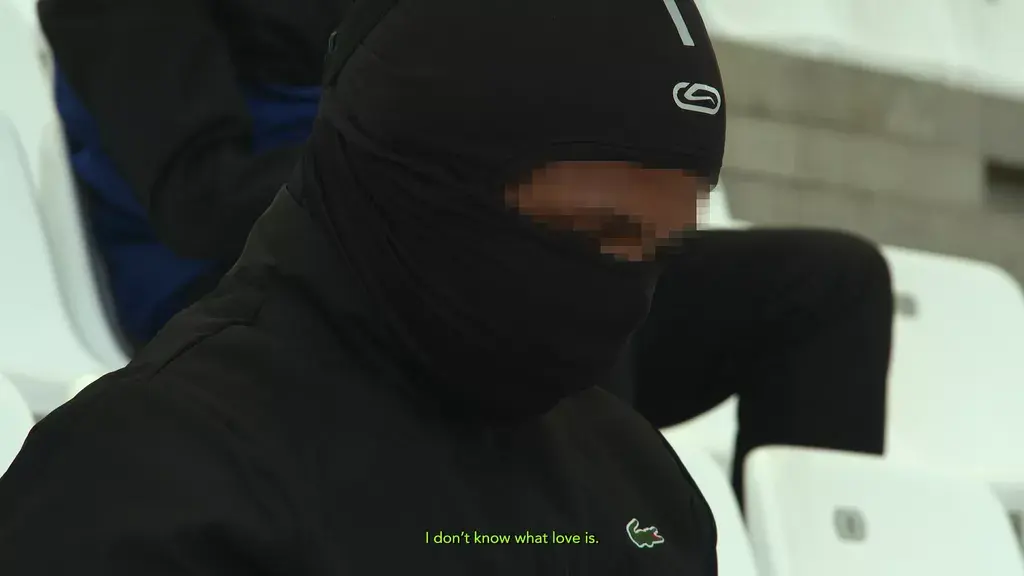
Carnalito Full Option
2020, 20', in French
Carnalito Full Option is the second phase of Hlel Academy, a four-part project exploring teenage interactions and displays of emotions. Hlel Academy is a fictive training center that welcomes those whom love has forgotten–heartbroken men between 16 and 20. Its academic program is based on emotional and sentimental rehabilitation with the goal of training the elite Hlels of tomorrow.

Carnalito Full Option, video, 2020, 20’. Video still.
Courtesy of the artist
At 5:55 p.m.
Artist: Sara Sadik
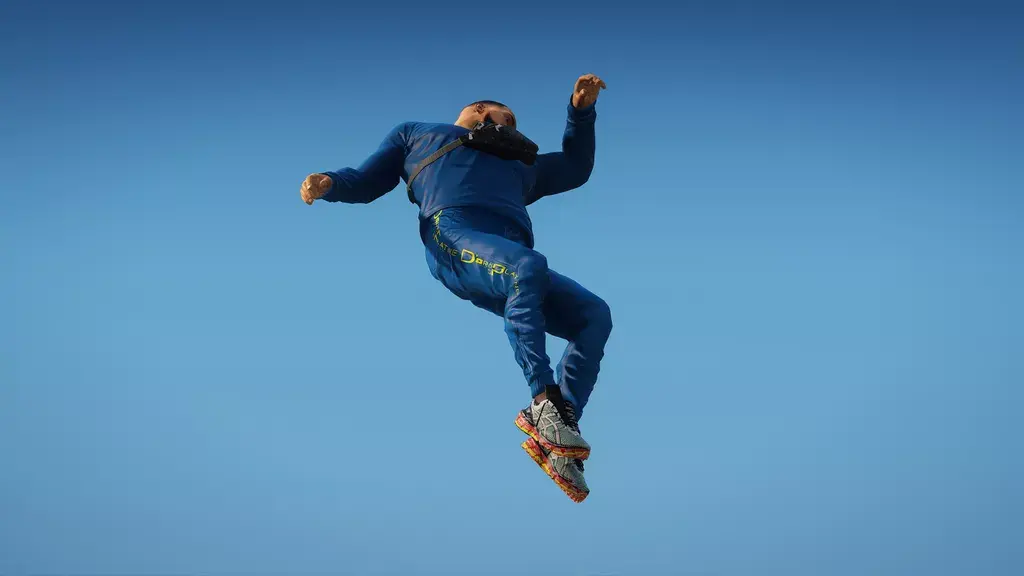
KHTOBTOGONE
2021, 16', in French
KHTOBTOGONE is the intimate portrait of Zine, a 20 years old man on a quest to become the best version of himself before asking for his girlfriend’s hand. KHTOBTOGONE depicts his daily life, love story and friendships as well as emotional roller-coasters, torments and inner demons he must continuously manage in order to regain self-confidence, self-love and self-esteem. KHTOBTOGONE is inspired by real-life stories and words of Ahmed Ra’ad Al Hamid and Brian Chiappetta.amid et de Brian Chiappetta.

KHTOBTOGONE, video, 2021, 16’. Video still.
Courtesy of the artist
At 6:15 p.m.
Artist: Rachel Rose
Enclosure
2019, 29', in English
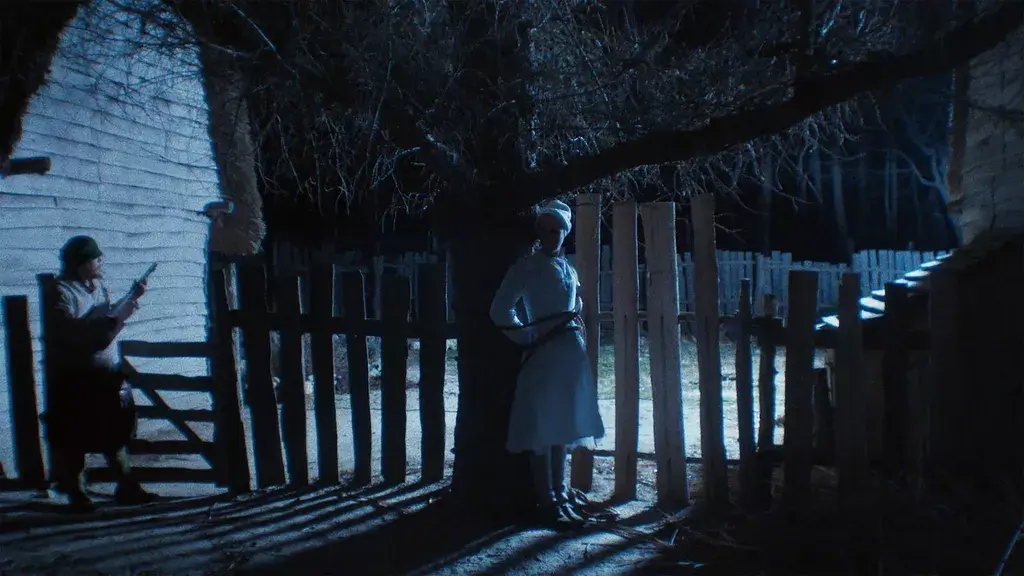
Originally co-commissioned by LUMA Arles and the Park Avenue Armory, Enclosure unfolds against the social and political backdrop of the Enclosure movement – the large-scale privatization of common land that transitioned England from a feudalist to a capitalist society, and from an unpolluted landscape to a dramatically industrialized one.
The film’s story follows an imagined cult-like clan of land grifters, called the Famlee, led by Jaccko, a hustler who swindles people into selling him deeds to their land.

Rachel Rose, still from Enclosure, 2019. HD video; 29'.
Courtesy of the artist, Gladstone Gallery, New York, Brussels, and Seoul, and Pilar Corrias Gallery, London.
At 6:50 p.m.
Artist: Rachel Rose
Wil-o-Wisp
2018, 10', in English
Originally co-commissioned by LUMA Arles and the Park Avenue Armory, Enclosure unfolds against the social and political backdrop of the Enclosure movement – the large-scale privatization of common land that transitioned England from a feudalist to a capitalist society, and from an unpolluted landscape to a dramatically industrialized one.
The film’s story follows an imagined cult-like clan of land grifters, called the Famlee, led by Jaccko, a hustler who swindles people into selling him deeds to their land.

Rachel Rose, still from Wil-o-Wisp, 2018. Single-channel video; 10'.
Courtesy of the artist, Gladstone Gallery, New York, Brussels, and Seoul, and Pilar Corrias Gallery, London.
At 7:05 p.m.
Artist: Shahryar Nashat
Image Is an Orphan
2017, 18', in English
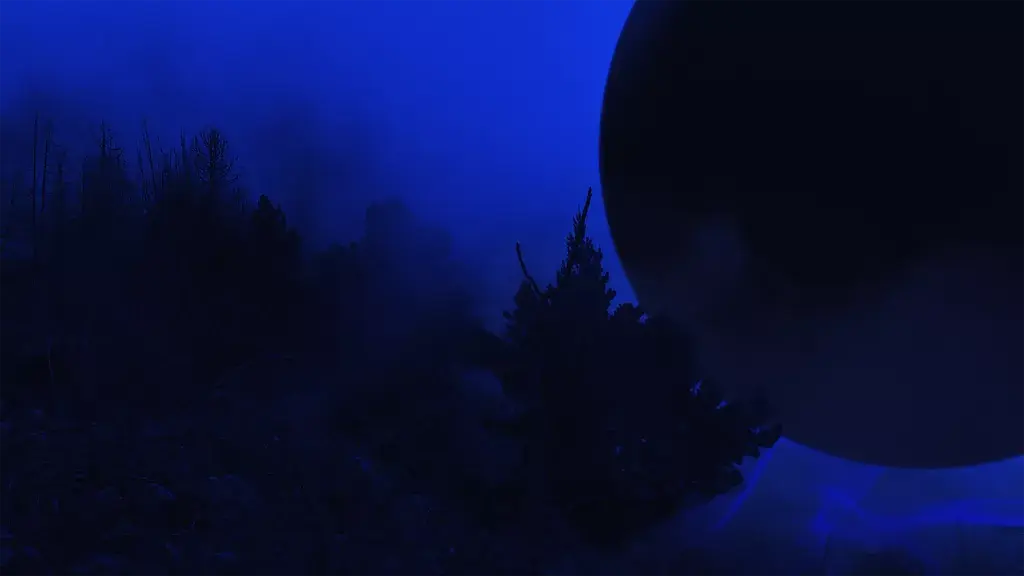
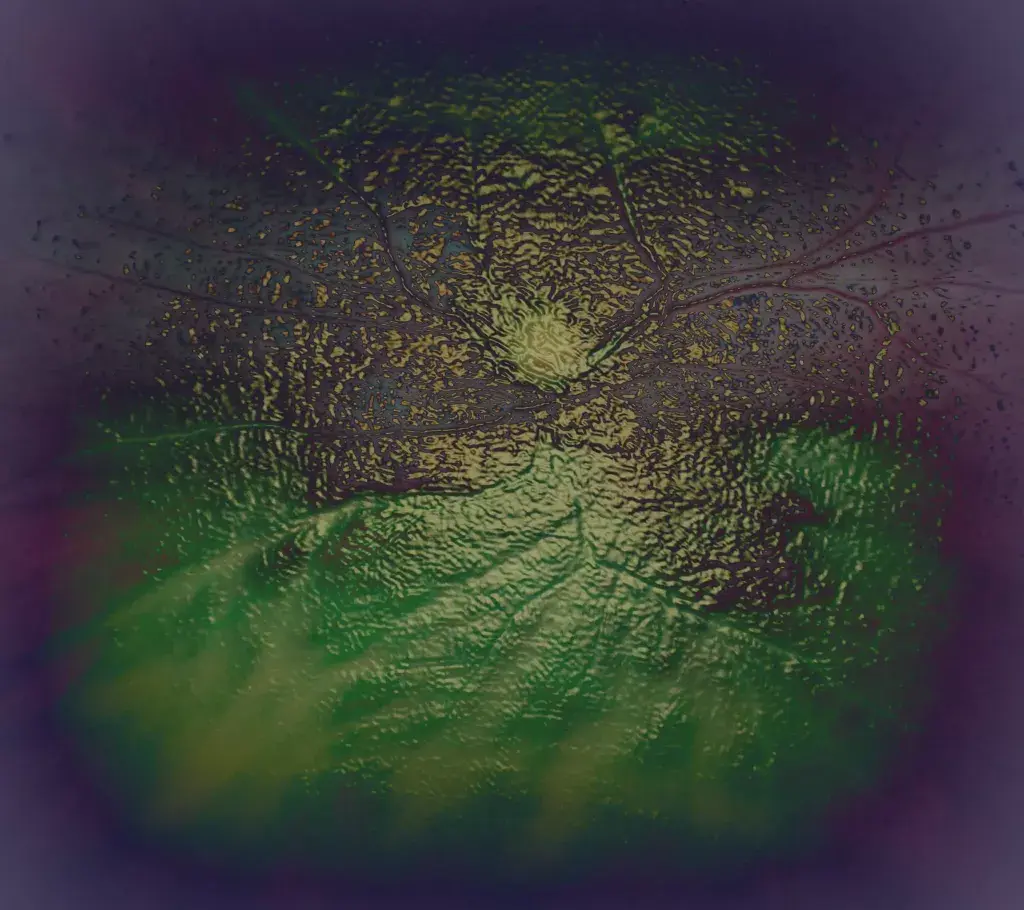
Throughout this 18-minute work, a voice asks, “How will I die? Who will carry me? Who will feel my after-effects?” which, combined with its soundtrack, lends it an elegiac quality. It is unclear whether the voice belongs to a living person, or whether it speaks on behalf of an image questioning its own existential status. Images that border on abstraction nonetheless bristle with natural textures, suggesting that the line between the digital and the organic is blurred.

Image Is an Orphan, 2017. (5 + 2 AP)
HD video, color, sound
18'
Still from video
Friday, July 28,
From 5:30 p.m.
At 5:30 p.m.
Artist: Bouchra Khalili
Foreign Office
2015, 22', Language: Algerian Kabyle, Arabic, English and French
Subtitles: English
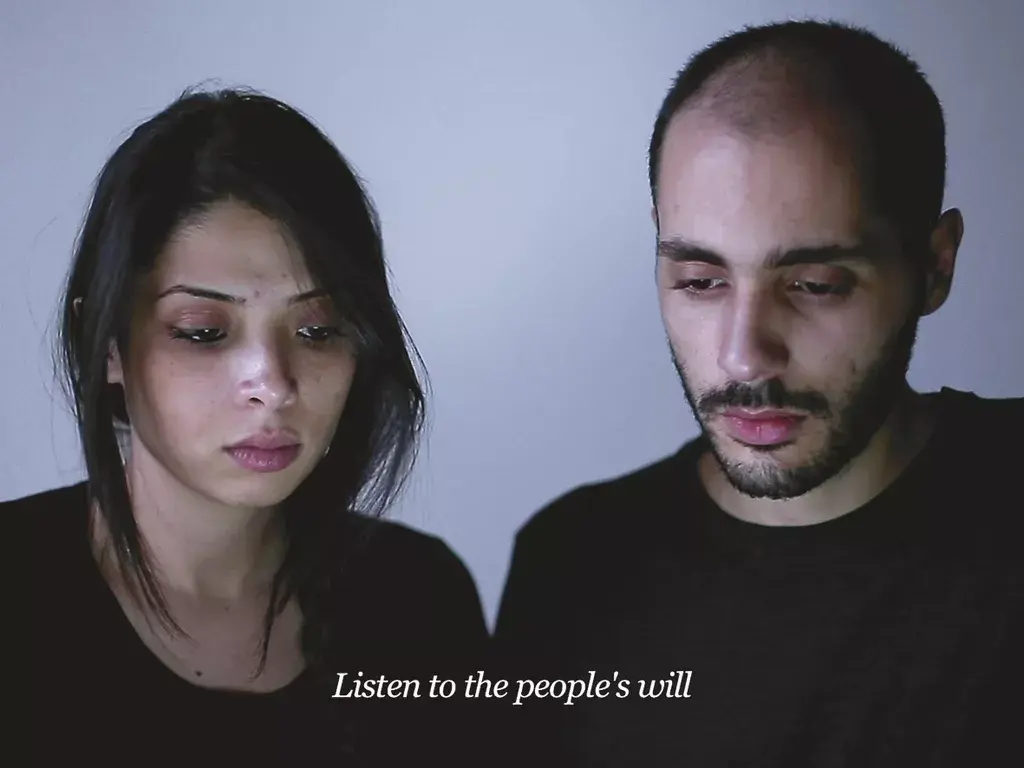
Foreign Office focuses on the period during which Algiers – between 1962 and 1972 – became the "mecca of revolutionaries," hosting representations of many liberation movements from Africa, Asia and the Americas. Taking as a starting point this forgotten past of post-independence era and internationalism, Foreign Office, invites one to reflect on history and its transmission, and on emancipation as essentially linked to poetry.
The film shows two young Algerians "re-writing" this history through images, language, and orality, articulating a historiography defined by "cinematic montage" as well as by translation as forms of writing, investigating, and reflecting on history and its resonances.

Foreign Office, digital film, 2015, 22', from The Foreign Office Project, 2015, mixed media installation: digital film, 15 photographs, silkscreen print.
Video still.
Courtesy of the artist
At 5:55 p.m.
Artist: Bouchra Khalili
Twenty-Two Hours
2018, 43', Language: Algerian Kabyle, Arabic, English and French
Subtitles: English
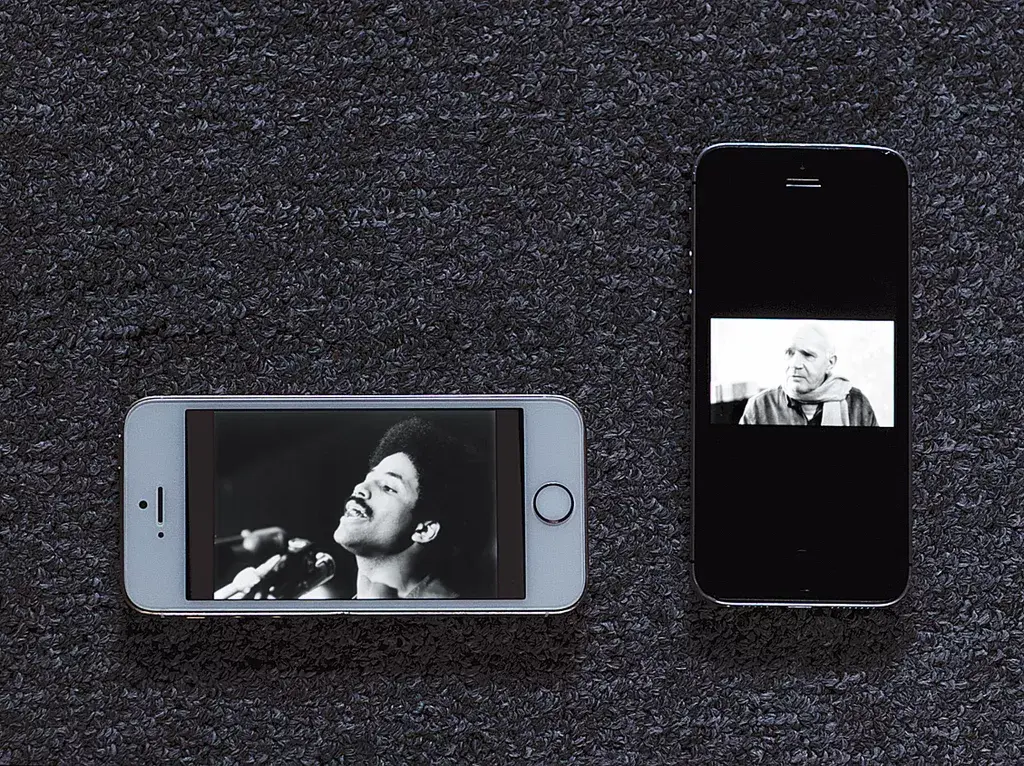
Twenty-Two Hours investigates Jean Genet's visit to the United States between March and May 1970. Invited by the Black Panther Party, the French poet stood in solidarity with the movement and its leadership, who was at that time arbitrarily detained. During the two months he spent in the US, he toured the country, tirelessly calling for solidarity.
Nearly 50 years later, two young African-American women examine Genet's commitment to the Party in the very same area where Genet delivered his first public speech.
Simultaneously, Doug Miranda, a former prominent member of the Black Panther Party who was involved in organizing Genet's tour on the East Coast, narrates his meetings with Genet and his own commitment to the Party.

Twenty-Two Hours, digital film, 2018, 43'. Video stills.
Courtesy of the artist
At 6:45 p.m.
Artist: Bouchra Khalili
The Magic Lantern
2020-2022, 27', Language: Arabic, English and French
Subtitles: English
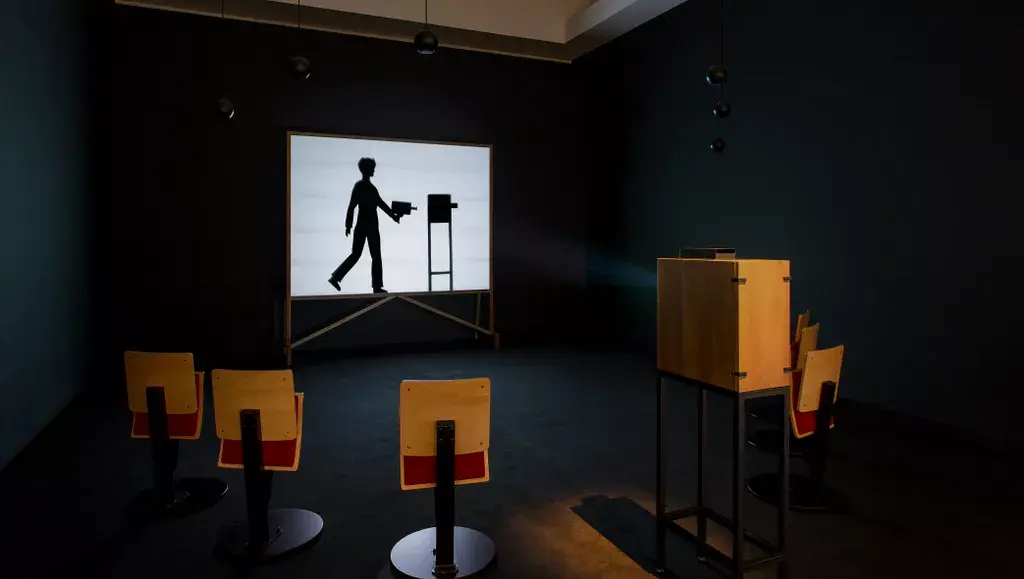
The Magic Lantern takes its starting point from The Nero of Amman, a film by Swiss activist and video pioneer Carole Roussopoulos (1945-2009) made in the wake of the massacres of Palestinian refugees by King Hussein's Jordanian army in 1970. Only three minutes of the original footage remain from this Portapak-filmed work, the pioneering analog video camera, battery-powered and portable, used by Roussopoulos.
In The Magic Lantern, Khalili attempts to reclaim the film’s essence in a language she describes as "trans-Arabic [...] mixing different dialects.” In doing so, she reactivates the art of phantasmagoria, a late 18th-century technology that combined projected images with living narratives to conjure up ghosts, and which was notably used to maintain the memories of Maximilien Robespierre and Jean-Paul Marat within the collective imagination.

The Magic Lantern, digital film, 2022, 27', from The Magic Lantern Project, 2019-2022, mixed media installation: digital film, 26 silkcreen prints, objects, and textile. View of The Magic Lantern at "Between Circles and Constellations'', solo exhibition at Macba, Barcelona. Photo by La Fotografica. Courtesy of the artist
Saturday, August 26
From 5:30 p.m.
At 5:30 p.m.
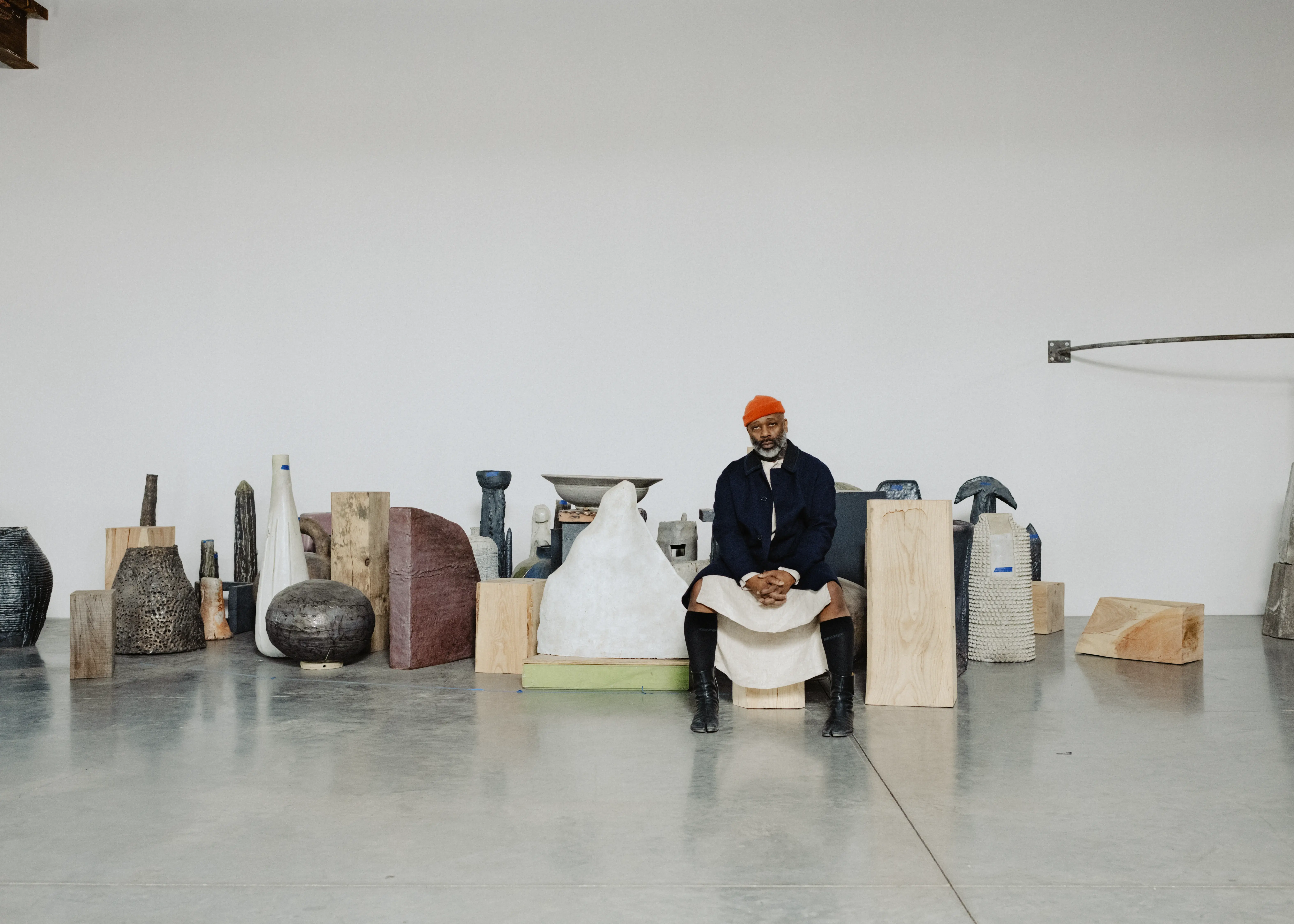
Artist: Theaster Gates
Black Artist Retreat : Reflections on 10 Years of Convening
2023, 1 hour 23 min, VO
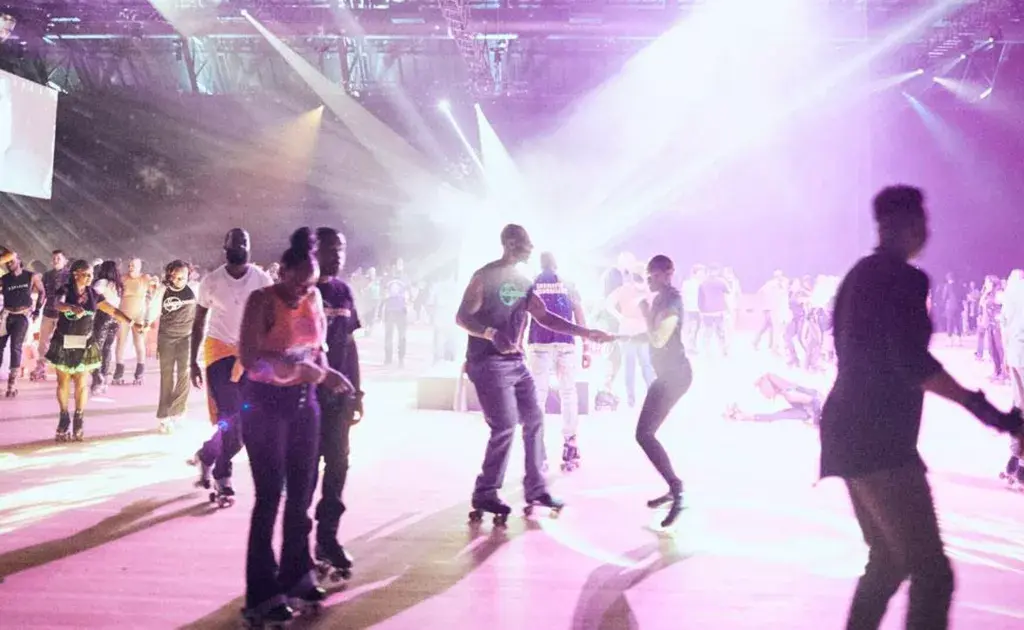
First premiered at the Venice Biennale of Architecture in 2023, this film chronicles a decade of Theaster Gates’ celebrated Black Artist Retreat (B.A.R), an ongoing project of convening artists in Chicago. Since 2013, Gates has invited artists from all over the world to reflect together on their making practices, explore challenges in the industry, and advance mentorship and knowledge sharing. The documentary Black Artist Retreat: Reflections on 10 years of Convening (2023) acts as a document of witness to the gatherings that Gates has hosted almost annually over the past decade for Black artists, considering the architecture of convening, and demonstrating the creation of space through joy and inhabitance.

Theaster Gates, "Black Artist Retreat: Reflections on 10 years of Convening", 2023 (video still).
Courtesy of Theaster Gates Studio.
Sunday, August 27
From 5:30 p.m.
At 5:30 p.m.
Artist: Theaster Gates
Billy Sings Amazing Grace
2013, 12 min 24 sec, VO
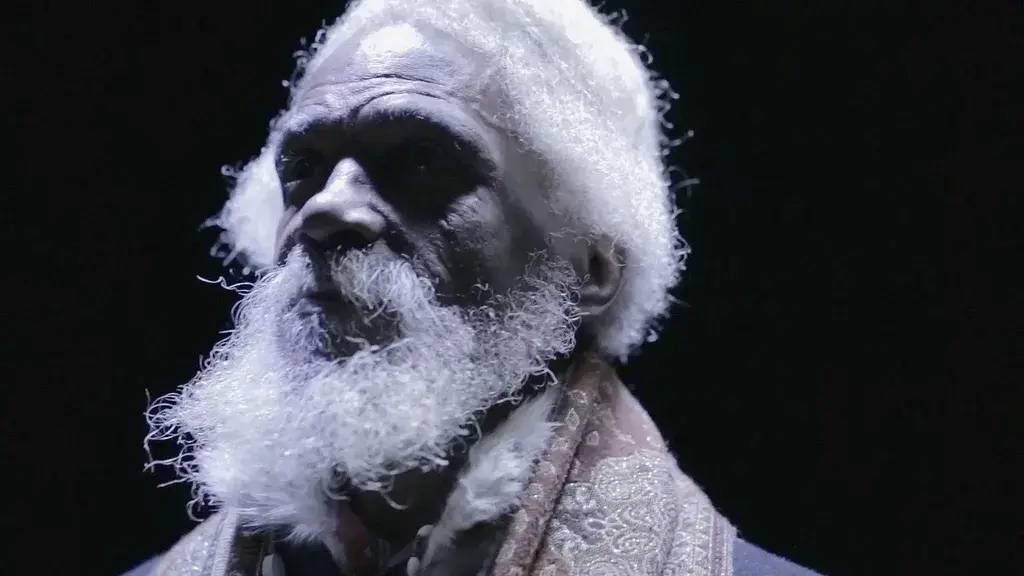
In Billy Sings Amazing Grace, Gates collaborates with soul singer Billy Forston and presents a performance where they both sing "Amazing Grace," sharing a poignant rendition of the classic within a dimly lit auditorium. Produced in 2013, this film underscores Gates' profound connection to the emotional and spiritual resonance of music, a theme that permeates his diverse body of work encompassing ceramics, urban planning, and archiving.

Theaster Gates, "Billy Sings Amazing Grace", 2013–14 (video still).
Courtesy of Theaster Gates Studio.
At 5:45 p.m.
Artist: Theaster Gates
Gone Are the Days of Shelter and Martyr
2014, 6 min 31 sec, VO
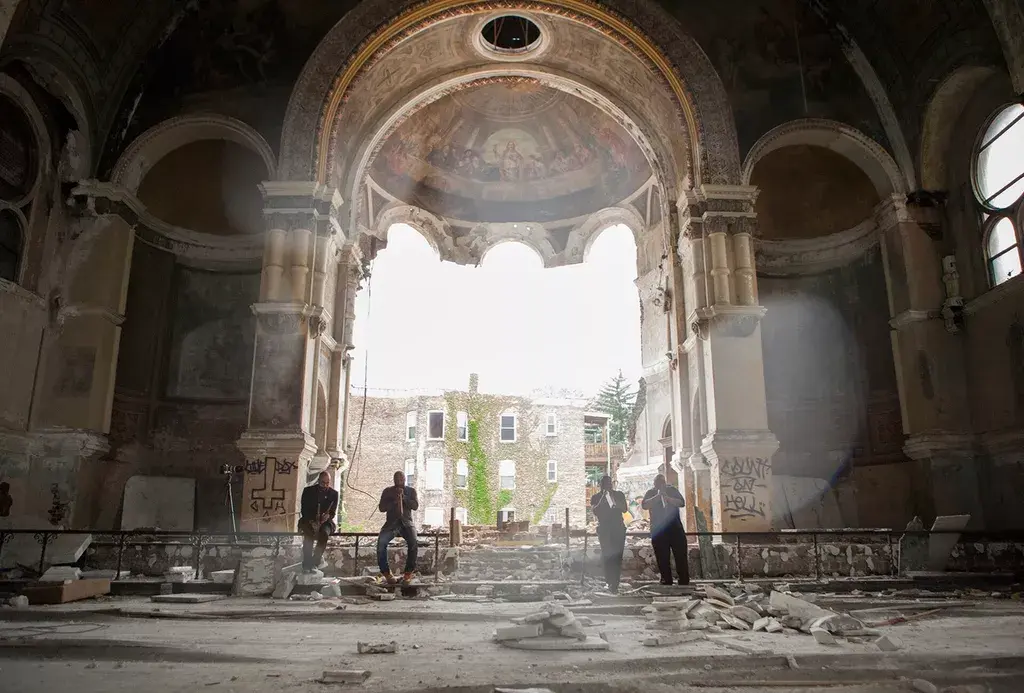
Continuing his exploration of the interplay between sound and space, this film showcases Gates and members of The Black Monks in a performance intervention within the Catholic church of St. Laurence on the South Side of Chicago, during its demolition. The Black Monks are an experimental musical ensemble founded by Gates in 2008. Their music is rooted in the Black music of the South, including the blues, gospel, and wailings, but also linked to ascetic practices, related most closely to Eastern monastic traditions.
The group has been a through line in Gates's artistic practice. Gone Are The Days of Shelter and Martyr mourns the loss of sacred spaces and acknowledges their enduring spiritual significance.

Theaster Gates, "Gone Are the Days of Shelter and Martyr", 2014 (video still).
Courtesy of Theaster Gates Studio.
Photo: Sara Pooley.
At 5:50 p.m.
Artist: Theaster Gates
The Flood
2023, 24 min 31 sec, VO
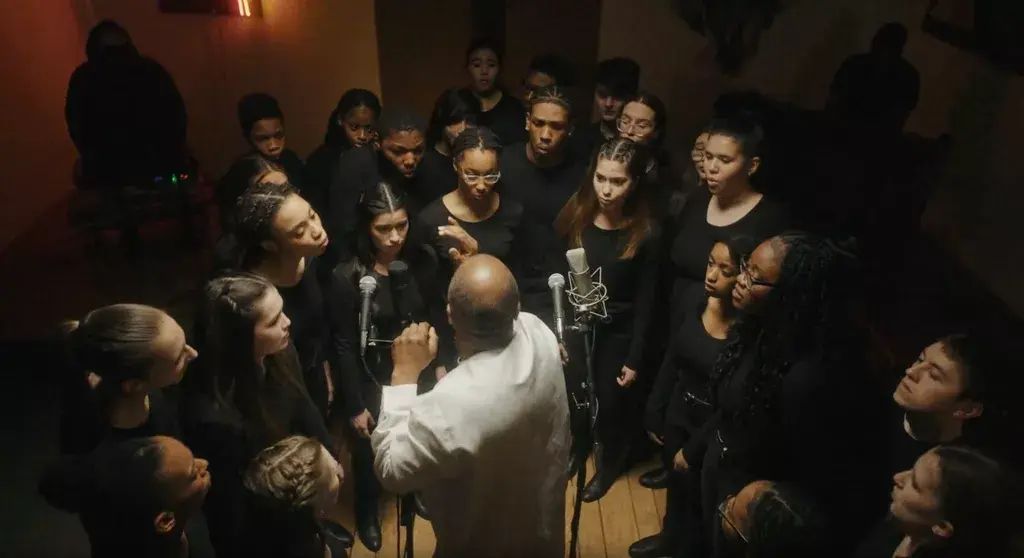
This new film by Gates interweaves gospel renditions by Gates' ensemble, The Black Monks, the Uniting Voices Chicago youth choir, and members of the Thompson Community Singers with scientific commentary on evidence of the Great Biblical flood and the possibility of impending mass geological extinction. Through this unique combination of the scientific and the biblical, The Flood serves as a thought-provoking reflection on the urgency of the climate crisis. Premiering at the Venice Architecture Biennale, the film further exemplifies Gates's ongoing commitment to blending artistic expression with social engagement.

Theaster Gates, “The Flood" (video still), 2023.
Courtesy of Theaster Gates Studio.
Sara Sadik
Sara Sadik was in residence at LUMA Arles from march to june 2021.
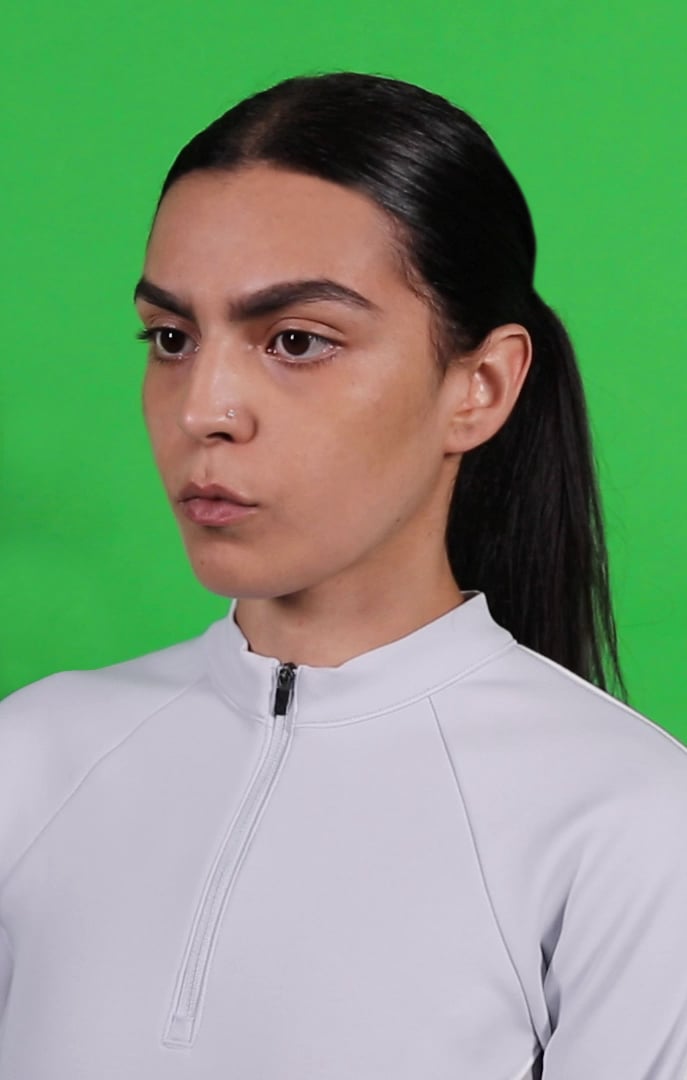
Sara Sadik was born in 1994 in Bordeaux. In 2018, she obtained a master’s degree from Bordeaux School of Fine Arts. She lives and works in Marseille. She works on French youth from working-class neighborhoods and its culture, documenting its mysteries and deconstructing social mythologies, particularly those related to adolescence and masculinities. Her work is expressed in videos and performances, ranging from documentaries to science fiction and reality TV. Her work has been shown in group exhibitions at 221 A (Vancouver, 2017), Karma International (Zürich, 2017), the Open’er Festival (Gdynia, 2017), Roodkapje (Rotterdam, 2018), Wallach Gallery-Columbia University (New York, 2019), Galerie Édouard Manet (Gennevilliers, 2019), Triangle France-Astérides (Marseille, 2021), Munchmuseet (Oslo, 2021) Magasins généraux (Pantin, 2021). She performed at the Do Disturb Festival, as part of the Triangle France-Astérides program (Palais de Tokyo, Paris, 2019), and at the Parallèle Festival (Frac PACA and Friche Belle-de-Mai, Marseille, 2020). Her work is also featured in public collections such as the Cnap, the Frac Nouvelle-Aquitaine MÉCA, the Frac PACA, and the City of Paris Museum of Modern Art. She is represented by the Crèvecœur Gallery, in Paris.
Rachel Rose
Shahryar Nashat
Shahryar Nashat was in residence at LUMA Arles in 2022 / 2023.
Shahryar Nashat is a Swiss visual artist based in Paris. Focusing on our physical limits and the possibilities of extension, he treats digital and analogue technologies—from LEDs to stone and cast resin—as prostheses, props, or stand-ins. He has had solo shows at the Art Institute of Chicago (2023), Museum of Modern Art, New York (2020); SMK—Statens Museum for Kunst, Copenhagen (2019); Swiss Institute, New York (2019); Kunsthalle Basel (2017); Portikus, Frankfurt (2016); and Schinkel Pavillon, Berlin (2016).
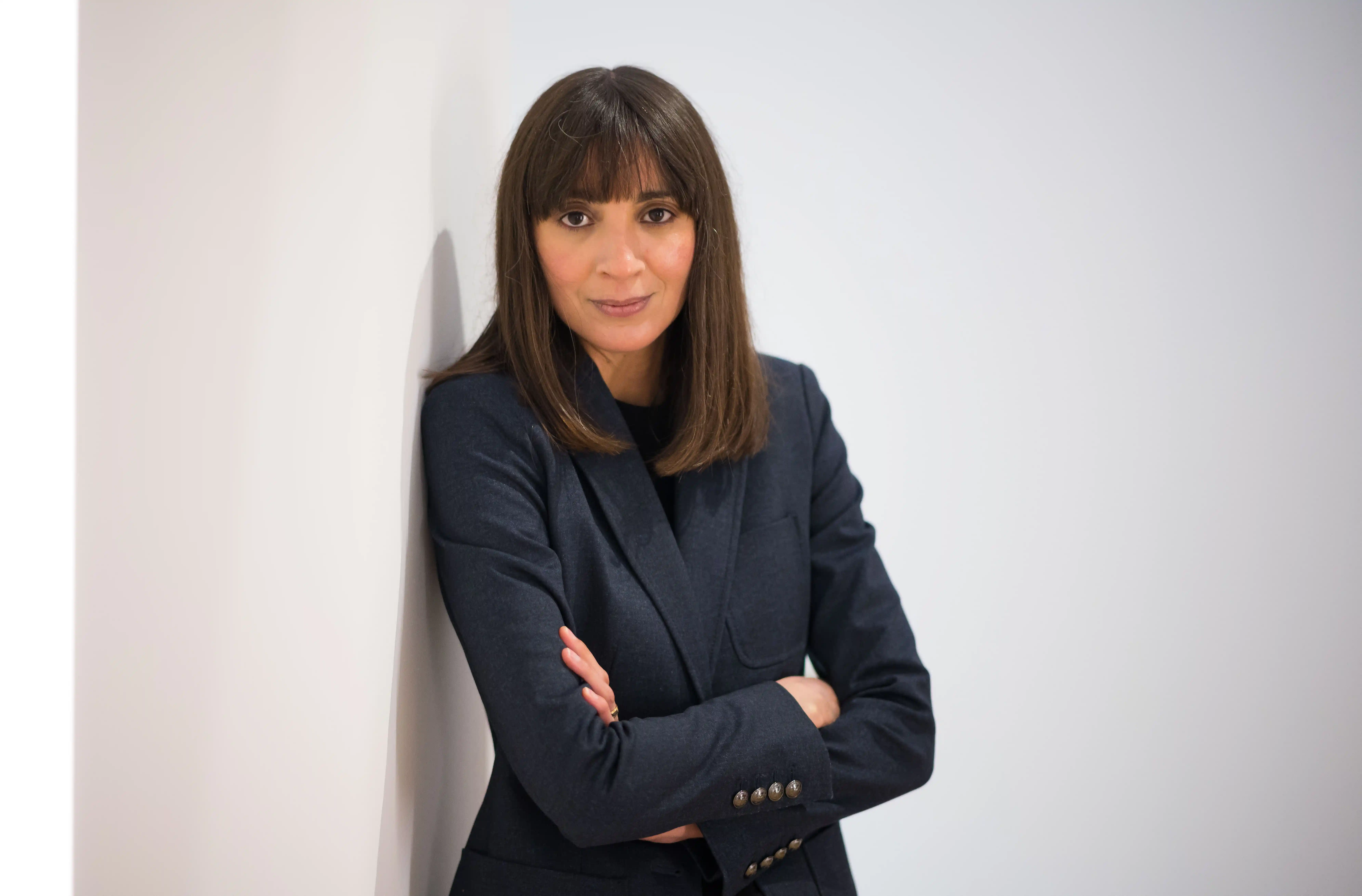
Bouchra Khalili