
The Impermanent Display II
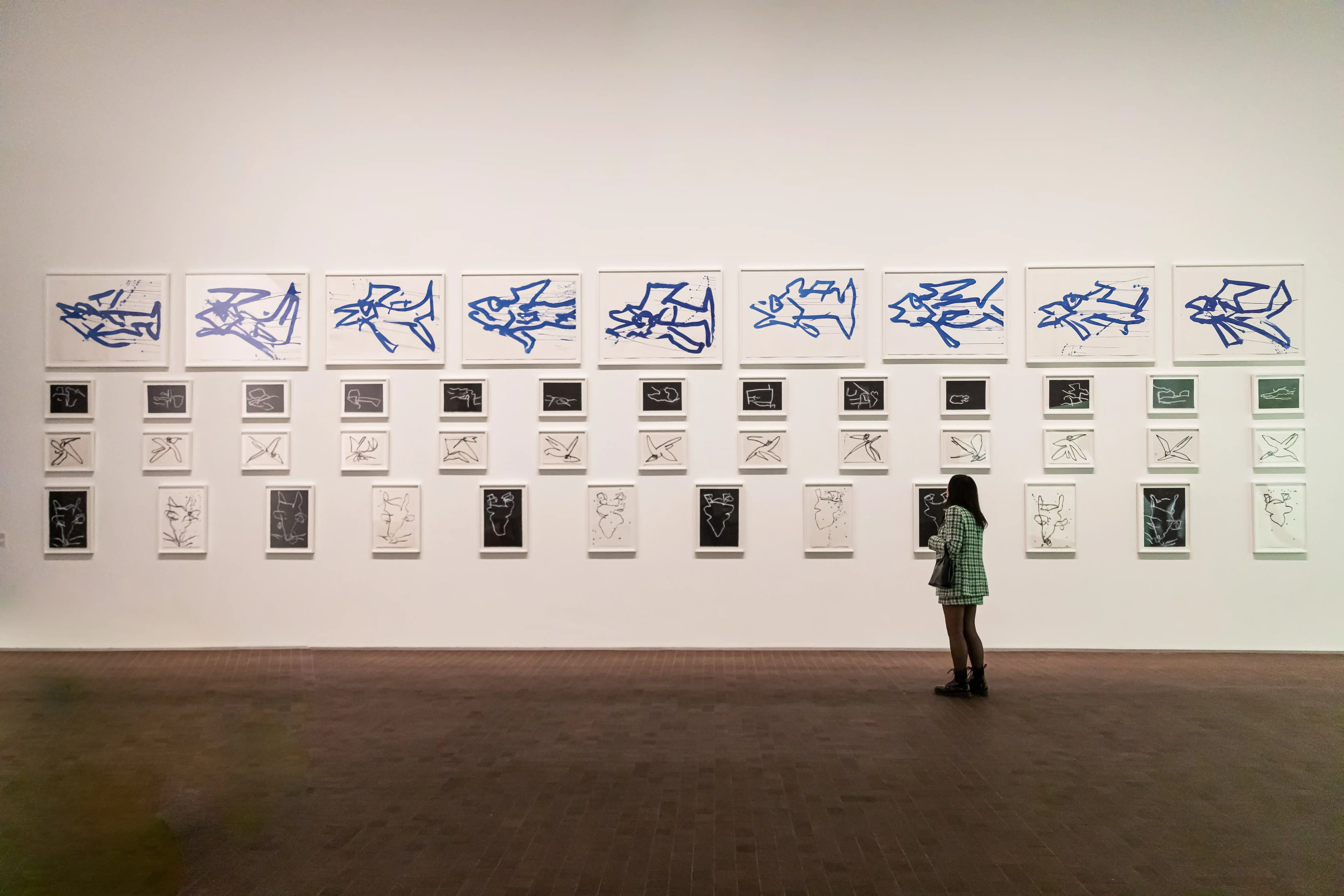
Performance Drawings from Reanimations, Boston, October 2014, Joan Jonas dans The Impermanent Display II, Collection Maja Hoffmann / LUMA Foundation ©Adrian Deweerdt
Performance Drawings from Reanimations, Boston, October 2014, Joan Jonas dans The Impermanent Display II, Collection Maja Hoffmann / LUMA Foundation ©Adrian Deweerdt
Inside the exhibition
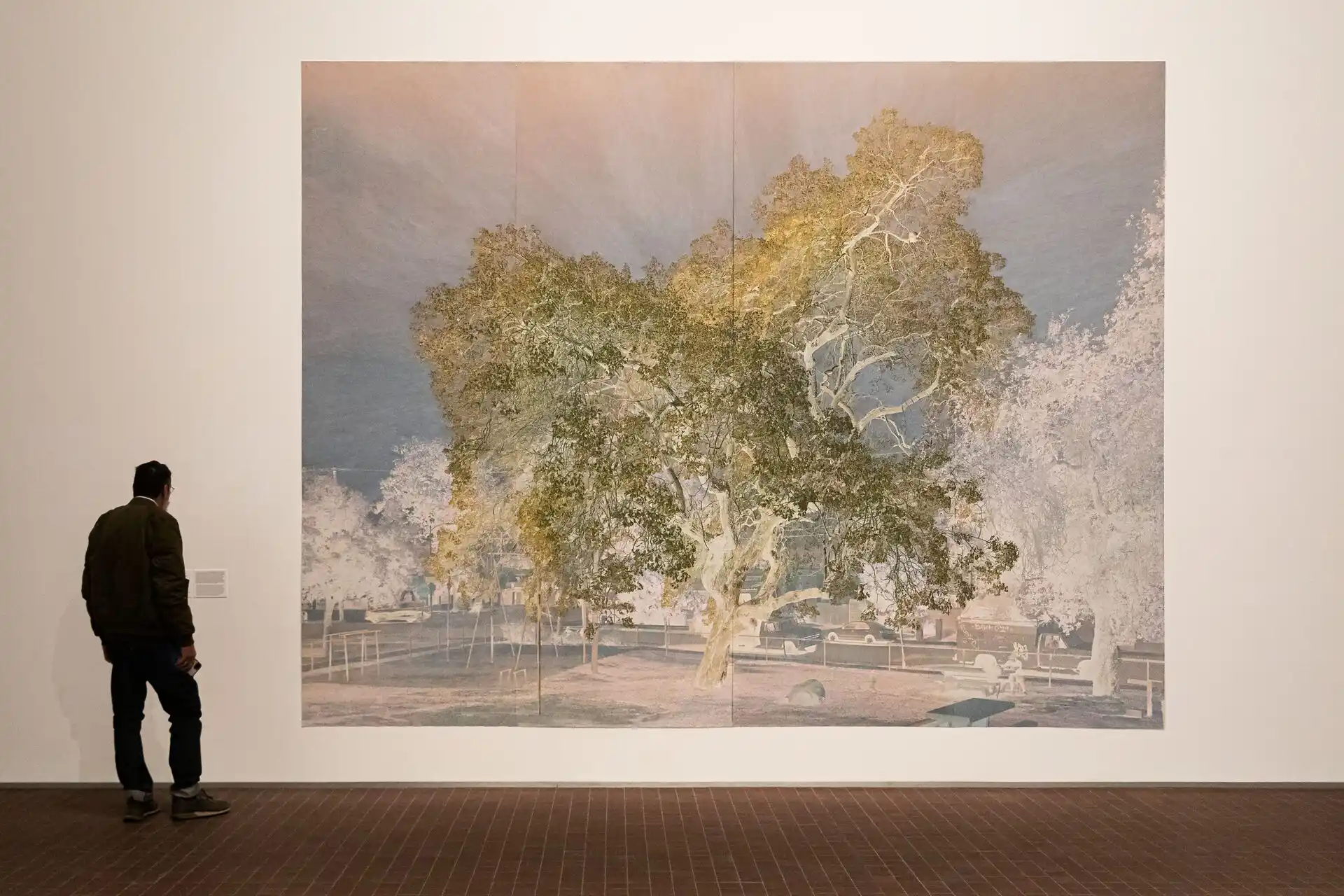
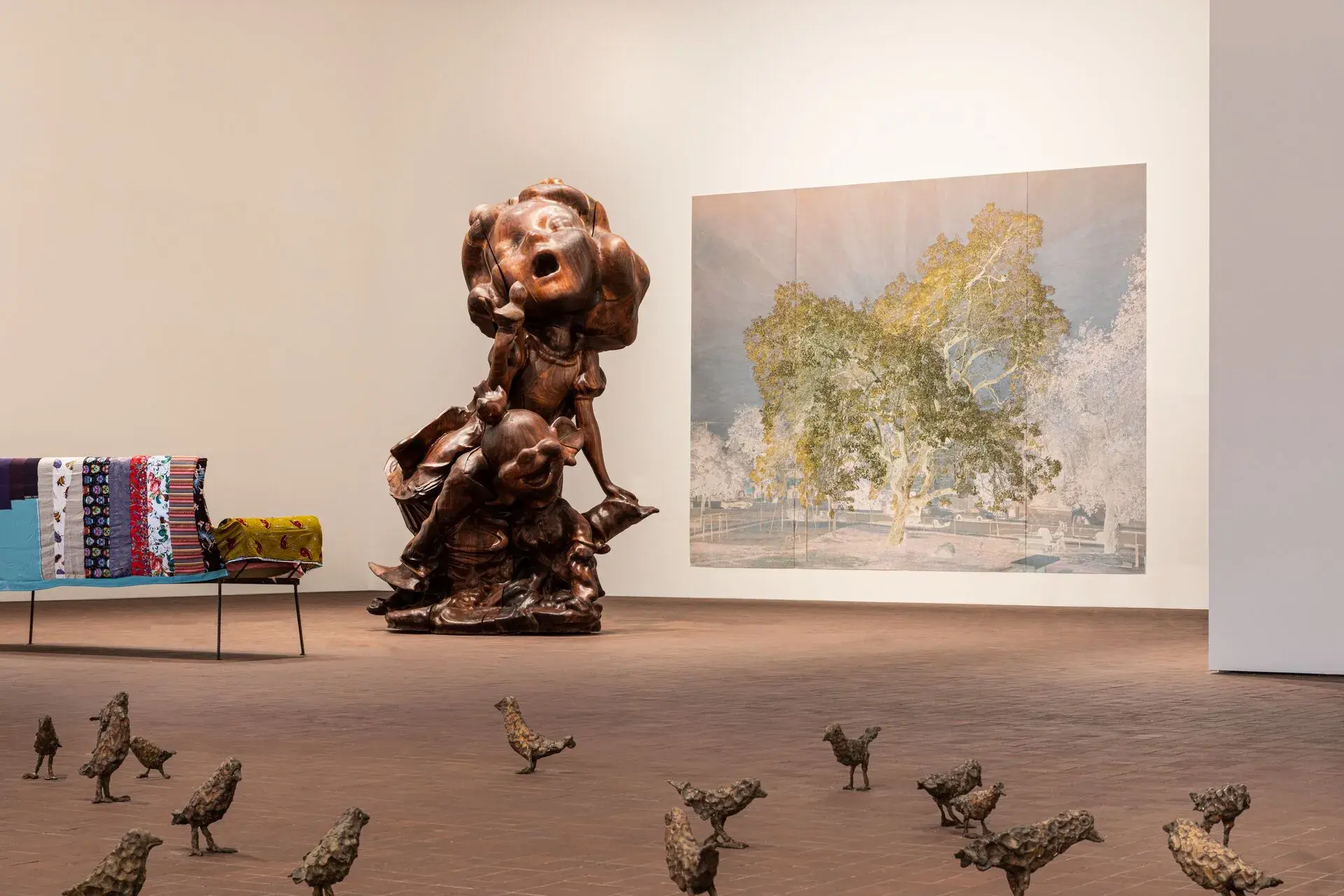
Purgatory (2nd Cornice), Tacita Dean in The Impermanent Display II, Maja Hoffmann / LUMA Foundation Collection
© Adrian Deweerdt


/ADNAN%20Etel_2_Courtesy%20Galerie%20Lelong%20&%20Co.jpg)
Etel Adnan
Judy Chicago

Tacita Dean
Trisha Donnelly
/990235a2e3db31bdc305e717c1f574630cea7d01-1594033956-5f030724-1920x1280.jpg)
Ólafur Elíasson
Visual artist Ólafur Elíasson (b. 1967) grew up in Iceland and Denmark. In 1995, he founded Studio Ólafur Elíasson in Berlin, which today comprises a team of craftsmen, architects, archivists, researchers, administrators, cooks, art historians, and specialised technicians. Natural phenomena—such as water, light, ice, fog, and reflections—feature prominently in Elíasson’s often large-scale artworks. His practice is driven by interests in perception, movement, embodied experience, and the sense of self. He strives to make the concerns of art relevant to society at large, considering art a crucial means of turning thinking into doing in the world. Elíasson’s work spans sculpture, painting, photography, film, and installation. Not limited to the confines of the museum or gallery, his practice engages the broader public sphere through architectural projects, interventions in civic space, arts education, policy-making, and issues of sustainability and the climate crisis.
He is internationally renowned for works such as The Weather Project (2003), an indoor sun shrouded in mist installed in the Turbine Hall at Tate Modern, London, seen by more than two million people, and The New York City Waterfalls(2008), a public art project commissioned by the Public Art Fund with the support of former mayor Michael Bloomberg, for which he installed four artificial waterfalls along the Manhattan and Brooklyn shorelines. Another acclaimed project in public space is Ice Watch, a public installation for which Elíasson and geologist Minik Rosing transported twelve massive blocks of glacial ice from Greenland to Copenhagen’s City Hall Square in 2014, to coincide with the publication of the Fifth Assessment Report of the UN Intergovernmental Panel on Climate Change. The project was reiterated in Paris (2015) and London (2018).
In 2012, he founded the social business Little Sun, and in 2014, he and Sebastian Behmann founded Studio Other Spaces, an office for art and architecture.
/0435%20-%20CARSTEN%20H%C3%96LLER%20-%20NO%20KILL%20-%20JUNE%2014%202019-1.jpg)
Carsten Höller
Carsten Höller uses his training as a scientist in his work as an artist, concentrating particularly on the nature of human relationships. Born in Brussels in 1961, he now lives and works in Stockholm, Sweden and Biriwa, Ghana. His major installations include Test Site, a series of giant slides for Tate Modern’s Turbine Hall (2006); Amusement Park, an installation of full-size funfair rides turning and moving at very slow speed at MASS MoCA, North Adams, USA (2006); Flying Machine (1996), a work which hoists the viewer through the air; Upside-Down Goggles, an experiment with goggles which modify vision; and the famous The Double Club (2008-2009) in London, which opened in November 2008 and closed in July 2009, that took the form of a bar, restaurant and nightclub designed to create a dialogue between Congolese and Western culture.
His Revolving Hotel Room (2008), a rotating art installation that becomes a fully operational hotel room at night, was shown as part of theanyspacewhatever exhibition at the Guggenheim Museum in 2009. For his 2015 exhibition Decision at the Hayward Gallery, he turned the whole building into an experimental parcours with two entrances and four exits, two of them being slides. His works have been shown internationally over the last two decades, including solo exhibitions at Fondazione Prada, Milan (2000), the ICA Boston (2003), Musée d’Art Contemporain, Marseille (2004), Kunsthaus Bregenz, Austria (2008), Museum Boijmans Van Beuningen, Rotterdam (2010), Hamburger Bahnhof, Museum für Gegenwart, Berlin (2011), New Museum, New York (2011) Thyssen-Bornemisza Art Contemporary (TBA21), Vienna (2014), Pirelli HangarBicocca, Milan (2016), Henie Onstad Kunstsenter, Høvikodden, Norway (2017), The Florence Experiment at the Palazzo Strozzi, Florence (2018), Sunday at Museo Tamayo, Mexico City (2019) and most recently the exhibitions Behaviour at Kunsten Museum of Modern Art, Aalborg (2019) and Reproduction at Copenhagen Contemporary, Copenhagen (2019).
/Portrait-of-Joan-Jonas-by-Maximilan-Geuter-2022-HORIZONTAL-scaled.jpg)
Joan Jonas
/7c16dbdc-1113-4806-9483-1c4bf64222e6.webp)
Mike Kelley
Paul McCarthy
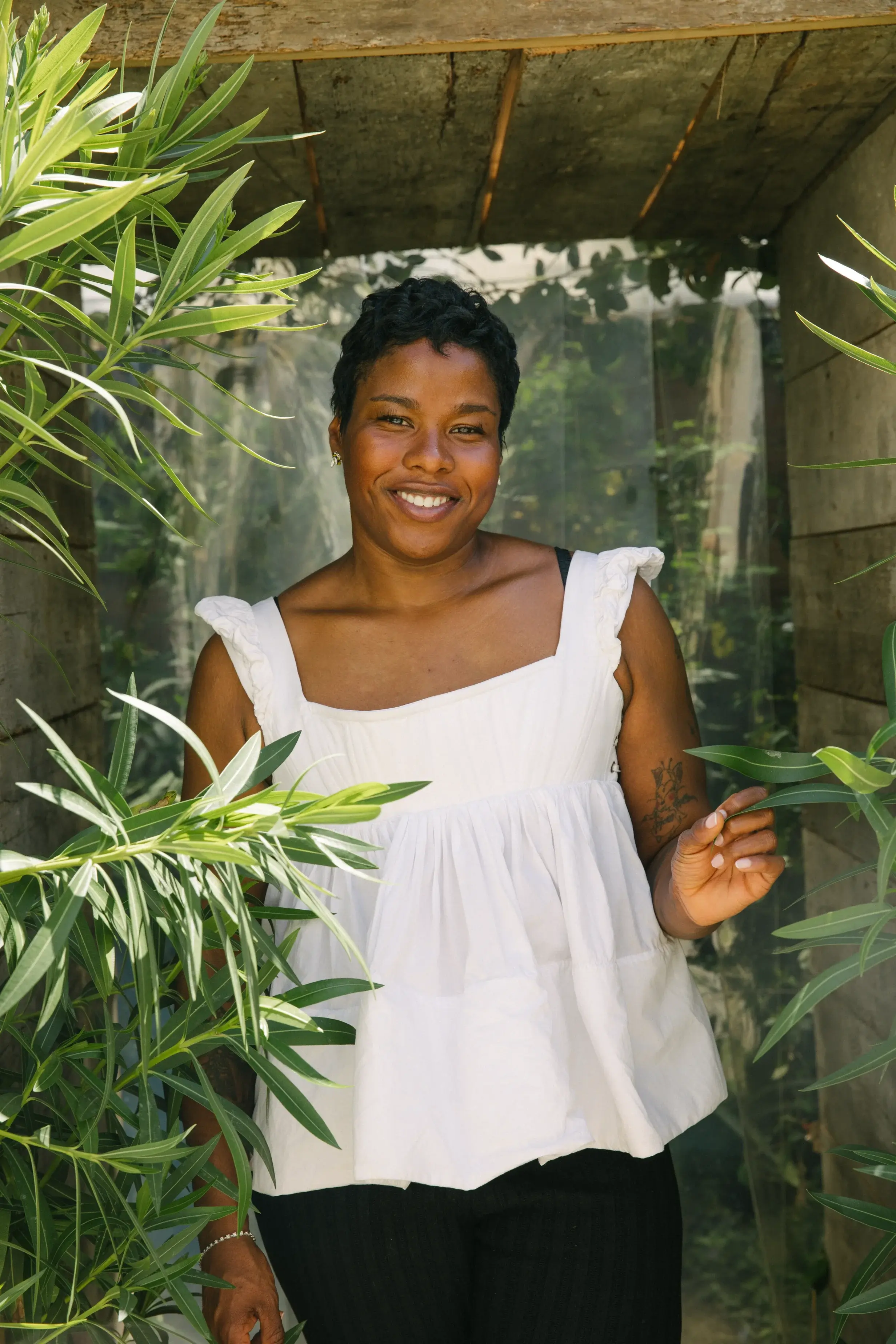
Precious Okoyomon
Precious Okoyomon was in residence at LUMA Arles from october to december 2020.
Precious Okoyomon (b. 1993) is a Nigerian-American poet and artist. Their work considers the natural world, histories of migration and racialization, and the pure pleasures of everyday life.
They have had one-person exhibitions at the LUMA Westbau, Zurich; the Museum Für Moderne Kunst, Frankfurt; Performance Space New York, New York; the Aspen Art Museum, Aspen; The Sandretto Re Rebaudengo Madrid Foundation, Madrid; The Herbert F. Johnson Museum, Ithaca; Kunsthaus Bregenz, Bregenz. They were included in the Baltic Triennial 13, Tallinn; the 58th Belgrade Biennial, Belgrade; the 59th Venice Biennale, Venice; the 2022 Okayama Art Summit, Okayama; the 11th Sequences Biennial, Reykjavik; the 2023 Thailand Biennial, Chiang Rai, as well as in group exhibitions at the Institute of Contemporary Arts, London; LUMA Westbau, Zurich; Schinkel Pavillon, Berlin; LUMA Arles, Arles; Palais de Tokyo, Paris; Nigerian Pavillion, 60th Venice Biennale, Venice; Fondation Beyeler, Basel; Kunsthaus Bregenz, Bregenz. Okoyomon’s work is included in the permanent collection of the Museum Für Moderne Kunst, Frankfurt and LUMA Arles. Okoyomon was the 2021 recipient of the Frieze Art Fair Artist Award, as well as the 2021 Chanel Next Art Prize. In 2024, But Did You Die?, their second book of poetry, was co-published by the Serpentine and Wonder Press.
Laura Owens
Philippe Parreno
/sigmar-polke.jpg!Portrait.jpg)
Sigmar Polke
Tavares Strachan
Sturtevant
/ptwestfranz_in01.jpg)
Franz West
A major figure of the Viennese art scene, Franz West developed a sculptural and installation-based practice from the early 1970s onward that challenges the boundaries between everyday functional objects and works of art. Chairs, tables, armchairs, sofas, beds, carpets, and even upholstery fabrics become, in turn, vehicles for a critical, provocative, and often deliberately irreverent reflection on the nature and scope of the artistic gesture.
Influenced by performance art and Viennese Actionism, West took an early interest in the role of the body in art and argued for a radical merging of art and life. Beginning in the 1970s, he created portable papier-mâché sculptures known as Paßstücke (Adaptives), inviting the public to interact with them and to perform.
Playful in spirit, his works challenge traditional frameworks of art. By the late 1980s, Franz West was creating installations that sit at the intersection of sculpture and furniture—objects designed to be used, altered, and activated by the public. Everyday objects and furnishings thus became a central motif in his work.