Open |
Open from
Closed today
Ticketing
My selection

Environmental History II

  • Environment

For its second edition, the Environmental History symposium asked the questions: Which narratives, which poetics and which history for the Earth? These themes framed different approaches to understanding fragile ecosystems, land use, and the ways in which these environments have been perceived throughout history through poetry and prose.

What are the layers of human action deposited upon the environment and its visible manifestations? How has Environmental History shifted since its emergence as a field of inquiry in the twentieth century? And what is the current status of these reflections, at a moment when the impact of human activity undeniably shapes the realms of the visible and the invisible?

Invited historians, poets, artists, scientists, architects, and other cultural practitioners offered their unique insights through a series of talks and debates, putting forward novel hypotheses and ideas. Part of the symposium was dedicated to the work of Atelier LUMA. The program was complemented by selected readings about the environment, honoring the work of pioneering artist and author Etel Adnan.

LUMA_1920_1280_150DPI-2

Watch or Rewatch the Talks

Explore the full series of conference sessions from the event, available online.

Saturday, May 27

  • 1:30 p.m.: Introduction
    With Grégory Quenet, Professor of Environmental History, University of Versailles-Saint-Quentin-en-Yvelines

  • 2:15 p.m.: Time of the World / Time of the Anthropocene: the Simultaneous of the Non-Simultaneous
    With François Hartog, Director of the Chair of Ancient and Modern Historiography at EHESS

  • 2:45 p.m.: Healing the Web of Life: the Buffalo Nations Food System of the Northern Plains and Rockies [via Zoom]
    With Jill Falcon Ramaker (Anishinaabe: Ojibwe Nation), Assistant Professor and Director of the Buffalo Nations Food System Initiative at Montana State University

  • 3:00 p.m.: Break

  • 3:10 p.m.: Ancient DNA, Genetics in the History of Horses and Humans
    With Ludovic Orlando, Director of Research at the CNRS and Director of the Anthropobiology and Genomics Center of Toulouse

  • 4:00 p.m.: Journey to the Earth's Surface. A Geochemical Perspective on Habitability
    With Jérôme Gaillardet, Professor of Earth Sciences at the Institut de Physique du Globe de Paris

  • 4:30 p.m.: Terrestrial Architectures: Rebuilding the Common Good
    With Salima Naji, Architect and Anthropologist

  • 5:00 p.m.: Planetary Blues: Environmental History, Good and Bad Ghosts of the Future
    With Christof Mauch, Director of the Rachel Carson Center for Environment and Society

  • 5:45 p.m. – 6:00 p.m.: Conclusion
    With Maria Finders and Martin Guinard, Curators, LUMA Arles

  • 6:00 p.m. – 6:45 p.m.: Break

  • 6:45 p.m.: Discussion on the Occasion of the Opening of Le Magasin Électrique
    “Every building is a prediction, and every prediction is wrong.”1

    With Maja Hoffmann, Founder and President of the LUMA Foundation and Founder of LUMA Arles;
    Jan Boelen, Artistic Director at Atelier LUMA;
    Laurens Bekemans, Architect and Co-founder of BC architects & studies;
    Guillaume Habert, Chair of Sustainable Construction, ETH Zürich;
    Joe Halligan, Architect and Co-founder of Assemble;
    Salima Naji, Architect and Anthropologist.

    1 Stewart Brand, How Buildings Learn: What Happens After They're Built, Viking Press, 1994.

Sunday, May 28

  • 10:30 a.m.: Air, Ventilation, Breathing in the 18th Century
    With Marie Thébaud-Sorger, Associate Researcher at the Centre for the History of Science and Technology Alexandre Koyré in Paris and Visiting Researcher at the Maison Française d’Oxford

  • 11:00 a.m.: Anthropocene Enquiry in Arles: Exhibitions in Light of the Heat Wave
    With Valérie Disdier, President of Cité anthropocène and Deputy Director of the Lyon Urban School

  • 11:30 a.m.: A Metabolic History of Agriculture in 19th-Century Marseille: Temporalities, Organic Transactions, Ruptures
    With Rémi Grisal, Doctoral Student in Contemporary History at Aix-Marseille University

  • 12:00 p.m. – 1:30 p.m.: Break

  • 1:30 p.m.: Screening of a Film by Julien Creuzet
    Mon corps, carcasse, se casse casse casse / Mon corps canne à sucre flèche flèche flèche / Mon corps banane est en larme larme larme / Mon corps peau noire, au coucher du soleil, ne trouve le sommeil / Mon corps plantation poison / Mon corps plantation poison / Mon corps plantation / Demande la rançon / La pluie n’est plus la pluie / La pluie goutte aiguille / La pluie acide pesticide / La pluie infanticide / Mon père vivait près de la rivière / La rivière était à la lisière / Du champ de banane pour panam / Banane rouge poudrière / Sous les tropiques du Cancer, 2019

  • 1:45 p.m.: The Historical Resonances of Chlordecone, a Pesticide in the French Antilles
    With Philippe Verdol, Lecturer at the University of the French West Indies and Guiana

  • 2:15 p.m.: The Against Nature Journal: Sexual and Reproductive Rights and the Heritage of “Against Nature” Laws
    With Grégory Castéra, Curator and Co-founder of the journal TANJ, and Dayna Ash, Artist and Activist [via Zoom]

  • 3:00 p.m.: Break

  • 3:15 p.m.: Dancing in the Zoo: On Simone Forti's Choreographic Work with and for Zoo Animals
    With Filipa Ramos, Writer and Curator

  • 3:45 p.m.: Vegetal Witnessing and Plant Echoes
    With Uriel Orlow, Artist

  • 4:15 p.m.: Remember Nature
    With Hans-Ulrich Obrist, Artistic Director, Serpentine Galleries, and Senior Advisor, LUMA Arles

  • 5:00 p.m.: Homage to Etel Adnan. Performance and Reading of a Selection of Poems Relating to the Environment in Her Work.
    With Simone Fattal, Artist and Poet;
    Rayya Badran, Writer, Translator and Educator;
    Sharif Sehnaoui, Musician and Free Improvising Guitarist;
    Christine Abdelnour, Musician and Free Improvising Saxophonist.

    Poetry readings by Wu Tsang, Tosh Basco, Eileen Myles, Precious Okoyomon, and many other artists and poets.
210224560_10159647426411349_7501213828306162444_n

Christine Abdelnour

Christine Abdelnour is a musician using alto saxophone. She approaches sound as a malleable material, rich in concrete textures which combine breath, silence and countless acoustic distortions. She has developed extended techniques and complex patterns of sound production, exploring the microtonal aspects of the saxophone and its high-pitched tones. She has released more than ten CDs and has collaborated with visual art, dance, literature, poetry, as well as projects with noise, electronics, rock or free jazz.
Dayna_Ash

Dayna Ash

Dayna Ash is a performing artist, writer, playwright, and the Executive Director of Haven for Artists; a cultural feminist organization. She is the Intersectional Feminism Advocacy Fellow at The Asfari Institute for Civil Society and Citizenship at the American University of Beirut, and is the Arts for Gender Fellow for Care USA and The Rockefeller Foundation. Ash was named one of the BBC's 100 most inspirational women in 2019, awarded the Woman of Distinction award in 2020 by the NGO Committee on the Status of Women, and Leader in LGBT Health Equity award from the Lebanese Medical Association for Sexual Health in 2021 for advancing LGBTQ wellbeing in Lebanon.
profile-pic-quad-formatkey-png-w320r.png

Rayya Badran

Based in Beirut, Rayya Badran is a writer and translator whose practice centers on sound, music, and contemporary art. Her writings have featured in various publications such as Bidoun, Art Review, Art Papers, Norient, The Wire, and more. She was guest editor of the Beirut Art Center's online publication The Derivative in 2020 and curator and editor of the Norient City Sounds Online Special: Beirut in 2022. She taught courses on contemporary art and sound studies at the Department of Fine Arts and Art History at the American University of Beirut from 2014 to 2021. She is co-curator of the forthcoming second edition of the Listening Biennial in 2023.
d71a1ca5776dff55c0c30804089e0fb70a93bfd8-2000x2666.jpg

Tosh Basco

Tosh Basco was born in California and rose to prominence in the drag scene in San Francisco in the 2010’S. Well known for her movement-based performances under the name boychild, Basco’s photography and drawing accompany her performance practice enfolding language, representation and becoming together in spaces where they are presumed to exist as discrete entities. She is co-founder of the collaborative entity Moved by the Motion with Wu Tsang and collaboration remains a vital aspect to her work. Basco’s work has been presented at the Venice Biennale; the Sydney Biennial, The Whitney Museum of American Art, New York; the Museum of Contemporary Art, Chicago; MOCA, Los Angeles; ICA London among other institutions.
C6A15D2E11A7C7DD1EDACBF46386F2C4

Laurens Bekemans

Laurens Bekemans is an architect and cofounder of BC architects & studies, an architecture firm, nonprofit research entity, and materials laboratory based in Brussels, as well as, more recently, “BC materials,” an urban mining company that repurposes construction debris. BC comprises BC architects, studies, and materials. BC stands for “Brussels Cooperation” and illustrates how BC has taken root in a place and in the spirit of its inhabitants. Founded in 2012 as a hybrid practice, BC pushes the boundaries of architecture in a pragmatic way. With three distinct legal entities, the team engages in a variety of experimental projects through which it designs bioregional and circular architecture, studies educational and construction processes, and produces new materials using local waste streams such as excavated soil.

Gregory_Castera_portrait_photo_credit_Alice_D.width-2560

Grégory Castéra

Grégory Castéra is the co-founder of the Bureau Curatorial Council (2013-2023), the Afield Network (2014-), and The Against Nature Journal (2014-2022), a publication that explores "unnatural crime" laws and their legacies in order to encourage dialogue about sexual and reproductive rights and rethink nature. He was Professor of Collective Practices at the Royal Institute of Art, Stockholm (2019-2022) and co-director of Les Laboratoires d'Aubervilliers (2010-2012). He currently advises the Gulbenkian Foundation (Paris and Lisbon), the Jan van Eyck Academie (Maastricht), Kanal (Brussels) and Kerenidis Pepe (Paris and Anafi).
Julien_Creuzet005[1]

Julien Creuzet

Julien Creuzet was in residence at LUMA Arles from november - december 2021 to april - june 2022.

Julien Creuzet is an artist, video maker, performer and poet. He spent most of his childhood in Martinique. These first years in the Caribbean, at the crossroads between the African, Indian and European cultures, have impregnated an oeuvre where the mixture of visions and imaginations has a central place. Through environments made up of composite assemblies, he creates footbridges between these constructs and Elsewhere, between the social realities of here and the forgotten stories of minorities. He represented France for the 2024 Venice Biennale.

valerie-10-sur-13-1546x2048.jpg

Valérie Disdier

Valérie Disdier, President of Cité Anthropocène and Deputy Director of the Lyon Urban School. With Michel Lussault, she directs the collection À partir de l'Anthropocène (From the Anthropocene) within the Éditions Deux-cent-cinq. An art historian and urban planner by training, she co-created and directed Archipel, a center for urban culture (Lyon), a place for the production and dissemination of contemporary architectural and urban culture.
image15-1

Jill Falcon Ramaker

Jill Falcon Ramaker is Assistant Professor of Community Nutrition and Sustainable Food Systems and Director of the Buffalo Nations Food System Initiative at Montana State University. She notably studies food systems in Indigenous communities. Her research lies in the restoration of balance in human-natural systems; Indigenous land practices; Native American food systems; intertribal food sovereignty initiatives; heirloom seed propagation and stewardship; the buffalo culture seasonal round; cultural identity, Indigenous wellness, and biocultural diversity.
Simone-Fattal-Portrait-by-Julia-Andreone-and-Ghazaal-Vojdani-from-Europium-683x725

Simone Fattal

Simone Fattal was born in Damascus and grew up in Lebanon. In 1969 she returned to Beirut and started painting. She participated in numerous shows during the ten years when life in Lebanon was still possible. In 1980, fleeing the Lebanese Civil War, she settled in California and founded the Post-Apollo Press, a publishing house dedicated to innovative and experimental literary work. In 1988, she returned to artistic practice by doing ceramic sculptures after enrolling at the Art Institute of San Francisco. Since 2006, she has produced works in Hans Spinner’s prestigious workshop in Grasse, France. In 2012, she released a movie, Autoportrait, which has been shown worldwide in many film festivals.
Jerome-Gaillardet3-@Camille-de-Chenay-800x1200

Jérôme Gaillardet

Jérôme Gaillardet is a professor of Earth Sciences at the Institut de Physique du Globe de Paris and member of the Institut Universitaire de France. As a geochemist, he conducts research to explore the biogeochemical cycle of chemical elements at the Earth's surface and their temporal or anthropocene evolution. He is co-leader of the national research infrastructure OZCAR federating perennial observatories of the Critical Zone of the Earth.
921310e6342ebc598c8aa5f22690a0

Rémi Grisal

Rémi Grisal is a doctoral student in contemporary history at Aix-Marseille University. His dissertation focuses on the environmental transformations of the Marseille territory in the 19th century, upstream and downstream of the construction of the canal.
personinfo.person-portrait.MTg5ODg2

Guillaume Habert

Guillaume Habert is Chair of Sustainable Construction and is Associate Professor at the ETH Zürich. From 2007 to 2012, Habert conducted research at the Laboratoire Central des Ponts et Chaussées in Paris. His work focuses on the development of sustainable concrete. This also led him to address the environmental evaluation of building materials as well as the development of new binders such as geopolymers.
Freunde-von-Freunden-TSN-Joseph-Halligan-0651-1800x1200.jpg

Joe Halligan

Assemble Assemble is a multi-disciplinary collective working across architecture, design and art. Founded in 2010 to undertake a single self-built project, Assemble has since delivered a diverse and award-winning body of work, whilst retaining a democratic and co-operative working method that enables built, social and research-based work at a variety of scales, both making things and making things happen.
SIRVINS_HARTOG_2-e1738672533619-808x538.jpg

François Hartog

François Hartog is Director of Studies at the Ecole des Hautes Etudes en Sciences sociales (Paris) where he directs the Chair of Ancient and Modern Historiography. He is particularly known for his work on Regimes of Historicity, namely the relationship of a society to its past, present and future. His recent publications include Chronos: The West Confronts Time (L'Occident aux prises avec le temps, Gallimard, 2020), Believe in History (Croire en l'histoire, Flammarion, 2013) and Regimes of Historicity (Régimes d'historicité. Présentisme et expériences du temps, Points, Sciences humaines, 2015).
mauch_christof_01_c_Martin_Hangen_2021_web (Urheberbild Web)_800x800

Christof Mauch

Christof Mauch is Director of the Rachel Carson Center for Environment and Society and chair in American Culture and Transatlantic Relations at LMU Munich. He is also an affiliated professor in the History Faculty of LMU Munich and an honorary professor and honorary fellow at the Center for Ecological History at Renmin University in China. He is one of the leading figures in the field, with over 100 presentations in over 25 countries, with specialization in China, US and Germany. His publications include “Slow Hope, in Aeon” March 11, 2020 and (in German) “Paradise Blues: Travels through American Environmental History” (2022).
salima_naji.jpg

Salima Naji

Salima Naji is an architect and anthropologist, who has been multiplying participative workcamps for more than 20 years, around the preservation of Saharan collective architectures (ksours, collective granaries). Favoring the technologies of raw and bio-sourced materials in a process of innovation respectful of the environment, she also builds a contemporary architecture with a social character. Her practice is coupled with scientific activity in numerous international research-action programs that question sustainability and the deep relationship between societies and the environment. Naji was shortlisted for the Aga Khan Award for Architecture cycles in 2013 and 2022.
artworks-000088596576-mfalzh-t500x500

Sharif Sehnaoui

Sharif Sehnaoui is a free improvising guitarist. He plays both electric & acoustic guitars, with (or without) the use of extended and prepared techniques, focusing on expanding the intrinsic possibilities of these instruments. His main groups and projects include the “A” Trio (with Kerbaj & Raed Yassin), “Wormholes” – an audio-visual performance with Kerbaj drawing live on a glass table, Karkhana, a Middle-Eastern based super-group combining musicians from Beirut, Cairo & Istanbul, and Calamita, an experimental rock power-trio he founded with Tony Elieh.
Wu Tsang

Wu Tsang

Wu Tsang is an award-winning filmmaker and visual artist. Tsang’s work crosses genres and disciplines, from narrative and documentary films to live performance and video installations. Tsang is a MacArthur 'Genius' Fellow, and her projects have been presented at museums, biennials, and film festivals internationally. Awards include 2016 Guggenheim Fellow (Film/Video), 2018 Hugo Boss Prize Nominee, Creative Capital, Rockefeller Foundation, Louis Comfort Tiffany Foundation, and Warhol Foundation. Tsang received her BFA (2004) from the Art Institute of Chicago (SAIC) and an MFA (2010) from University of California Los Angeles (UCLA). Currently Tsang works in residence at Schauspielhaus Zurich, as a director of theater with the collective Moved by the Motion.

marie_ts_v2

Marie Thébaud-Sorger

Historian of technology, CNRS research fellow at the Alexandre-Koyré Center at the EHESS, Paris, and associated with the Maison Française d'Oxford. After studying "L'aérostation au temps des Lumières" (2009), her first monograph, and "air culture" over the long term, she is pursuing a social and material history of air through various inventive artefacts.
Portrait Hans Ulrich Obrist - Small

Hans Ulrich Obrist

Hans Ulrich Obrist (b. 1968, Zurich, Switzerland) is Artistic Director of the Serpentine Galleries in London, and Senior Advisor at LUMA Arles. Prior to this, he was the Curator of the Musée d’Art Moderne de la Ville de Paris. Since his first show “World Soup : The Kitchen Show” in 1991, he has curated more than 350 shows.

 Obrist’s recent publications include Ways of Curating (2015), The Age of Earthquakes (2015), Lives of the Artists, Lives of Architects (2015), Mondialité (2017), Somewhere Totally Else (2018) The Athens Dialogues (2018), Maria Lassnig: Letters (2020), Entrevistas Brasileiras: Volume 2 (2020), and 140 Ideas for Planet Earth (2021).
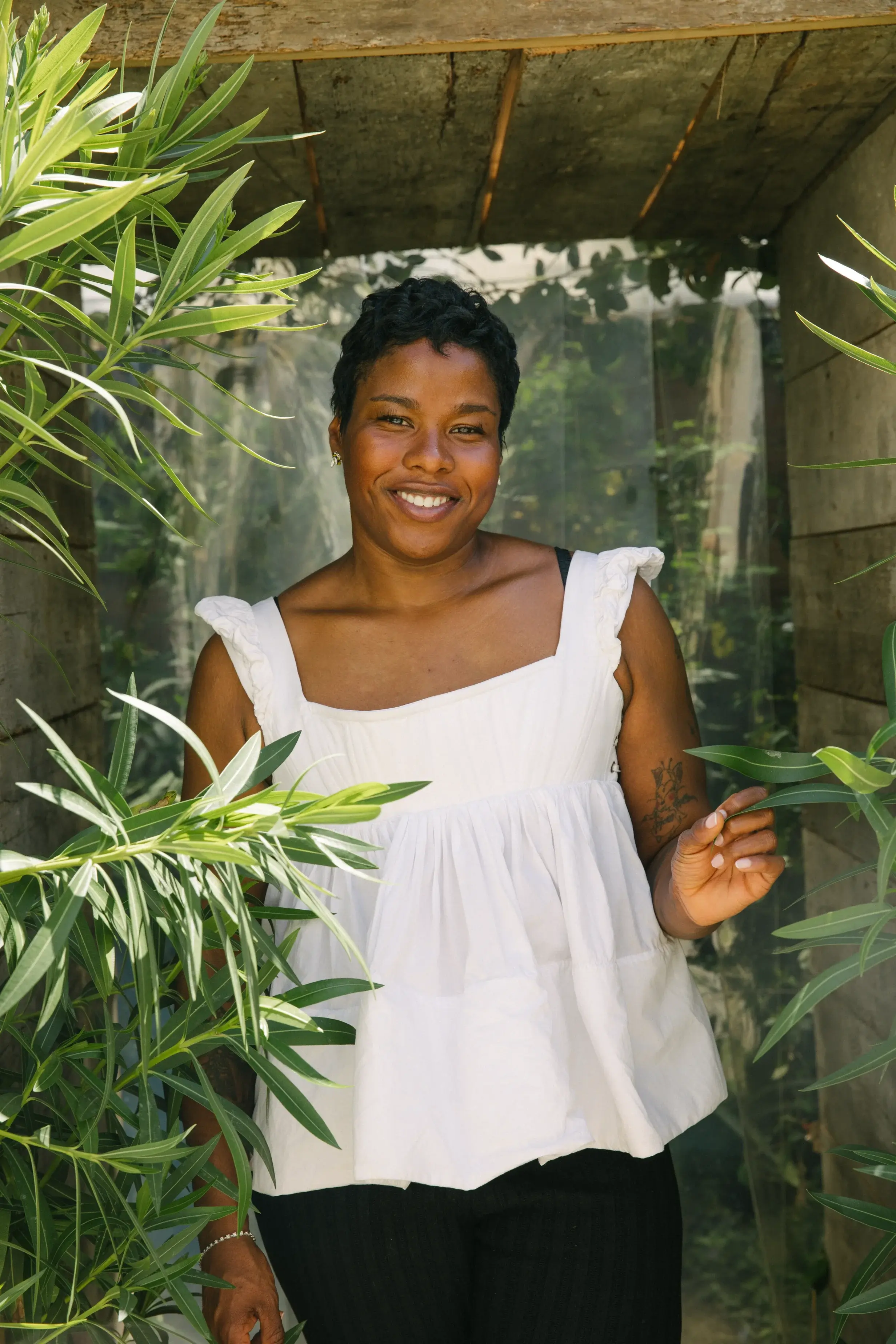
Danse avec les démons, 2025, LUMA Arles, France. Precious Okoyomon, 2025 - 2464 x 3696

Precious Okoyomon

Precious Okoyomon was in residence at LUMA Arles from october to december 2020.

Precious Okoyomon (b. 1993) is a Nigerian-American poet and artist. Their work considers the natural world, histories of migration and racialization, and the pure pleasures of everyday life.

They have had one-person exhibitions at the LUMA Westbau, Zurich; the Museum Für Moderne Kunst, Frankfurt; Performance Space New York, New York; the Aspen Art Museum, Aspen; The Sandretto Re Rebaudengo Madrid Foundation, Madrid; The Herbert F. Johnson Museum, Ithaca; Kunsthaus Bregenz, Bregenz. They were included in the Baltic Triennial 13, Tallinn; the 58th Belgrade Biennial, Belgrade; the 59th Venice Biennale, Venice; the 2022 Okayama Art Summit, Okayama; the 11th Sequences Biennial, Reykjavik; the 2023 Thailand Biennial, Chiang Rai, as well as in group exhibitions at the Institute of Contemporary Arts, London; LUMA Westbau, Zurich; Schinkel Pavillon, Berlin; LUMA Arles, Arles; Palais de Tokyo, Paris; Nigerian Pavillion, 60th Venice Biennale, Venice; Fondation Beyeler, Basel; Kunsthaus Bregenz, Bregenz. Okoyomon’s work is included in the permanent collection of the Museum Für Moderne Kunst, Frankfurt and LUMA Arles. Okoyomon was the 2021 recipient of the Frieze Art Fair Artist Award, as well as the 2021 Chanel Next Art Prize. In 2024, But Did You Die?, their second book of poetry, was co-published by the Serpentine and Wonder Press.

research_pasteur-orlando-150x150-1

Ludovic Orlando

Ludovic Orlando is a research director at the CNRS, and founder of the Anthropobiology and Genomics Center of Toulouse, which he directs. His work aims to trace the history of domesticated species and societies through DNA preserved in archaeological remains. He is internationally recognized for having found the cradles of the domestication of horses and donkeys. He is notably the author of La conquête du cheval, une histoire génétique (The Conquest of the Horse, A Genetic History), Odile Jacobe, 2023.
20230202103100666

Uriel Orlow

Uriel Orlow is an artist working with residues of colonialism, spatial manifestations of memory, social and ecological justice and plants as political actors. He participated in numerous exhibitions, notably the Berlin Biennale in 2022, 14th Dakar Biennale and the 54th Venice Biennale. He is the recipient of the 2023 Swiss Grand Prix for Art / Prix Meret Oppenheim. In 2020, he received the C. F. Meyer Prize, and in 2017 he was awarded the Sharjah Biennial prize.
Portrait Grégory Quenet

Grégory Quenet

Grégory Quenet is one of the pioneers of environmental history and the environmental humanities in France. Since 2012, he has been a professor of environmental history at the University of Versailles Saint-Quentin-en-Yvelines (Paris-Saclay). Founder of the French portal for environmental humanities, he organized the eighth European Society for Environmental History Conference in Versailles in 2015. Since its creation in 2024, he has been codirector of the Environmental Humanities research department at the Collège des Bernardins, where he held the Laudato si’: For a New Exploration of the Earth chair from 2021 to 2023. His latest book, Histoire de la pensée écologique (History of Ecological Thought), was published by PUF in May 2025. Since 2021, he has served as a scientific advisor for the Environmental History program at LUMA Arles.

Filipa_Ramos_portrait-by-Filipa-Brito2

Filipa Ramos

Filipa Ramos, PhD, is a writer and curator. Her research, manifested in speculative and theoretical texts, lectures and publications, focuses on how art addresses ecology and fosters relationships between nature and technology. She advocates a move away from anthropocentric approaches in the arts and humanities. She is Lecturer at the Institut Art Gender Nature FHNW, Basel, where she runs the Art and Nature Master seminars. She co-curates the ongoing manifestation The Shape of a Circle in the Mind of a Fish with Lucia Pietroiusti. Her upcoming book, The Artist as Ecologist, will be published by Lund Humphreys in 2024.
image-39091-808x538.jpg

Philippe Verdol

Philippe Verdol is a lecturer in Economics at the University of the West Indies. His main research interests are the analysis of neo-colonialism and sustainable development under the constraint of global chlordecone pollution. In 2020, he published Le chlordécone aux Antilles françaises: Politique publique de gestion de la crise. Pour une décolonisation et une coconstruction (Editions L'Harmattan) and in 2023 Le Mémorial ACTE (MACTE) de Guadeloupe - Pour un véritable hommage aux Premiers Moun Porteurs d'Humanité et de Civilisation (Editions Nestor).

Explore All Environmental History Symposium Editions

A3_72DPI
Environmental History V

2026

EH_2025_1920_1280
Environmental History IV

2025

A3_300DPI3
Environmental History III

2024

LUMA_1920_1280_72DPI
Environmental History II

2023

JOANA LUZ_20190605_LUMA_PERFORMANCE KILUANJI_DSF2312Joana Luz
Environmental History I

2022