
Explore the full series of conference sessions from the event, available online.
Realities of Science Fiction I
/Sophia-Al-Maria_Artist-Portrait_2022_Credit-Tosh-Basco_2000X1500.jpg)
Sophia Al Maria
Sophia Al-Maria’s work as a writer, filmmaker, and artist is oriented around the tense relationship between makers and society, with particular attention to the socioeconomic systems that dictate those conditions. Much of her art stems from personal experiences; she uses issues of gender and place as platforms for explorations of the climate of independent filmmaking, the relationship between public space and hegemonic systems such as advertising, and the various historical forces that have shaped locales such as Cairo and Dubai. The London-based artist, who was also a delegate of the artist collective GCC (a reference to the Gulf Cooperation Council), has also received attention for her work on “Gulf Futurism,” a concept describing what Al-Maria sees as the dystopian social and aesthetic tendencies that characterise the rapidly developing Persian Gulf region. The Qatari-American artist was born in 1983, and lives and works in London, UK. Recent solo exhibitions include “Beast Type Song”, Tate Britain, London, UK (2019); “Project Room #10, Sophia Al-Maria, Mirror Cookie”, Fondazione Pomodoro, Milan, Italy (2019); “Sophia Al-Maria: BCE”, Whitechapel Gallery, London, UK (2019).
/bergmann_boris.jpg)
Boris Bergmann
Boris Bergmann was born in Paris in 1992. He has published five novels. The most recent one, Les Corps insurgés (Calmann-Lévy, 2020), received the Fénéon Prize. He is the co-curator of the exhibition Monts Analogues at FRAC Champagne-Ardenne, Reims (September 17 to December 23, 2021), which brings together archival material as well as works by artists inspired by René Daumal and Le Mont Analogue (Mount Analogue, 1952). [JA2] He edited Les Monts analogues de René Daumal, a new edition of Le Mont Analogue published in October 2021 by Gallimard, with a preface by musician Patti Smith and featuring numerous unpublished works by Daumal.
.webp)
Federico Campagna
Federico Campagna was in residence at LUMA Arles from april to june 2024.
Federico Campagna is an Italian philosopher based in London. His work revolves around the metaphysical aspects of imagination and the possibility of modifying the present “reality-system”. His latest books, Otherworlds: Mediterranean Lessons On Escaping History (Bloomsbury, 2025), Prophetic Culture (Bloomsbury, 2021) and Technic and Magic (Bloomsbury, 2018) explored how ‘worlds’ can be born, destroyed, and created anew. In The Last Night (2013), he looked at contemporary work as a form of religion. His books have been translated in German, Italian, Norwegian (forthcoming), Spanish, and Turkish.
Federico Campagna works as Lecturer in Philosophy and World-Building at The Architectural Association (London) and ECAL (Lausanne). He is the co-founder of the Italian philosophy publisher Timeo, the director of rights at the Anglo-American radical publisher Verso Books, and editorial consultant for philosophy, theology and mythology for the Italian publisher Einaudi. He holds a PhD from the Royal College of Art, an MA from Goldsmiths University of London, and a MSc and BSc from Bocconi University in Milan.
He frequently collaborates as public speaker, podcaster and writer with some of the main international museums, contemporary art galleries and biennales. His work has been presented in numerous international institutions, including the Beyeler Foundation, Basel; the Venice Biennale; documenta, Kassel, Germany; Tate Modern, London; Transmediale, Berlin; Serpentine Gallery, London; Jameel Art Centre, Dubai; MACBA – Barcelona Museum of Contemporary Art; and MAXXI – National Museum of 21st Century Art, Rome.
/tristan-garcia-7.webp)
Tristan Garcia
Tristan Garcia is a writer and philosopher. He teaches philosophy at Jean Moulin University Lyon 3. He has published numerous works, philosophical treatises, and novels, including Forme et objet (reissued as part of the Presses universitaires de France (PUF) paperback collection Quadrige), Nous, La Vie Intense, Les Cordelettes de Browser, Mémoire de la jungle, 7, and Âmes (the first volume of his Histoire de la souffrance), published as part of Gallimard’s Blanche collection. Laisser être et rendre puissant, his latest work on metaphysics, will be published in April 2022 by PUF.
/A77DB849B49B95966C0DFEA674D194F9.webp)
Dominique Gonzalez-Foerster
Dominique Gonzalez-Foerster was born in 1965 in Strasbourg, France. She studied at École des Beaux-Arts, Grenoble, L’École du Magasin, Centre National d’Art Contemporain de Grenoble and Institut des hautes études en arts plastiques, Paris. The artist lives and works in Paris. She participated in the Venice Biennale in 1990, 1993, 1999, 2003, 2009, and 2019. Gonzalez-Foerster participated in dOCUMENTA(11) in 2002. In 2008, she created TH.2058 as part of The Unilever Series in the Turbine Hall at Tate Modern, London. The artist received the prestigious Marcel Duchamp Award in 2002. Since 1990, Dominique Gonzalez-Foerster has been exploring the different modalities of sensory and cognitive relationship between bodies and spaces, real or fictitious, up to the point of questioning the distance between organic life and work. Metabolizing literary and cinematographic, architectural and musical, scientific and pop references, Dominique Gonzalez-Foerster creates “chambres” and “interiors”, “gardens”, “attractions” and “planets”, with respect to the multiple meanings that these terms take on in the works of Virginia Woolf or Nathaniel Hawthorne, the Brontë sisters or Thomas Pynchon, Joanna Russ or Philip K. Dick. This investigation of spaces extends to a questioning of the implicit neutrality of practices and exhibition spaces. Her “mises en espace”, “anticipations” and “apparitions” seek to invade the sensory domain of the viewers in order to operate intentional changes in their memory and imagination. Haunted by history and future, Gonzalez-Foerster’s works become containers where the artist incubates a form of subjectivity that does not yet exist.
/Unknown.webp)
EAAPES
EAAPES (Exploration of the Arriving Alternatives of Extra-Solar Provenance) is a research group on feminist and gender issues in science fiction. Clara Pacotte and Charlotte Houette created the group in 2017 within the Cheapest University. EAAPES aims to make accessible, in French, never-before-translated works, spanning essays, fiction, interviews, round tables, and archival documents. Their fifth reader was published following their residency at Lafayette Anticipations, Paris. Their work has been presented at Yale Union, Portland, Oregon; Paris Ass Book Fair; CAC Brétigny – Centre d'art contemporain; and Villa Vassilieff, Paris, among others. Pacotte is an author and video maker and Houette is a painter.
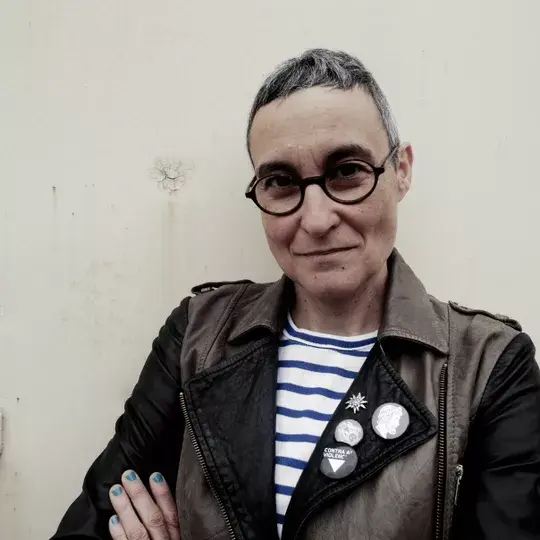
luvan
luvan is a novelist (Susto, 2018; Agrapha, 2021 …), a short-story author (Cru, 2013; Few of Us, 2017 …), a poet (Koímêsis, 2016), a translator (Amatka, 2018 …), a radio producer, a playwright, and an essayist. She is one of the new voices of the French “prospective” and contributes, as part of the Zanzibar collective, to a critical examination of current events through fiction. luvan currently lives in Germany.
/download_01.png)
Mahan Moalemi
Mahan Moalemi is a writer and curator from Tehran. He is currently pursuing a PhD in Film and Visual Studies at Harvard University, Cambridge, Massachusetts, where he is also the 2021–22 Graduate Curatorial Fellow at the Carpenter Center for the Visual Arts. Moalemi explores contemporary art, architecture, film, and digital media in light of the situated politics of temporality, historicity, and futurity (third)worldwide. He is the co-editor of Ethnofuturisms (Merve Verlag, 2018) and his writings have appeared in art journals, exhibition catalogues, and edited volumes published both in and outside Iran.
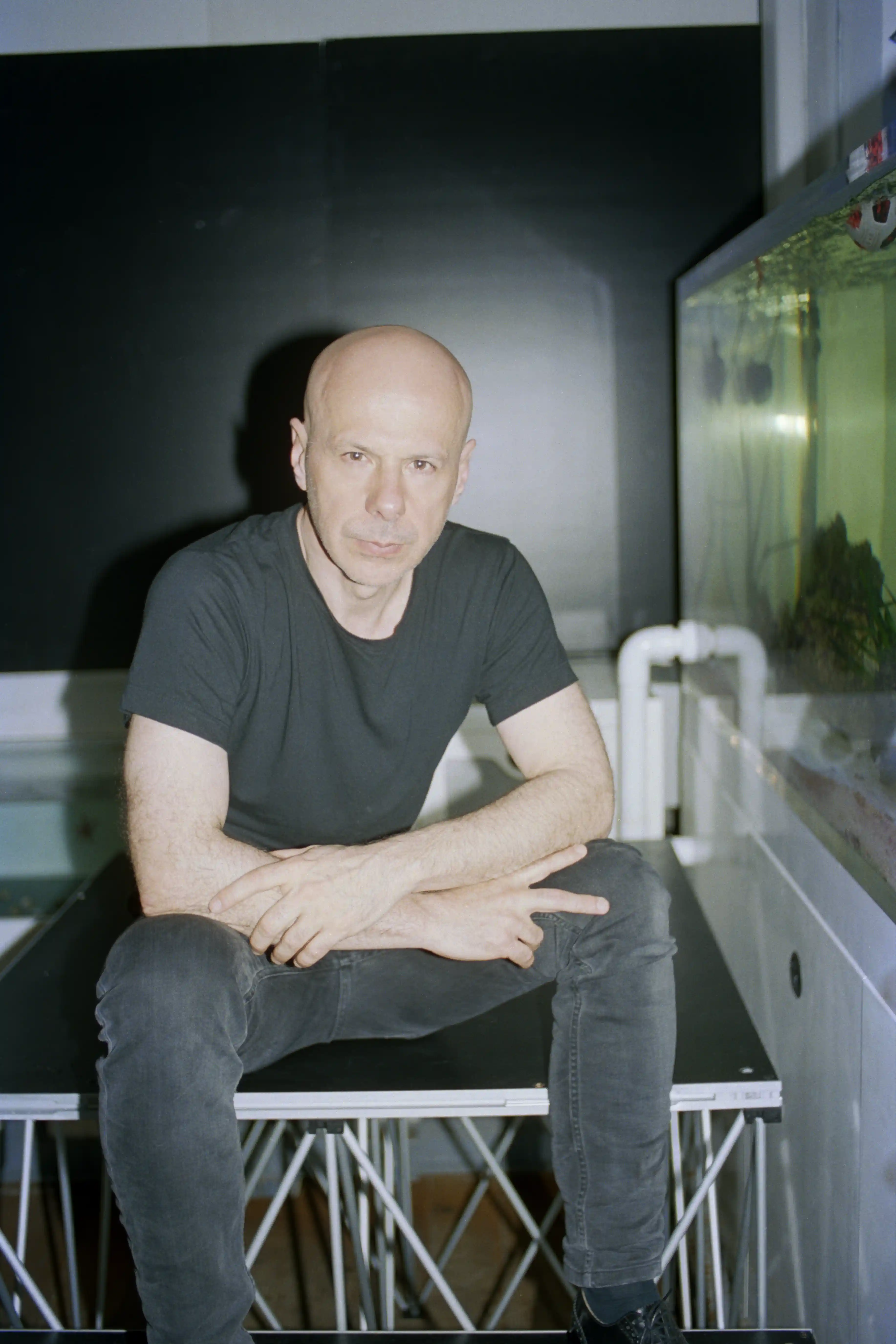
Philippe Parreno
Philippe Parreno studied at École des Beaux-Arts, Grenoble, and Institut des hautes études en arts plastiques, Palais de Tokyo, Paris. He lives and works in Paris, France. Parreno is a French artist who rose to prominence in the 1990s, earning critical acclaim for his work that spans a diversity of media, including film, sculpture, drawing, and text.
Parreno radically redefined the exhibition experience by taking the exhibition itself as a medium and placing its construction at the heart of his process. Exploring the possibilities of the exhibition as a coherent “object” rather than as a collection of individual works makes it into a true open space, a format that differs on each occasion, and a frame for things to appear and disappear. Parreno conceives his exhibitions as a scripted space where a series of events unfolds. He seeks to transform the exhibition visit into a singular experience that plays with spatial and temporal boundaries and the sensory experience of the visitor, who is guided through the space by the orchestration of sound and image. For the artist, the exhibition is less a total work of art than a necessary interdependence that offers an ongoing series of open possibilities.
/olivier.jpg)
Olivier Schefer
Olivier Schefer is a philosopher and writer. He is Professor of Aesthetics at the University of Paris 1 Panthéon-Sorbonne. A specialist in German Romanticism, he translated and edited several posthumous manuscripts by Novalis, including À la fin tout devient poésie (Allia, 2020), Le Brouillon général (Allia, 2015), and Semences (Allia, 2004). In his works, Schefer questions the aesthetic theory of Romanticism and its contemporary resonances through the cinema of ghosts and somnambulists, fragmentary writing, and the modern traces of the sacred. He is the author of theoretical fictions (Variations nocturnes, Vrin, 2008; Les Eaux de la mort, Rouge Profond, 2016), as well as novels (Un Saut dans la nuit, Arléa, 2021; Une tache d’encre, Arléa, 2017) and catalogues for contemporary artists (Anish Kapoor, Bernar Venet, Stéphane Thidet, Evi Keller).
He has a forthcoming essay on the work of Robert Smithson, read through the prism of French theory, pop culture, and science fiction, entitled “Sur Robert Smithson. Variations dialectiques” (La Lettre volée, November 2021).
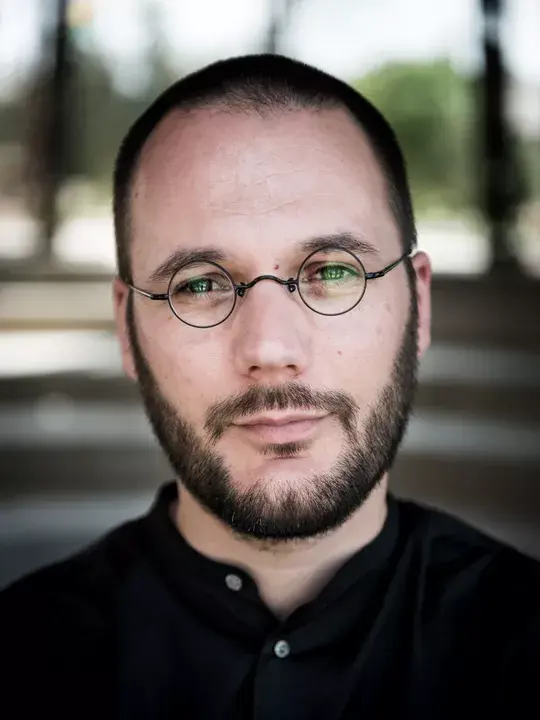
Jonas Staal
Jonas Staal is an artist. His work, which examines the relationship between art, propaganda, and democracy, has been exhibited in prestigious venues such as the Stedelijk Museum. He collaborated with Radha D'Souza on the Court for International Climate Crisis project. His exhibition-projects have been widely exhibited at venues such as the Stedelijk Museum in Amsterdam, the M_HKA in Antwerp, the Moderna Museet in Stockholm, and the Nam June Paik Art Center in Seoul, as well as at the 7th Berlin Biennale, the 31st São Paulo Biennale, and the 12th Taipei Biennale.
/Tournay_Virginie.jpg)
Virginie Tournay
Originally trained as a biologist, Virginie Tournay is also a political scientist and Research Director at the French National Centre for Scientific Research (CNRS), based at CEVIPOF at Sciences Po. Her research focuses on biotechnology, epistemology, and public opinion studies. In 2011, she was awarded the CNRS Bronze Medal for her work in the sociology of institutions.
Alongside her academic career, Tournay is also a science fiction writer. Her novel "Civilisation 0.0" (Glyphe) imagines a hyperconnected society in 2062 brought to a standstill by a catastrophic failure of its digital infrastructure, exploring how deeply our moral values depend on technological systems. In "S’il te plaît, dessine-moi une institution" (Glyphe), she examines our relationship to reality through an imagined dialogue between a sociologist and a theoretical physicist on the nature and perception of institutions.
She is also a member of the Red Team, a foresight initiative created by the French Defence Innovation Agency in partnership with Université Paris Sciences & Lettres, which brings together writers and researchers to imagine future military threats that could affect France and its strategic interests.