LUMA Days #5 / Recompose: Roadmap for Possible Worlds
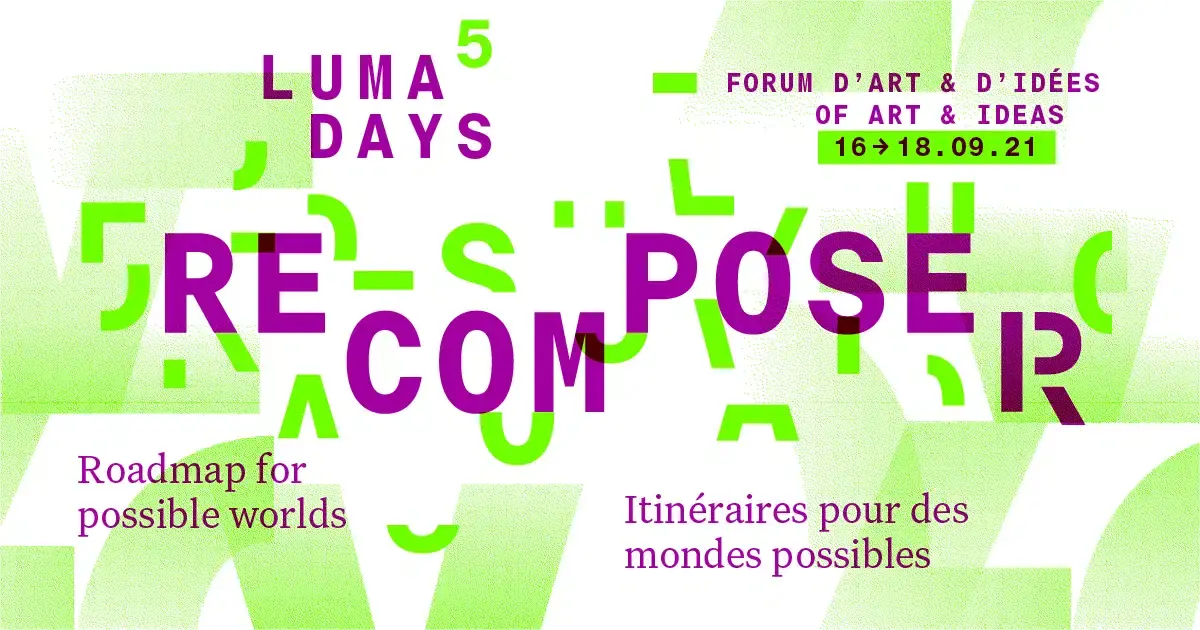
Under the title Recompose: Roadmap for Possible Worlds, the 2021 edition of LUMA Days explored ways of navigating and charting new paths through rapidly changing realities. Bringing together perspectives from across disciplines, the program examined how we might rethink the ways we inhabit the world, use resources, and act collectively.
In the wake of the upheavals of the previous twelve months, questions about how to move forward had become increasingly urgent. But what does it mean to restart the economic engine if doing so requires pursuing infinite growth in a finite world at any cost?
Against this backdrop, recomposition emerged as an alternative to the idea of recovery. LUMA Days brought together artists, thinkers, scientists, and the public to explore this concept, imagine new futures, and develop new narratives and forms of exchange.
In this process of recomposition, what tools do we have to access resources sustainably? How do we develop new ideas, new goals, and new systems of belief when our traditional points of reference have shifted so profoundly? How do we rebuild communities when the ties that hold them together begin to dissolve? And, in an interconnected world, how do we redefine our ethical, social, and environmental responsibilities in the face of ecological and socio-political challenges?
Recomposition implies change. It can be understood as a process in which the decomposition of one element enriches—and even nourishes—the emergence of another. At this pivotal moment in an increasingly fragile world, LUMA Days offered intersecting cultural perspectives and unexpected points of departure across seemingly incommensurable ways of living, inviting participants to reimagine shared narratives and expand the fields of inquiry through which we understand the present.
LUMA Days took place in Arles from September 16–18, 2021. The opening day was dedicated to workshops focused on sustainable and regenerative territorial development, while the following two days adopted a more speculative approach to pressing contemporary questions. The program was organized around three themes: Recompose, With What Resources? (Day 1), Recompose the Transmission of Knowledge (Day 2), and Recompose Plural Worlds (Day 3).
Conceived and convened by Maria Finders, Martin Guinard, and Hans-Ulrich Obrist.
Practical Information
Thursday, September 16, 2021: Recompose, With What Resources?
What resources are available and will help to define the development of a sustainable territory? Here is the question which frames the debate on the first day of Luma Days devoted to local territorial development. The aim is to draw up an inventory of existing resources, whether material, financial, cultural, and human, considering a collective desire to enhance available local wealth and trying to balance between economic, ecological, and social imperatives.
- 6:00 p.m.: “Rapport d’étonnement”
With Silvie Aries (writer), Joël Rumello (writer), Laetitia Sariroglou (journalist), and Philippe Thuru (writer). Read by Claude Lecat (actor). - 6:15 p.m.: Reversing the Use of Resources: An Egyptian Perspective
By Lina Alorabi, founder of The New Egyptian. - 6:35 p.m.: Presentation
By Philippe Bihouix (Managing Director, AREP). - 6:45 p.m.: The Geopolitics of Rare Metals
By Guillaume Pitron (investigative journalist). - 7:00 p.m.: Energy: A History Without Transition
By Jean-Baptiste Fressoz (historian of science, technology, and the environment). - 7:20 p.m.: Recompose: With What Resources?
With Philippe Bihouix, Jean-Baptiste Fressoz, and Guillaume Pitron.
Moderated by Maria Finders (LUMA Days co-curator).
Friday, September 17, 2021: Recompose the transmission of knowledge
The definition and transmission of knowledge are mutating. How can knowledge be shared today, beyond classical pedagogical concerns, within the context of the generalization of distance education, the disruption of existing structures caused by the emergence of artificial intelligence or the development of continuing education throughout one’s professional life? Thus, recomposing the transmission of knowledge first requires rethinking within this new context. Discussions on horizontal rather than vertical transmission of knowledge continue to occupy an important part of the deliberations about pedagogy. However, how can such modes of transmission be reconciled with the reliability of information in the age of fake news?
Throughout the day, through the views of various speakers, whether teachers, botanists as well as artists, we will attempt to review what constitutes the fields of learning based on exchange and transmission.
- 10:00 a.m.: Introduction to LUMA Days
By Maja Hoffmann (founder, LUMA). - 10:00 a.m.: Toward a New Geography
By Grégory Quenet (environmental historian). - 10:30 a.m.: La Plateforme, a Digital School in Marseille
By Cyril Zimmermann (digital entrepreneur and President of La Plateforme). - 11:15 a.m.: The School of Mutants: University of African Futures
With Olivia Anani (Co-Director of the Africa + Modern and Contemporary Art Department, Piasa), Hamedine Kane (filmmaker and artist), and Stéphane Verlet-Bottéro (artist, environmental engineer, and curator).
Moderated by Martin Guinard (LUMA Days co-curator). - 11:45 a.m.: Les Vaillants
A conversation with Sara Sadik (artist), Malaa (rapper), and Julie Boukobza (Head of Residencies, LUMA Arles). - 2:30 p.m.: Exploring Controversies from High School to Higher Education
By Nicolas Benvegnu (Director of the METIS Program, Sciences Po). - 2:50 p.m.: Circular Economy Startups: Opportunities, Challenges, and Needs—Examples from Egypt
By Heba Labib (Director of the Center for Innovation, Entrepreneurship, and Competitiveness, Nile University, Egypt). - 3:10 p.m.: The Rural World: A Place and Model for Sharing Knowledge
With Jean Rakovitch (Academic Director of the École du Domaine du Possible) and Émilie Rousselou (Director of the Université du Domaine du Possible and founder of the Spiruline arc-en-ciel farm). - 3:40 p.m.: The Rural World: A Place and Model for Sharing Knowledge
With Gianfranco Baruchello (artist and farmer).
Moderated by Hans Ulrich Obrist (Senior Advisor, LUMA Arles). - 4:15 p.m.: The Rural World: A Place and Model for Sharing Knowledge
With Maurizio Rossi (co-founder of H-FARM and President of the H for Human Foundation) and Audrey Bourolleau (founder of the HECTAR campus).
Moderated by Nicolas Benvegnu (Director of the METIS Program, Sciences Po).
Saturday, September 18, 2021: Recompose plural worlds
Questions about how to inhabit the world today are becoming particularly pressing. These concerns lead to a set of considerations on ways of worldmaking, welcoming different concepts of the relationship between humans and their environment. To admit that there can be several worlds is to accept that our representations of one world can change, and that consequently possible actions within it can be modified accordingly. As Philippe Descola asserts, at the end of his anthropological research "we only see what we have learned to see". This day will try to explore, through interventions by anthropologists, physicists, artists, and philosophers, multiple ways to construct these plural worlds.
- 10:00 a.m.: Remember: An Opening Oracle
By Alexis Pauline Gumbs (artist).
Moderated by Hans Ulrich Obrist (Senior Advisor, LUMA Arles). - 10:30 a.m.: The Other of Thought
By Manthia Diawara (writer and filmmaker). - 11:00 a.m.: The Forms of the Visible
By Philippe Descola (anthropologist). - 11:30 a.m.: Restoring Anthropology: A Political Question
By Nastassja Martin (anthropologist). - 12:00 p.m.: Reimagining Worlds
With Philippe Descola (anthropologist), Nastassja Martin (anthropologist), and Eliza Levy (filmmaker).
Moderated by Martin Guinard (LUMA Days co-curator). - 2:00 p.m.: Mass (17 min)
By June Balthazard and Pierre Pauze. - 2:15 p.m.: Which World, at What Scale?
With June Balthazard (artist), Pierre Pauze (artist), and Chiara Mariotti (particle physicist, CERN).
Moderated by Hans Ulrich Obrist and Martin Guinard. - 2:45 p.m.: Real Worlds / Virtual Worlds
By Daniel Birnbaum (Director and Curator, Acute Art). - 3:00 p.m.: Recovery?
A critical discussion with Laurent Fonbaustier (environmental law researcher), Philippe Rahm (architect), Hélène Tordjman (economist), and François Vatin (sociologist).
Moderated by Sylvain Bourmeau (Director, AOC Media). - 4:00 p.m.: LUMA ABCD
With Maja Hoffmann (Founder, LUMA), Vassilis Oikonomopoulos (Director of Exhibitions and Programs, LUMA Arles), Tom Eccles (Senior Advisor, LUMA Arles), and Hans Ulrich Obrist (Senior Advisor, LUMA Arles).
Olivia Anani
Olivia Anani was born in Abidjan, Côte d’Ivoire. She studied Asian Studies and contemporary art across three continents before beginning her career at Sotheby’s, Phillips, and Christie’s. She later joined PIASA as Co-Director of the Africa + Modern and Contemporary Art Department. As a researcher, writer, and curator, she has collaborated with the Taipei, Dakar, and Kampala Biennials, Beijing’s Zajia Lab, the Institut national d’histoire de l’art, the Centre Pompidou, the Gulbenkian Foundation, and Columbia University–Reid Hall in Paris. A member of the Board of the Amis du Palais de Tokyo since 2013, she served on the jury for the 2018 Prix des Amis, which supports emerging artists through their first major institutional exhibition.
Deeply interested in the power of the auction market to bring overlooked artists and art histories into focus, Anani has contributed to the sale of masterpieces by Francis Bacon, Alberto Giacometti, Nicolas de Staël, Cy Twombly, Mark Rothko, Jean-Michel Basquiat, Bodys Isek Kingelez, Barthélémy Toguo, and Seydou Keïta. She has also worked on loans and acquisitions for institutions including the Louvre Museum and Louvre Abu Dhabi.
June Balthazard
Gianfranco Baruchello
Neïl Beloufa
Nicolas Benvegnu
Philippe Bihouix
Daniel Birnbaum
Philippe Descola
Jean-Baptiste Fressoz
Alexis Pauline Gumbs
Hamedine Kane
Chiara Mariotti
Nastassja Martin
Nastassja Martin is an anthropologist and holds the Junior Professorship in Earth’s Habitability and Just Transitions (ISJPS, Paris 1 Panthéon-Sorbonne University, 2023–2026). She studied at EHESS under the supervision of Philippe Descola. She devoted her dissertation to the Gwich’in, an Indigenous people of northeastern Alaska, which formed the basis of her first book, Les Âmes sauvages: Face à l’Occident, la résistance d’un peuple d’Alaska (Wild Souls: An Alaskan People’s Resistance to the West) (La Découverte, 2016).
Her research develops a comparative anthropology of responses to environmental crises, with a focus on subarctic Indigenous cosmologies. After Alaska, she investigated the Even people of Kamchatka, whose ways of life were first reshaped by Soviet colonization and then contemporary extractivism. This work resulted in À l’est des rêves: Réponses even aux crises systémiques (To the East of Dreams: Even Responses to Systemic Crises) (La Découverte, 2022), in which performative dreams and mythical narratives engage with colonial logics and ecological disruption, as well as Croire aux fauves (In the Eye of the Wild) (Verticales, 2019).
Her current professorship extends this research, notably through a study on green hydrogen in Chile.
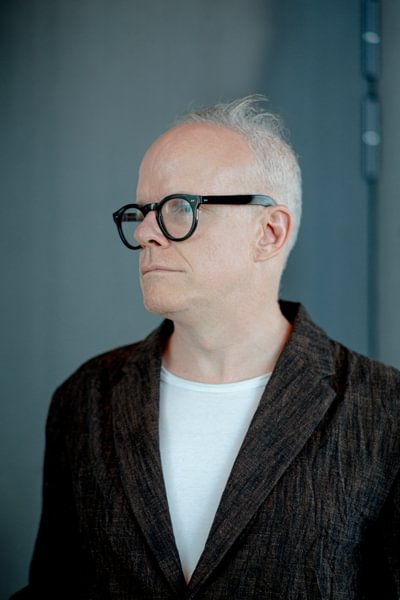
Hans Ulrich Obrist
Hans Ulrich Obrist (b. 1968, Zurich, Switzerland) is Artistic Director of the Serpentine Galleries in London, and Senior Advisor at LUMA Arles. Prior to this, he was the Curator of the Musée d’Art Moderne de la Ville de Paris. Since his first show “World Soup : The Kitchen Show” in 1991, he has curated more than 350 shows.
Obrist’s recent publications include Ways of Curating (2015), The Age of Earthquakes (2015), Lives of the Artists, Lives of Architects (2015), Mondialité (2017), Somewhere Totally Else (2018) The Athens Dialogues (2018), Maria Lassnig: Letters (2020), Entrevistas Brasileiras: Volume 2 (2020), and 140 Ideas for Planet Earth (2021).
Pierre Pauze
Guillaume Pitron
Hashim Sarkis
Grégory Quenet
Grégory Quenet is one of the pioneers of environmental history and the environmental humanities in France. Since 2012, he has been a professor of environmental history at the University of Versailles Saint-Quentin-en-Yvelines (Paris-Saclay). Founder of the French portal for environmental humanities, he organized the eighth European Society for Environmental History Conference in Versailles in 2015. Since its creation in 2024, he has been codirector of the Environmental Humanities research department at the Collège des Bernardins, where he held the Laudato si’: For a New Exploration of the Earth chair from 2021 to 2023. His latest book, Histoire de la pensée écologique (History of Ecological Thought), was published by PUF in May 2025. Since 2021, he has served as a scientific advisor for the Environmental History program at LUMA Arles.
Maurizio Rossi
Estelle Rouquette
Sara Sadik
Sara Sadik was in residence at LUMA Arles from march to june 2021.
Sara Sadik was born in 1994 in Bordeaux. In 2018, she obtained a master’s degree from Bordeaux School of Fine Arts. She lives and works in Marseille. She works on French youth from working-class neighborhoods and its culture, documenting its mysteries and deconstructing social mythologies, particularly those related to adolescence and masculinities. Her work is expressed in videos and performances, ranging from documentaries to science fiction and reality TV. Her work has been shown in group exhibitions at 221 A (Vancouver, 2017), Karma International (Zürich, 2017), the Open’er Festival (Gdynia, 2017), Roodkapje (Rotterdam, 2018), Wallach Gallery-Columbia University (New York, 2019), Galerie Édouard Manet (Gennevilliers, 2019), Triangle France-Astérides (Marseille, 2021), Munchmuseet (Oslo, 2021) Magasins généraux (Pantin, 2021). She performed at the Do Disturb Festival, as part of the Triangle France-Astérides program (Palais de Tokyo, Paris, 2019), and at the Parallèle Festival (Frac PACA and Friche Belle-de-Mai, Marseille, 2020). Her work is also featured in public collections such as the Cnap, the Frac Nouvelle-Aquitaine MÉCA, the Frac PACA, and the City of Paris Museum of Modern Art. She is represented by the Crèvecœur Gallery, in Paris.